
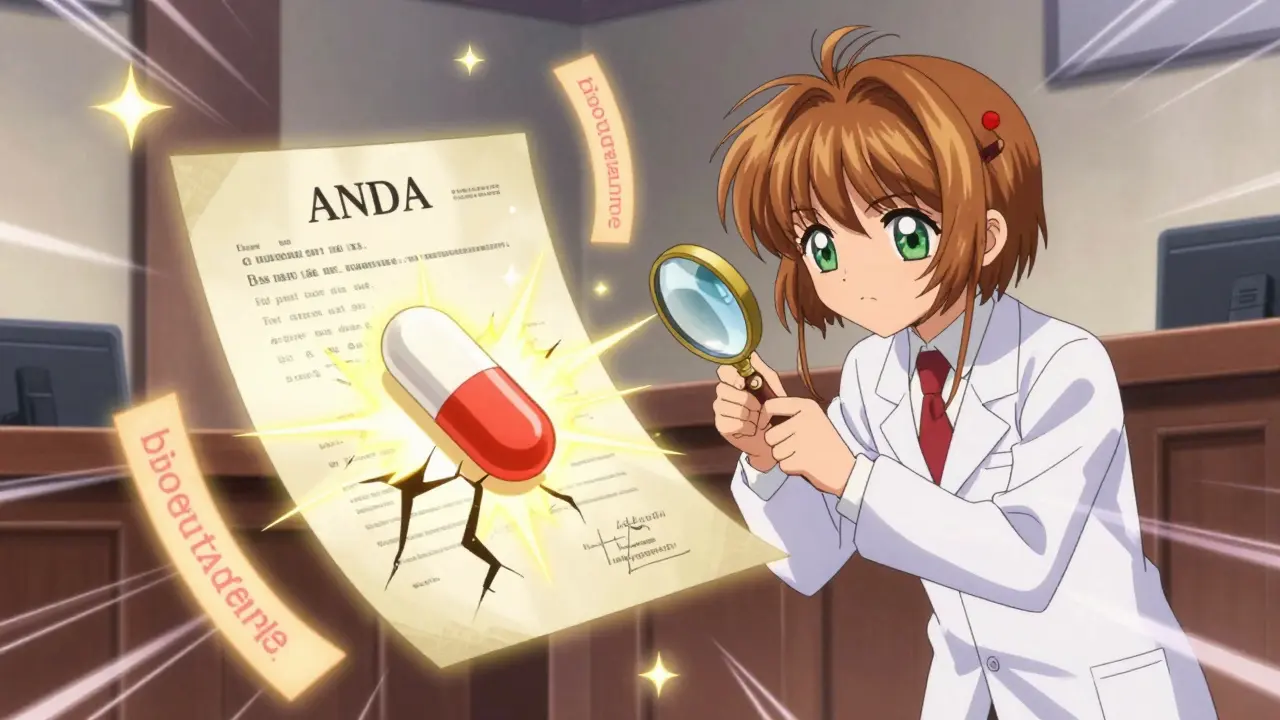
The U.S. generic drug market didn’t just happen. Before 1984, if you needed a cheaper version of a brand-name medicine, you were out of luck. The system was stacked against generic manufacturers. They had to run full clinical trials-just like the original drugmaker-to prove their version was safe and effective. Even if the chemical formula was identical, the FDA didn’t trust them without years of expensive testing. And if the brand-name drug was still under patent? Forget it. You couldn’t even start testing until the patent expired. That meant patients paid full price for years, even after the drug’s invention was public knowledge.
What the Hatch-Waxman Act Actually Did
In 1984, Congress passed the Drug Price Competition and Patent Term Restoration Act-better known as the Hatch-Waxman Amendments. Named after Senator Orrin Hatch and Representative Henry Waxman, this law didn’t just tweak the system. It rebuilt it from the ground up. The goal? Let generics in without wrecking innovation.
The key innovation was the Abbreviated New Drug Application, or ANDA. Instead of repeating every clinical trial, generic companies could now prove their drug was bioequivalent to the brand-name version. That meant matching how fast and how much of the drug entered the bloodstream. No need to retest safety on thousands of patients. Just prove it worked the same way. This cut development costs by 80-90%.
At the same time, brand-name companies got something back. If the FDA took too long approving their new drug, the law let them extend their patent by up to five years. That made sense: the clock on their monopoly was ticking while regulators reviewed the data. Without this, companies had less incentive to invest in risky new drugs.
The Patent Game: Paragraph IV and the 180-Day Prize
Hatch-Waxman didn’t just make it easier to copy drugs-it gave generic makers a reason to challenge patents head-on.
Brand-name companies had to list every patent covering their drug in the FDA’s Orange Book. When a generic company filed an ANDA, they had to pick one of four certifications. The most explosive? Paragraph IV. That’s when the generic says: Your patent is invalid, or we don’t infringe it.
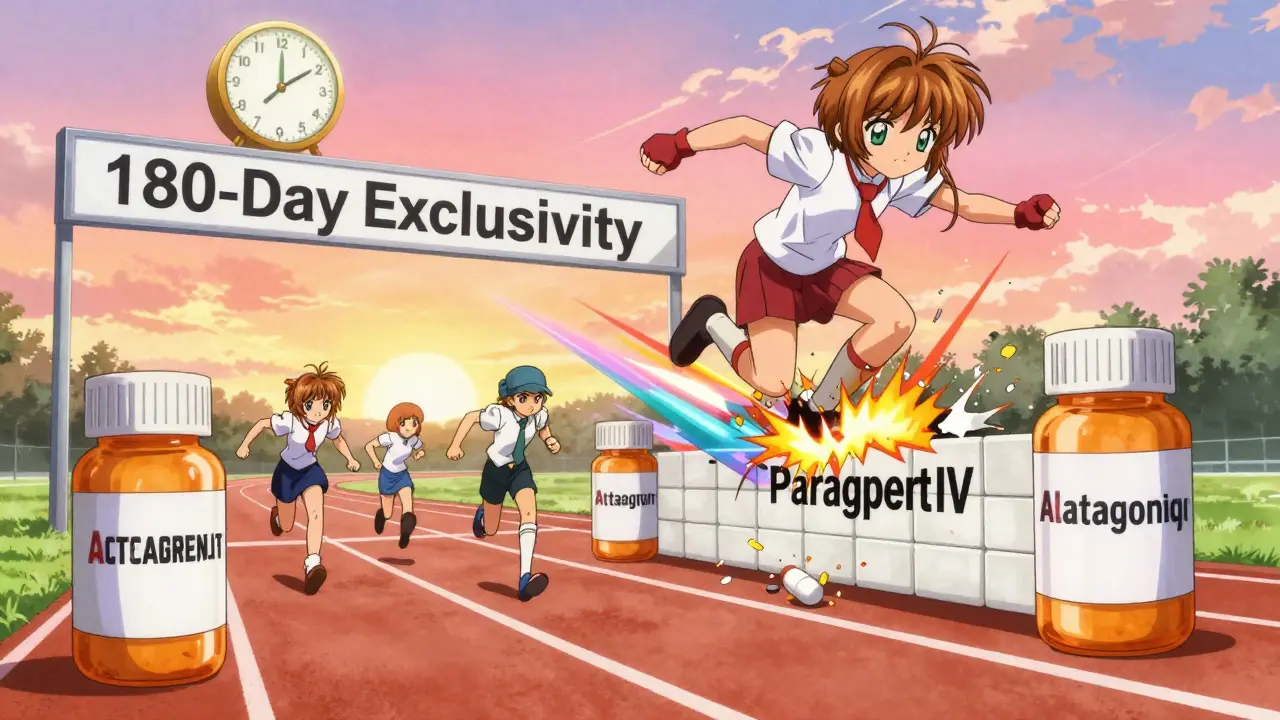
That’s when the legal fireworks start. The brand-name company has 45 days to sue. If they do, the FDA can’t approve the generic for 30 months-unless a judge rules sooner. But here’s the kicker: the first generic to file a Paragraph IV certification gets 180 days of exclusive market access. No other generics can enter during that time.
That 180-day window? It’s worth billions. One company could dominate the entire market for half a year, charging low but still profitable prices. That’s why generics race to file. Some even file on the exact same day, hoping the FDA will let them share the prize. The system was designed to encourage challenges, and it worked. By 2023, nearly 90% of U.S. prescriptions were filled with generics.
The Safe Harbor: Why Generic Companies Can Start Early
Before Hatch-Waxman, even testing a generic drug while the patent was active was considered infringement. The 1984 Federal Circuit Court case Roche v. Bolar made it clear: no testing until patent expiry. That delayed generics by years.
Hatch-Waxman fixed that with a legal shield: 35 U.S.C. § 271(e)(1). It says activities done solely to gather data for FDA approval don’t count as patent infringement. That’s called the safe harbor. It lets generic companies start manufacturing, testing, and submitting paperwork while the brand-name patent is still alive. They don’t sell the drug yet-but they’re ready the day the patent expires.
This single change turned the generic industry from a slow, risky gamble into a predictable, high-stakes race. Companies could now plan years ahead, knowing they wouldn’t be sued just for doing their homework.
The Results: Cheaper Drugs, More Access
The numbers speak for themselves.
- In 1983, before Hatch-Waxman, generics made up less than 19% of U.S. prescriptions.
- By 2023, that number hit 90%.
- Generic drugs cost, on average, 80-85% less than brand-name versions.
- More than 10,000 generic products are now available in the U.S.
The FDA estimates that generics saved the U.S. healthcare system over $300 billion in 2022 alone. That’s not just a savings for patients. It’s a savings for insurers, employers, and taxpayers.
But it wasn’t just about price. It was about access. Millions of Americans who couldn’t afford brand-name insulin, blood pressure meds, or antidepressants suddenly had options. The law didn’t just change the market-it changed lives.
The Dark Side: Pay-for-Delay and Evergreening
For all its success, Hatch-Waxman didn’t close every loophole. In fact, some companies learned how to game it.
One tactic? Pay-for-delay. Instead of fighting in court, a brand-name company pays a generic maker to hold off on launching its cheaper version. The FTC found 668 such deals between 1999 and 2012. Those deals cost consumers an estimated $35 billion a year in higher prices.
Another trick? Evergreening. Brand-name companies file new patents on tiny changes-like a new pill coating, a slightly different dose, or a new delivery method. Each new patent resets the clock. Even if the original patent expires, the drug stays protected. The FDA has struggled to keep up.
And then there’s the citizen petition tactic: a brand-name company files a frivolous complaint with the FDA, hoping to delay approval by months or even years. These aren’t safety concerns-they’re legal delays dressed up as public health questions.
In 2023, Congress introduced the Preserve Access to Affordable Generics and Biosimilars Act to crack down on pay-for-delay deals. The FTC is still pushing for stronger rules. But the system, as designed in 1984, still holds.
Is the Balance Still Right?
Today, the question isn’t whether Hatch-Waxman worked-it’s whether it still works well.
The original compromise was elegant: let generics in fast, but reward innovation. It created the world’s largest generic drug market. It kept the U.S. at the forefront of drug development. And it made medicines affordable for millions.
But the pharmaceutical landscape has changed. Drug prices have skyrocketed. Patent strategies have grown more complex. The 180-day exclusivity window, meant to spur competition, sometimes leads to collusion. The FDA’s backlog, once a major problem, has improved thanks to user fees from the Generic Drug User Fee Amendments (GDUFA), but pressure remains.
Some argue Hatch-Waxman has outlived its usefulness. Others say it’s the only thing keeping the system from collapsing into chaos. The truth? It’s neither a perfect law nor a failed one. It’s a living framework-one that’s been tested, stretched, and adapted over 40 years.
What’s clear is this: without Hatch-Waxman, today’s generic drug market wouldn’t exist. And millions of people would still be paying full price for medicines they can’t afford.
What Comes Next?
The FDA continues to refine the system. GDUFA has cut average ANDA review times from 30 months in 2012 to under 12 months by 2022. More applications are approved faster. More generics hit the market sooner.
But the real battle is political. Will Congress act to limit pay-for-delay? Will the courts rein in evergreening? Will the FDA become more aggressive in rejecting weak patents?
For now, Hatch-Waxman remains the backbone of the U.S. drug system. It’s not flashy. It’s not glamorous. But every time you pick up a $4 generic prescription, you’re seeing the legacy of a law passed in 1984-one that quietly saved billions and changed healthcare forever.
What is the Hatch-Waxman Act?
The Hatch-Waxman Act, formally called the Drug Price Competition and Patent Term Restoration Act of 1984, is a U.S. law that created the modern system for approving generic drugs. It lets generic companies prove their drugs are bioequivalent to brand-name versions without repeating full clinical trials. It also gives brand-name drugmakers extra patent time to make up for delays in FDA approval.
How did generic drugs get approved before Hatch-Waxman?
Before 1984, generic manufacturers had to submit a full New Drug Application (NDA), including their own clinical trials to prove safety and effectiveness-even if the drug’s chemical structure was identical to the brand-name version. This was expensive, slow, and often impossible while the patent was active. As a result, fewer than 19% of prescriptions were filled with generics in 1983.
What is an ANDA?
ANDA stands for Abbreviated New Drug Application. It’s the streamlined pathway created by Hatch-Waxman that allows generic drugmakers to get FDA approval by proving their product is bioequivalent to a brand-name drug already on the market. They don’t need to repeat costly clinical trials-just show the body absorbs the drug the same way.
Why do generic companies file Paragraph IV certifications?
Paragraph IV certification is when a generic company claims a brand-name drug’s patent is invalid or that their product doesn’t infringe it. If they’re the first to file, they get 180 days of exclusive market access-no other generics can enter. That’s worth billions, so companies race to file. It’s the main incentive to challenge weak or overreaching patents.
What’s the 30-month stay in Hatch-Waxman?
If a brand-name company sues a generic maker for patent infringement within 45 days of receiving a Paragraph IV notice, the FDA must delay approval for up to 30 months. This gives the courts time to resolve the dispute. The stay ends early if a judge rules in favor of the generic, or if the patent expires.
How has Hatch-Waxman affected drug prices?
Hatch-Waxman drove down drug prices dramatically. Generic drugs now cost 80-85% less than brand-name versions. In 2022, generics saved the U.S. healthcare system over $300 billion. Before the law, generics made up less than 20% of prescriptions. Today, they’re used in 90% of all prescriptions.
What are pay-for-delay deals?
Pay-for-delay is when a brand-name drugmaker pays a generic company to delay launching its cheaper version. Instead of competing, they agree to share the market. The FTC found over 600 such deals between 1999 and 2012, costing consumers an estimated $35 billion a year. These deals are now illegal under court rulings and new legislation.
Is Hatch-Waxman still relevant today?
Yes. Even with new challenges like evergreening and complex patent strategies, Hatch-Waxman remains the foundation of the U.S. generic drug system. It’s been updated-through GDUFA, for example-but its core structure still enables millions of Americans to access affordable medicines. Without it, the modern generic industry wouldn’t exist.

15 Comments
Nishant Sonuley
January 19, 2026 AT 06:36Wow, so the whole generic drug system is basically a legal loophole turned into a public health miracle? I mean, imagine if we had to pay $500 for insulin because some pharma execs got to sit on patents like they were collecting baseball cards. The Hatch-Waxman Act didn’t just change the game-it rewrote the rulebook while the players were still arguing over the coin toss. And yet, here we are, 40 years later, watching them try to stitch the rulebook back together with duct tape and corporate lobbying. The 180-day exclusivity window? More like a golden parachute for the first guy who dares to say, ‘Hey, this patent’s a joke.’ And don’t even get me started on pay-for-delay deals-basically, Big Pharma paying off the only people who could’ve saved you money. I’m not mad, I’m just disappointed.
Emma #########
January 20, 2026 AT 06:02This is one of those laws that quietly saved lives every single day, and nobody talks about it. My dad couldn’t afford his blood pressure med until generics hit the market. He used to skip doses. Now he takes them like clockwork. I didn’t even know this law existed until I read this. Thank you for writing it.
Andrew Short
January 20, 2026 AT 21:20Oh please. This whole ‘Hatch-Waxman saved America’ narrative is pure socialist propaganda. You think generics are cheap because of some 1984 law? No. They’re cheap because China makes them in factories with no environmental regulations and workers paid in noodles. The real problem isn’t pay-for-delay-it’s the FDA letting foreign labs approve drugs without proper oversight. And don’t even get me started on how we let India and China dominate the supply chain. This isn’t innovation-it’s national security negligence.
Zoe Brooks
January 21, 2026 AT 18:22Can we just take a second to appreciate how wild it is that a law passed in 1984 still powers 90% of our prescriptions today? Like, imagine if your phone’s operating system was still iOS 6 and somehow it still worked better than anything new. That’s Hatch-Waxman. It’s clunky, it’s outdated, it’s got bugs-but it still runs the whole damn thing. And honestly? Maybe we don’t need to fix it. Maybe we just need to stop letting pharma companies turn it into a Monopoly board with bribes and patents on pill coatings. 🤷♀️
Kristin Dailey
January 22, 2026 AT 10:39America invented this. Don’t let them take it away.
Wendy Claughton
January 22, 2026 AT 20:38Every time I see a $4 generic at the pharmacy, I think of the people who fought for this-lawmakers, scientists, patients, even the lawyers who dared to file Paragraph IVs. It’s not glamorous. It’s not sexy. But it’s human. And it’s sacred. I wish more people understood how fragile this system is. One bad court ruling, one weak FDA, one pay-for-delay deal too many… and we’re back to paying $800 for insulin. Please don’t let that happen. 💔
Stacey Marsengill
January 24, 2026 AT 04:19They let you file a patent on a *color* change? A *coating*? That’s not innovation-that’s intellectual theft dressed up in a lab coat. And don’t get me started on the citizen petitions-those are just legal harassment tactics wrapped in a ‘concern for safety’ bow. I swear, if I had a dollar for every time a pharma exec cried ‘public health’ while pocketing $200 million… I’d buy every generic on the planet and give them away for free. The system isn’t broken. It’s been hijacked. And the worst part? We’re all still paying for it.
Aysha Siera
January 24, 2026 AT 14:32Who really wrote this law? Because if it was Hatch and Waxman, why does it look like a blueprint for a corporate oligarchy? The 180-day window? That’s not competition-it’s a cartel. The ‘safe harbor’? That’s just a legal loophole to let generics prep for war before the patent even expires. And the FDA? Controlled by pharma money. Everything you’re calling ‘progress’ is just a slower version of the same scam. They don’t want you to have cheap drugs-they want you to think you do. Wake up.
Eric Gebeke
January 24, 2026 AT 22:27It’s funny how people act like Hatch-Waxman was some noble act of altruism. It wasn’t. It was a political deal between two senators who got cozy with Big Pharma lobbyists. The ‘balance’? There was never any balance. The patent extensions were always going to be abused. The Paragraph IV system? Designed to create chaos so the first mover could monopolize. And now we’re surprised when companies game it? Please. This law was never about patients. It was about control. And the control is still in the hands of the same people who wrote it.
Joni O
January 25, 2026 AT 14:49Just wanted to say thank you for this. I work in a clinic and I see the difference this law makes every day. A patient came in last week crying because she finally got her antidepressant for $3 instead of $400. She said, ‘I didn’t think I’d ever be able to afford to feel okay again.’ That’s what this law did. Not politics. Not hype. Real life. And yeah, it’s flawed. But it’s still the best thing we’ve got. Let’s protect it, not tear it down.
Praseetha Pn
January 26, 2026 AT 03:17Did you know the FDA’s entire generic approval system is secretly run by a shadow consortium of Indian and Chinese pharma conglomerates? The Orange Book? A distraction. The ANDA process? A front. The real story is that the U.S. government sold the rights to our medicine supply chain in the 90s as part of a trade deal nobody told us about. The 180-day window? That’s when the real manufacturers get paid off. And the ‘safe harbor’? That’s just a legal loophole to let them start production years early while we all think they’re ‘testing.’ Wake up. They’re not making drugs-they’re making control.
Andrew McLarren
January 27, 2026 AT 03:29It is, without question, a remarkable legislative achievement that successfully reconciled the competing imperatives of pharmaceutical innovation and public accessibility. The structural architecture of the Abbreviated New Drug Application, coupled with the patent term restoration mechanism, represents a sophisticated equilibrium between incentivizing research and development and facilitating market entry for cost-effective therapeutics. One might reasonably posit that, absent such a framework, the contemporary landscape of pharmaceutical affordability would be unrecognizably diminished.
Robert Cassidy
January 27, 2026 AT 22:54Let me be clear: this law was never meant to help people. It was meant to keep America #1 in drug profits. The ‘180-day prize’? That’s not competition-it’s a monopoly handed to the first corporate warrior who can afford a $10 million lawsuit. And the ‘safe harbor’? That’s just letting foreign labs build your drugs while the patent’s still active. We didn’t make generics affordable-we outsourced them to countries with no labor laws and then pretended we didn’t know. This isn’t progress. It’s surrender dressed up in legal jargon.
Dayanara Villafuerte
January 28, 2026 AT 11:00As someone who grew up in a country where generics were the only option, I can tell you: this law didn’t just change the U.S.-it changed the world. India and Brazil modeled their systems after Hatch-Waxman. The whole global access to medicine movement? Built on this. The fact that you can get a $4 generic in Iowa is because someone fought for it in 1984. And now we’re arguing about loopholes? Let’s not forget what this law actually did: it made dignity affordable. 🌍❤️
Andrew Qu
January 30, 2026 AT 04:54One thing people miss: Hatch-Waxman didn’t just lower prices-it created a whole new industry. Thousands of jobs. Labs. Regulatory experts. Supply chains. It turned generics from a fringe afterthought into a $200 billion sector. The real win? It gave small companies a shot. You don’t need a billion-dollar R&D budget to compete anymore. You just need to prove bioequivalence. That’s democratized medicine. And yeah, the system’s got flaws-but the alternative? No generics at all. That’s not a tradeoff we can afford to lose.