
When a brand-name drug loses its patent, most people assume the company loses everything. But that’s not what happens. Instead, you’ll often see the same company launch a version of that drug - identical in every way - under a new, cheaper label. This isn’t a knockoff. It’s not a fake. It’s an authorized generic.
What exactly is an authorized generic?
An authorized generic is the exact same drug as the brand-name version. Same active ingredient. Same inactive ingredients. Same pill shape, same coating, same manufacturing process. The only difference? No brand name on the box. No fancy marketing. Just a plain label and a much lower price. It’s made by the original brand company - or a subsidiary they own - and sold under their original FDA approval (the NDA). That’s different from regular generics, which are made by other companies using a separate approval process (ANDA). Those generics can have different fillers or coatings. Authorized generics? They’re clones of the brand. Exactly. You might have taken one without knowing it. Celebrex’s authorized generic is celecoxib. Concerta’s is methylphenidate ER. Colcrys? Its authorized version is colchicine. If you’ve been prescribed one of these, you might’ve been handed the same pill your doctor originally prescribed - just cheaper.Why would a brand company hurt its own profits?
It sounds crazy. Why would Pfizer or Johnson & Johnson drop the price of their own drug? The answer is simple: to keep from losing everything. When a blockbuster drug loses patent protection, revenue typically crashes by 80-90% in the first year. That’s not a guess. That’s what industry analysts have seen for decades. Without action, the brand vanishes from the market. All sales go to competitors. But if the brand company launches an authorized generic, they don’t disappear. They stay in the game. They capture a slice of the generic market. Maybe 15-20%. For a drug that made $1 billion a year, that’s $150 million in revenue they didn’t lose. It’s not charity. It’s survival.The Hatch-Waxman Act and the 180-day advantage
The U.S. system for approving generics is built around the Hatch-Waxman Act of 1984. It gives the first company to file a generic application 180 days of exclusive rights to sell their version. During that time, no other generic can enter the market. That’s a huge advantage. The first generic can charge high prices - sometimes nearly as high as the brand - and rake in massive profits. That’s where authorized generics come in. If the brand company launches its own authorized generic during that 180-day window, it splits the market. Now the first generic isn’t alone. It’s competing with a version of the exact same drug, sold by the original manufacturer. Prices drop fast. Profits for the first generic shrink. Consumers win. The Federal Trade Commission found this in 2011: when authorized generics entered during the exclusivity period, prices were significantly lower than in markets without them. The brand company wasn’t just protecting its own revenue - it was undercutting its competitor’s windfall. And here’s the twist: about 70% of authorized generics launched before or during that 180-day window. That’s not random. That’s calculated.
Two markets. One company. More profit.
Brand companies don’t just want to survive. They want to optimize. They now run two parallel markets:- One for patients and insurers willing to pay more for the brand name - maybe because of trust, habit, or insurance formulary rules.
- One for cost-conscious buyers - Medicaid, Medicare Part D, mail-order pharmacies, cash-paying patients - who get the same drug at a discount.
Why not just let generics take over?
Because generics aren’t always the same. Regular generics only need to prove they’re “bioequivalent” - meaning they deliver the same amount of drug into the bloodstream. But they can use different fillers, dyes, or binders. For most drugs, that doesn’t matter. But for some - like blood thinners, epilepsy meds, or thyroid drugs - tiny differences can affect how the body reacts. Patients and doctors often prefer the brand because they know exactly what’s in it. An authorized generic removes that fear. It’s the same pill. Same chemistry. Same results. A 2005 survey found over 80% of Americans wanted the option of an authorized generic. Why? Because they trusted it. They didn’t want to risk switching to a different version. Brand companies know that. So they give patients a choice that feels safe - while still making money from it.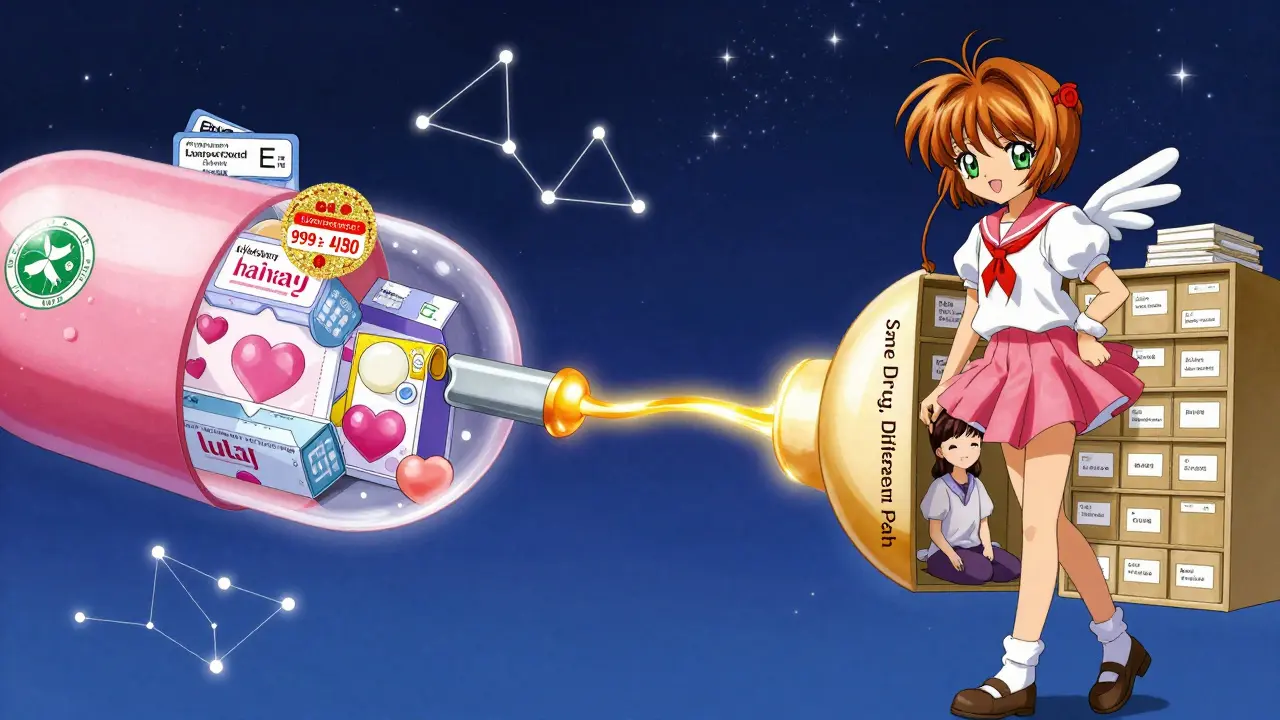
It’s getting smarter - and faster
Back in the 2010s, most authorized generics launched after a generic competitor already entered the market. They were reactive. Now? They’re proactive. Recent data from 2020-2023 shows brand companies are launching authorized generics even before the first generic hits the shelves. They’re using them as a warning shot: “We’re coming in with our own version. Don’t expect to make a fortune.” Some are even bundling them with specific distribution channels - selling them only through mail-order pharmacies or certain retail chains. That keeps the authorized generic from directly competing on store shelves with the brand version. It’s subtle. But it works. This isn’t just defense anymore. It’s offense.What’s next? Authorized biosimilars
The same logic is starting to show up in biologics - complex drugs made from living cells, like Humira or Enbrel. These are expensive. And their patents are starting to expire. The FDA hasn’t officially defined “authorized biosimilars” yet. But companies are already testing the waters. Why? Because the same strategy applies: keep control. Keep trust. Keep revenue. If a brand can launch its own version of a biosimilar - identical to its original drug - before competitors enter, they’ll dominate the early market. Just like they did with small-molecule drugs. The FTC is watching. So are regulators. But so far, the data shows one thing: when authorized generics enter, prices fall. Patients get more choices. And the original company still stays in the game.Bottom line: It’s not about cheating the system. It’s about controlling it.
Brand companies don’t launch authorized generics because they care about patient access. They do it because they’re smart businesspeople. They see the patent cliff coming. They know their drug will lose exclusivity. And instead of letting competitors take everything, they step in - with the exact same product - and take back part of the market. The result? Lower prices for consumers. More stability for patients. And a company that doesn’t go from billion-dollar brand to zero overnight. It’s not perfect. Some critics call it anti-competitive. But the evidence shows something else: when authorized generics are in play, the market moves faster. Prices drop quicker. And patients get better access - without sacrificing the drug they know. If you’ve ever wondered why your doctor’s prescription suddenly came in a plain bottle - now you know. It wasn’t a mistake. It was strategy.Are authorized generics the same as regular generics?
No. Regular generics only need to match the active ingredient and prove bioequivalence. They can have different fillers, dyes, or coatings. Authorized generics are identical to the brand-name drug in every way - including inactive ingredients - because they’re made by the same company under the same FDA approval.
Why are authorized generics cheaper than the brand?
They’re cheaper because they don’t carry the marketing, advertising, and brand-building costs that the original drug does. The manufacturer saves money by skipping the brand label and promotional campaigns, and passes those savings to the buyer - while still keeping the same product.
Can I ask my pharmacist for an authorized generic?
Yes. You can ask if an authorized generic is available for your prescription. Pharmacists often know which ones are stocked, especially for common drugs like Celebrex, Concerta, or Colcrys. They’re not always displayed separately, so it helps to ask.
Do authorized generics affect the quality of my medication?
No. In fact, because they’re identical to the brand, they often offer more consistency than regular generics. This is especially important for drugs with narrow therapeutic windows, like warfarin or levothyroxine, where small changes can affect outcomes.
Why don’t all brand companies launch authorized generics?
Not every drug is worth it. If a drug’s sales are too low, or if the manufacturer doesn’t have the production capacity, it’s not worth the effort. Also, some companies prefer to exit the market entirely and focus on new drugs. But for high-revenue drugs facing heavy generic competition, it’s a common and effective strategy.



12 Comments
Jenna Allison
January 23, 2026 AT 03:06So authorized generics are basically the brand drug in a plain box? That makes so much sense now. I’ve been taking celecoxib for years and never realized it was just Celebrex without the logo. My copay dropped from $45 to $8 overnight. 🤯
Pharma companies are ruthless but smart - they’re not giving up, they’re just rebranding their monopoly.
Vatsal Patel
January 24, 2026 AT 23:54Oh wow. So the same company that spent $2 billion marketing a drug to make you think it’s magic now sells you the exact same pill for $2 because… capitalism? Brilliant. The real drug is the business model. The pill is just the delivery system. 🤡
Next they’ll sell you air in a branded bottle and call it ‘oxygen+’.
Sharon Biggins
January 26, 2026 AT 13:17This actually made me feel better about my prescriptions. I was so scared switching to generics, but knowing there’s an option that’s literally identical? That’s a relief. Thank you for explaining this so clearly. You’re a lifesaver 💛
Michael Camilleri
January 27, 2026 AT 01:00They call it strategy but it’s just greed dressed up as innovation. You don’t get to play both sides of the game and call it fair. You made the drug. You priced it at $500. Now you want to undercut your own customers with a cheaper version? That’s not patient care. That’s market manipulation.
And don’t get me started on the 180-day loophole. That’s a backdoor monopoly wrapped in a patent suit.
lorraine england
January 28, 2026 AT 18:12My pharmacist told me about authorized generics last year and I was skeptical at first. But I tried the generic version of my thyroid med and didn’t notice any difference - and saved $60 a month. Honestly? I’m hooked. Why pay more if it’s the same pill? 🤷♀️
Also, I asked my doctor and she said most patients don’t even know this exists. We should spread the word.
Himanshu Singh
January 29, 2026 AT 05:09Life is like a drug patent - you can’t hold onto it forever. The smart ones don’t fight the change, they ride it. Brand companies are like chess players: they sacrifice one pawn to control the whole board. 😊
And hey - if patients get cheaper meds? That’s a win-win. We all win when someone thinks ahead.
Husain Atther
January 30, 2026 AT 14:06This is a fascinating case study in economic adaptation. The pharmaceutical industry, often criticized for its pricing models, demonstrates a nuanced form of market evolution. By preserving product integrity while adjusting pricing architecture, firms mitigate systemic disruption. It is neither purely exploitative nor altruistic - it is rational self-interest within regulatory constraints.
Helen Leite
February 1, 2026 AT 07:58WAIT. So the same company that made me pay $1000 for a pill is now selling me the SAME PILL for $10??? And they call this ‘innovation’?? 🤔
They’re LYING to us. This is how they keep us hooked. They want us to think we’re getting a deal… but really they’re just milking us twice. I’m not buying it. 🚩
And why is the FDA letting them do this?? Someone’s getting paid under the table. I’m telling my senator.
Marlon Mentolaroc
February 1, 2026 AT 17:29Let’s break this down. The 180-day exclusivity window? That’s where the real money is. The first generic gets to charge $40 a pill while the brand is still at $50. Then the authorized generic drops in at $8 - and suddenly everyone’s pricing collapses. The brand company doesn’t lose - they just shift the profit margin from the generic player to themselves. Classic move.
And yes, the FTC data proves it. Prices drop 40% faster when authorized generics enter. That’s not charity. That’s corporate warfare.
Luke Davidson
February 2, 2026 AT 13:19I’ve been on Concerta for 12 years and never knew my generic was an authorized one. I just thought my pharmacist was being extra helpful. Turns out I was getting the exact same pill my doctor prescribed - just cheaper. I feel like I’ve been living in a secret club this whole time 😅
And honestly? I’d rather have this than some random generic that makes me feel weird. My anxiety is already bad enough without wondering if my meds are ‘bioequivalent’ or just ‘close enough’.
Also - why don’t more people know about this? This info should be on every prescription bottle. We deserve to know what we’re taking and why it costs what it does.
Karen Conlin
February 2, 2026 AT 20:56Let me tell you something - this is the kind of transparency we need in healthcare. Not every company does this. Some just vanish when the patent expires. But the ones who stick around with authorized generics? They’re building trust. They’re saying ‘we care about you, not just your insurance card’.
And guess what? Patients notice. They remember. And they come back. This isn’t just about money - it’s about loyalty. It’s about being the company that doesn’t abandon you when times get tough.
So yes - this is smart. But it’s also human. And we need more of that in pharma.
PS: If your pharmacist doesn’t know about authorized generics, find a new one. Seriously.
Tiffany Wagner
February 4, 2026 AT 13:06So if I ask for an authorized generic, they have to give it to me? Or do I have to specifically request it? I’ve never asked before. Maybe I’ve been overpaying for years. 😅