
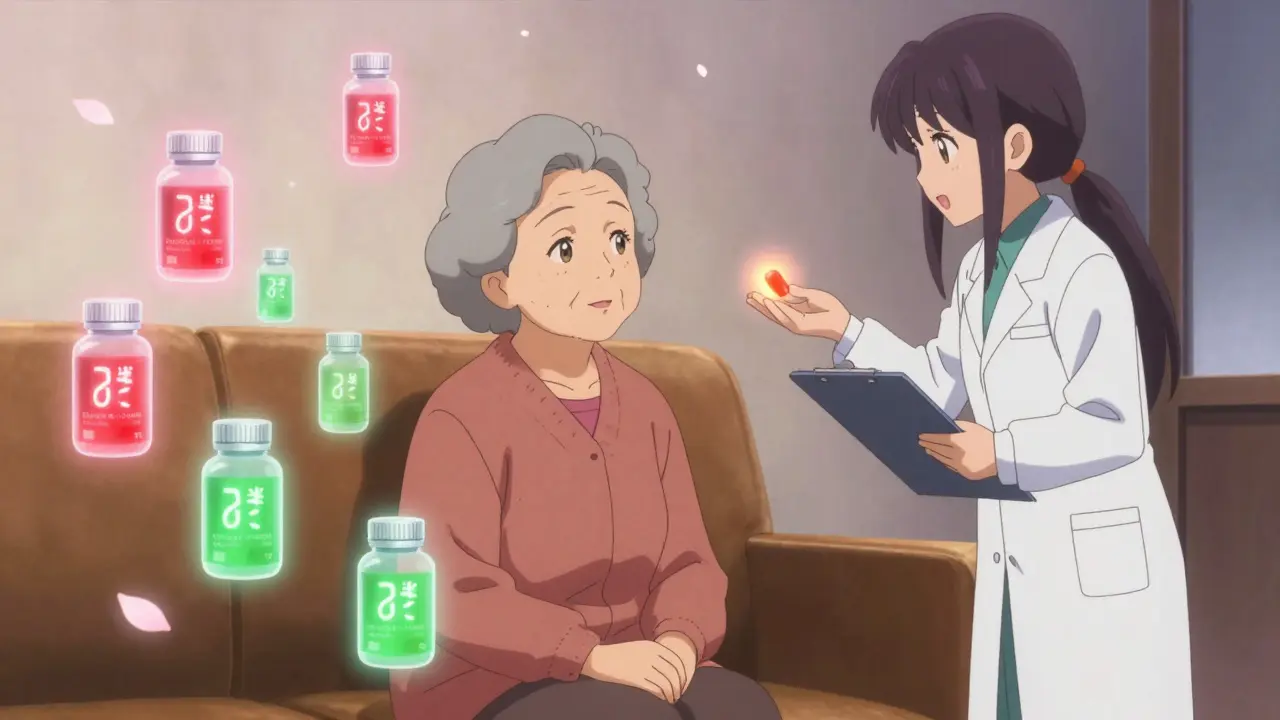
Every year, thousands of seniors end up in the hospital not because of a fall or infection, but because of a pill they were told to take. It’s not always a mistake - sometimes, it’s just a medication that was never meant for someone their age. That’s where the Beers Criteria comes in. Developed by the American Geriatrics Society, it’s not a suggestion. It’s a hard-edged, evidence-backed list of drugs that doctors should think twice - or even avoid - when treating adults 65 and older.
What Exactly Is the Beers Criteria?
The Beers Criteria isn’t some outdated pamphlet gathering dust. It’s a living, breathing guideline updated every three years, with the latest version released in May 2023. Think of it as a safety net for older adults who are often on five, six, or even ten different medications. While seniors make up just 13.5% of the U.S. population, they take 34% of all prescription drugs. That’s a recipe for trouble if you’re not careful.
The list was first created in 1991 by Dr. Mark Beers, a geriatrician who noticed how often nursing home residents were given drugs that did more harm than good. Today, it’s used by hospitals, pharmacies, and Medicare itself. The 2023 update reviewed over 7,300 studies - a 22% jump from the last version - and now includes 134 medications or classes flagged as potentially risky. Thirty-two new drugs were added; eighteen were removed because new data showed they were safer than once thought.
Five Ways the Beers Criteria Protects Seniors
The criteria doesn’t just say, “Don’t give this.” It breaks things down into five clear categories so doctors know exactly when to pause.
- Medications to avoid entirely - These are drugs with no safe use in seniors. First-generation antihistamines like diphenhydramine (Benadryl) and hydroxyzine fall here. They’re sedating, dry out your mouth, mess with your memory, and increase fall risk. Even OTC versions are on the list.
- Drugs to avoid with specific conditions - NSAIDs like ibuprofen and naproxen are fine for a healthy 40-year-old with a sprained ankle. But if you have heart failure, kidney disease, or high blood pressure? They can make it worse. The Beers Criteria says: skip them.
- Drugs to use with caution - These aren’t banned, but they need extra care. Dabigatran (Pradaxa), for example, is an anticoagulant that’s riskier than warfarin for people over 75 or with kidney issues. Dose matters. Monitoring matters.
- Dangerous combinations - Some drugs are fine alone but deadly together. Mixing opioids with anticholinergics? That’s a one-two punch for constipation and confusion. Add in a benzodiazepine for anxiety? You’ve got a perfect storm for falls and hospitalization.
- Renal dosing red flags - Kidneys slow down with age. Gabapentin, metformin, and many antibiotics need lower doses. The 2023 update expanded guidance here, but only 68% of kidney-cleared drugs currently have specific dosing rules. That’s changing in 2026.
Why It Matters More Than Ever
It’s not theoretical. One in five seniors takes at least one drug flagged by the Beers Criteria. That’s 23% of community-dwelling older adults. And it’s not just about side effects - it’s about hospital stays. Nearly 15% of all senior admissions are linked to inappropriate prescribing. In fact, a 2021 study showed that when clinics used the Beers Criteria to review meds, adverse drug events dropped by 28%.
Medicare Part D now requires pharmacies to screen dual-eligible beneficiaries (those on both Medicare and Medicaid) for Beers-listed drugs. If you’re on eight or more medications, your pharmacist is legally required to flag risky combinations. That’s not a suggestion - it’s a rule.
And it’s working. One clinic in Florida cut benzodiazepine prescriptions for insomnia in patients over 75 by 43% after adding Beers alerts to their electronic records. That’s 43% fewer seniors waking up dizzy, falling, or getting confused.

What the Beers Criteria Doesn’t Do
It’s not perfect. And it’s not meant to be a one-size-fits-all rulebook.
For example, antipsychotics like risperidone are flagged as inappropriate for dementia-related agitation. But what if a patient is violent, hallucinating, and at risk of hurting themselves or others? Sometimes, the risk of not using the drug is greater than the risk of using it. The Beers Criteria doesn’t say “never.” It says “be careful.”
Another blind spot? Cost. Dr. Jerry Avorn from Harvard points out that 25% of seniors skip doses because they can’t afford their meds. If a cheaper, Beers-listed drug is the only option, the criteria doesn’t help you decide what to do. It just says: “This is risky.”
And then there’s alert fatigue. One primary care doctor on Medscape said his EHR throws up 12 Beers alerts per patient visit. Some are critical. Most are noise. When you’re seeing 20 patients a day, you start ignoring them.
What’s New in 2025: The Alternatives List
The 2023 update didn’t just list bad drugs - it started offering better ones. In July 2025, the American Geriatrics Society released a companion guide: Alternative Treatments to Selected Medications in the 2023 Beers Criteria.
Now, when a doctor sees a patient on diphenhydramine for sleep, they don’t just get a warning. They get options:
- For insomnia: Cognitive behavioral therapy for insomnia (CBT-I) - proven to work better than sleep meds long-term.
- For overactive bladder: Pelvic floor exercises, timed voiding, bladder training.
- For chronic pain: Physical therapy, acupuncture, low-dose topical lidocaine.
There are 147 alternatives listed - 78 of them non-drug. That’s the real shift: the Beers Criteria is no longer just about what to avoid. It’s about what to replace it with.

How It’s Used in Real Clinics
Pharmacists are the frontline. In 89% of cases, pharmacists say the Beers Criteria helps them catch dangerous prescriptions during medication reviews. Hospitals that assign pharmacists to review every senior’s drug list see 37% fewer inappropriate prescriptions within six months.
Electronic health record systems like Epic have built Beers alerts directly into prescribing workflows. When a doctor tries to write a prescription for chlorpromazine (an old antipsychotic) to an 80-year-old, the system pops up: “High risk for QT prolongation and falls. Consider alternatives.”
But adoption is still patchy. Only 41% of primary care practices consistently use the criteria. Why? Lack of training. Time. Outdated systems. Many doctors still don’t know it exists.
The American Geriatrics Society offers a free 2.5-hour online course. Over 14,000 clinicians took it in 2023. They also have a free mobile app with quarterly updates. It’s been downloaded over 87,000 times. Each use saves an average of 8.2 minutes per patient - time that can be spent talking to the person, not just typing in a script.
What Patients Need to Know
Most seniors have no idea their meds are being judged by a list like this. A 2023 survey found that 61% of older adults were unaware their prescriptions were being checked against the Beers Criteria. That’s a problem.
If you’re over 65 and on more than five medications, ask your doctor: “Are any of these on the Beers list?” Don’t be shy. Bring your pill bottles. Ask about alternatives. Ask if a non-drug option could work.
And if your pharmacist flags a drug - listen. They’re trained to spot these risks. A simple switch - from diphenhydramine to melatonin, or from ibuprofen to acetaminophen - can make a huge difference in how you feel, how steady you are, and whether you end up in the ER.
Looking Ahead
The future of the Beers Criteria is smart. The AGS is working with Google Health AI to build predictive models that flag patients at highest risk before they even get the prescription. By 2026, every medication cleared through the kidneys will have specific dosing guidance - no more guessing.
Pharmaceutical companies are responding too. Over 23 new “senior-friendly” drugs are in development, designed to replace Beers-listed ones. The market for these safer options is projected to hit $84 billion by 2027.
But the biggest win won’t be a new pill. It’ll be a conversation. One where a doctor doesn’t just write a script, but asks: “What’s your goal? What’s your risk? What else could help?”
The Beers Criteria isn’t about taking away medicine. It’s about giving seniors better choices - ones that keep them safe, independent, and in control of their own health.
What is the Beers Criteria used for?
The Beers Criteria is a clinical guideline used by healthcare providers to identify medications that may be unsafe or ineffective for adults aged 65 and older. It helps reduce the risk of adverse drug events, hospitalizations, and falls by flagging drugs with risks that outweigh their benefits in older populations.
Is Benadryl really unsafe for seniors?
Yes. Diphenhydramine (the active ingredient in Benadryl) is on the Beers Criteria list because it has strong anticholinergic effects. In seniors, it can cause confusion, memory problems, dry mouth, constipation, urinary retention, and increase the risk of falls. Even occasional use can be risky. Safer alternatives include melatonin or cognitive behavioral therapy for sleep.
Do all seniors need to stop these medications?
Not always. The Beers Criteria is meant to guide decisions, not make them. In some cases - like severe dementia-related agitation or end-of-life care - a flagged medication may still be necessary. The key is that the decision is intentional, not automatic. Always discuss risks and alternatives with your provider.
How often is the Beers Criteria updated?
The American Geriatrics Society updates the Beers Criteria every three years. The most recent version was published in May 2023, based on over 7,300 research studies. Updates are driven by new evidence on drug safety, effectiveness, and emerging alternatives.
Can I check if my meds are on the Beers list?
Yes. The American Geriatrics Society offers a free mobile app and pocket guide with the full 2023 list. You can also ask your pharmacist or doctor to review your medications against the criteria. Many electronic health records now include automatic alerts when a Beers-listed drug is prescribed.






11 Comments
Karianne Jackson
February 8, 2026 AT 23:03I swear, my grandma took Benadryl for years and then one morning she just didn’t wake up. They said it was a stroke. But I know. It was that little blue pill. 🤦♀️
Chelsea Cook
February 9, 2026 AT 09:27Oh honey, you think this is new? My auntie was on 11 meds and the pharmacist had to draw a diagram with crayons. They called it ‘The Great Pill Purge of 2022.’ Now she walks without a cane. 🙌 #BeersCriteriaSavesLives
Andy Cortez
February 10, 2026 AT 13:05lol so now we’re gonna ban all meds because old people can’t handle them? what’s next? taking away their tv remotes? i’ve seen way more seniors die from being told ‘no’ than from a little diphenhydramine. also, who wrote this? a pharma lobbyist? 🤡
Joseph Charles Colin
February 12, 2026 AT 09:07The 2023 Beers Criteria revision incorporated updated pharmacokinetic modeling for CYP450 metabolism in elderly populations, particularly regarding renal clearance thresholds. Notably, the inclusion of gabapentinoids under Category 5 reflects a recalibration of glomerular filtration rate (GFR) thresholds from <60 mL/min to <45 mL/min, aligning with recent KDIGO guidelines. This is a significant clinical advance.
glenn mendoza
February 12, 2026 AT 11:55It is with profound gratitude that I acknowledge the tireless work of the American Geriatrics Society in refining this vital tool. The Beers Criteria represents not merely a list, but a moral imperative-an ethical framework that affirms the dignity and safety of our elders. To advocate for thoughtful prescribing is to honor the very essence of compassionate care.
Randy Harkins
February 13, 2026 AT 22:28I love this so much 😊 I had no idea my mom’s sleep meds were on the list until her pharmacist sat down with us and said, ‘Let’s try melatonin first.’ She’s been sleeping better, no more falls, and she says she feels like herself again. Thank you for sharing this! 🙏💖
Tori Thenazi
February 14, 2026 AT 09:53Wait... so the government is using this list to control what seniors take? I’ve been reading about this... the CDC, Big Pharma, and Medicare are all connected. They’re slowly replacing natural remedies with ‘approved’ drugs so they can track us through our prescriptions. And now they want us to use an app? That’s how they get our data. Don’t be fooled. 🕵️♀️
Monica Warnick
February 15, 2026 AT 14:06I read the whole thing. It’s interesting. I didn’t know about the alternatives list. I wonder if they’ve considered homeopathy. I’ve heard some seniors do better with that. Also, I think the word ‘dementia’ is used too loosely. Maybe we should call it ‘cognitive shifting’ instead. Just a thought.
Ashlyn Ellison
February 17, 2026 AT 00:08My dad’s on four meds. Two of them are on the list. He’s 79. He’s also the most alert person I know. He does crossword puzzles daily, fixes his own sink, and still drives to the store. So... maybe the list is useful? But also maybe it’s just a suggestion? I don’t know. I’m just saying.
Frank Baumann
February 18, 2026 AT 02:50Okay, so here’s the real story-I work in a nursing home, and I’ve seen this firsthand. We had this one guy, 84, on five different sedatives. His family kept saying ‘he needs it’ because he was ‘restless.’ But he wasn’t restless-he was bored. So we started playing jazz music in the lounge, brought in a therapy dog, and got him into a painting class. Within three weeks? We took him off three of the meds. He painted a picture of a sunset. It’s on the wall now. The Beers list? It’s a start. But the real fix? Human connection. That’s what heals.
Alex Ogle
February 19, 2026 AT 02:42I’ve been a pharmacist for 22 years. I’ve seen the Beers Criteria change lives. But I’ve also seen doctors ignore it because their EHR throws 15 alerts at once. One of them told me, ‘I’m not reading all that noise.’ So I started printing out the list and taping it to their monitor. Now they look. It’s not perfect. But it’s the best tool we’ve got. And if it saves one fall? Worth it.