
When you pick up a prescription at the pharmacy, you might assume the pharmacist is just filling what the doctor ordered. But in many parts of the U.S., pharmacists are doing far more than that. They’re changing medications, starting new treatments, and even ordering lab tests-all legally, and often without calling the doctor first. This isn’t a future fantasy. It’s happening right now, and the rules vary wildly from state to state.
What Exactly Is Pharmacist Substitution Authority?
Pharmacist substitution authority means a pharmacist can make changes to a prescription without going back to the prescriber. It’s not about making mistakes. It’s about using clinical judgment to improve safety, lower costs, or increase access. The most basic form is generic substitution. In every state, if a doctor writes a prescription for a brand-name drug and doesn’t say "dispensed as written," the pharmacist can swap it for the cheaper generic version. That’s been standard for decades.
But beyond generics, things get more complex. Some states let pharmacists do therapeutic interchange. That means switching a drug to another one in the same class-not just a generic, but a different brand. For example, if a patient is on simvastatin and the pharmacist knows atorvastatin is more effective and better covered by insurance, they can switch it-if the doctor has approved it in advance. Only three states have clear laws allowing this: Arkansas, Idaho, and Kentucky. In Kentucky, the prescriber must write "formulary compliance approval" on the script. In Idaho, they must say "therapeutic substitution allowed." And in both cases, the pharmacist has to notify the doctor and get the patient’s consent.
Prescription Adaptation: Fixing Prescriptions Without a Doctor Visit
Imagine you’re a diabetic in rural New Mexico. Your blood sugar is out of control. You need to adjust your insulin dose. But the nearest clinic is 90 miles away. You can’t take time off work. You can’t afford the gas. What do you do?
In states that allow prescription adaptation, your pharmacist can change your dose-no doctor visit needed. This isn’t prescribing from scratch. It’s tweaking what’s already there, based on lab results, symptoms, or guidelines. States like Oregon, Washington, and Colorado have built this into their pharmacy practice acts. The pharmacist must follow a written protocol, document every change, and notify the prescriber within 24 hours. It’s not a loophole. It’s a safety net for people who can’t access care.
Collaborative Practice Agreements: The Secret Weapon
Most expanded authority in pharmacy doesn’t come from one big law. It comes from collaborative practice agreements (CPAs). These are legal contracts between a pharmacist and one or more physicians. They spell out exactly what the pharmacist can do: start a medication, adjust a dose, order a test, or stop a drug. These agreements exist in all 50 states and D.C., but their power varies.
In some states, CPAs are mostly for hospitals or clinics. In others, like Minnesota and North Carolina, pharmacists in community pharmacies use them to manage chronic conditions-hypertension, diabetes, asthma. One study in Minnesota showed that patients in CPA programs had better blood pressure control than those seeing only their doctors. The key? The agreement must include clear clinical decision rules. What’s the threshold for raising a dose? When do you refer? What labs need to be checked? Without these details, the authority is meaningless.
States Leading the Way: What’s Different?
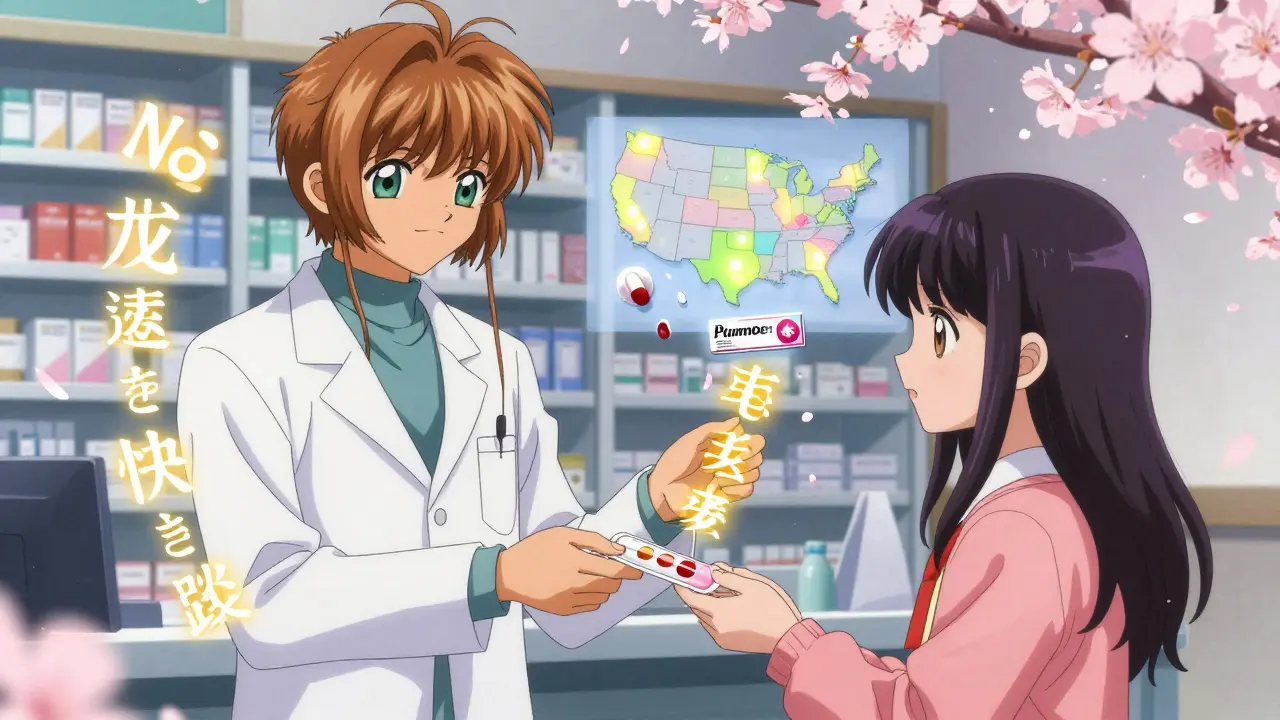
Not all states are moving at the same pace. Some are pushing hard. Maryland now lets pharmacists prescribe birth control to anyone over 18. Maine lets them sell nicotine patches without a prescription. California doesn’t use the word "prescribe"-they say "furnish." It’s semantics, but it matters legally. New Mexico and Colorado went even further. They created statewide protocols approved by the state pharmacy board. That means pharmacists can start certain treatments-like emergency contraception or flu shots-without needing individual agreements with doctors. The protocol is the rule.
Meanwhile, states like Texas and Florida still limit pharmacists mostly to generics and immunizations. The difference isn’t just politics-it’s geography. States with rural populations and fewer doctors have moved faster. The Health Resources and Services Administration says 60 million Americans live in areas with too few primary care providers. Pharmacists are stepping in where no one else can.
Why This Matters: Access, Equity, and Cost
Expanding pharmacist authority isn’t about giving pharmacists more power. It’s about fixing broken systems.
Take emergency contraception. In many rural counties, the nearest pharmacy that stocks Plan B is 40 miles away. If a pharmacist can’t dispense it without a prescription, a woman might wait too long-and lose the chance to prevent pregnancy. In states where pharmacists can dispense it directly, rates of unintended pregnancy drop.
The same goes for opioid overdose reversal. Naloxone is life-saving. But in places where you need a prescription to get it, people don’t carry it. States that let pharmacists give it out without a script have seen fewer overdose deaths.
And cost? Generic substitution saves billions. Therapeutic interchange can cut costs even more. A study from the University of North Carolina found that pharmacists switching patients from expensive brand-name drugs to cheaper, equally effective alternatives saved Medicaid $2.3 million in one year.
The Pushback: Who’s Against It?
Not everyone agrees. The American Medical Association still warns that pharmacists aren’t trained like physicians. They point to differences in education: pharmacists get four years of pharmacy school plus a residency. Doctors get four years of medical school plus three to seven years of residency. That’s true. But here’s the thing: pharmacists don’t need to be doctors to manage medications. That’s their specialty.
Another concern? Corporate influence. Big pharmacy chains like CVS and Walgreens are lobbying hard for expanded authority. Critics say they’re doing it to boost profits, not patient care. But the data doesn’t support that. Pharmacists in independent pharmacies are just as likely to use therapeutic interchange and CPAs. It’s not about who owns the store-it’s about the law.
Reimbursement is the real hurdle. Even in states where pharmacists can prescribe, Medicare and private insurers often won’t pay for it. Why? Because they don’t classify pharmacists as "providers." That’s changing. The federal Ensuring Community Access to Pharmacist Services Act (ECAPS) is now pending in Congress. If passed, it would require Medicare Part B to cover services like medication management, testing, and disease screening performed by pharmacists. That single change could unlock the whole system.
What’s Next?
The trend is clear: pharmacists are becoming frontline care providers. By 2025, 44 states introduced bills to expand their scope. Sixteen of them passed new laws. That’s unprecedented.
Next, we’ll see more states adopt statewide protocols like New Mexico. More CPAs will shift from physician-led to pharmacist-led. More insurers will start paying. And more patients will realize they don’t need to wait weeks for a doctor’s appointment-they can walk into the pharmacy and get help the same day.
The role of the pharmacist is no longer just counting pills. It’s about managing health. And that change? It’s already here.




11 Comments
phyllis bourassa
March 7, 2026 AT 21:48I love how pharmacists are finally getting the respect they deserve. I used to think they were just glorified cashiers, but after my grandma’s insulin dose was adjusted without a 3-hour drive to the clinic? I’m all in. They’re the unsung heroes of rural healthcare.
Ferdinand Aton
March 9, 2026 AT 12:21Nah, this is a slippery slope. Pharmacists aren’t doctors. Let them count pills, not prescribe insulin. Next thing you know, they’ll be doing appendectomies at the drive-thru.
Ian Kiplagat
March 9, 2026 AT 15:05Interesting. In the UK, pharmacists can do a lot too - especially with repeat prescriptions and minor ailments. But we don’t call it 'prescribing'. Just 'supplying under protocol'. 🇬🇧
Amina Aminkhuslen
March 10, 2026 AT 21:11This is the most goddamn beautiful thing I’ve read all year. Pharmacists are basically the last line of defense for people who can’t afford a doctor, live in the middle of nowhere, or work three jobs. They’re not just filling scripts - they’re saving lives with a clipboard and a caffeine buzz. 💯
amber carrillo
March 11, 2026 AT 02:39Expanding pharmacist authority improves access and reduces costs. This is a logical step forward in healthcare delivery.
Tim Hnatko
March 12, 2026 AT 08:32I’ve seen this firsthand. My neighbor, a diabetic, got her metformin dose adjusted by her pharmacist after her A1C came back high. No wait time. No copay. Just a quick chat and a new script. It’s not magic - it’s smart.
Aaron Pace
March 12, 2026 AT 18:29I’m all for it but… can pharmacists do my acne cream too? 🤔 I’m tired of waiting 6 weeks for a dermatologist appointment. Also, can they order my lab tests? I need to know if my B12 is trash 😅
Joey Pearson
March 14, 2026 AT 09:34You’re doing amazing work. Keep pushing. This change is long overdue. People need this. You’re making a difference.
Roland Silber
March 14, 2026 AT 13:28I’ve been a pharmacist for 18 years. We’ve been trained for this. We know drug interactions, pharmacokinetics, contraindications. We’re not replacing doctors - we’re complementing them. The real issue? Insurance won’t reimburse us. That’s the bottleneck, not the training.
Patrick Jackson
March 15, 2026 AT 13:53Think about it - we’ve turned healthcare into a maze of paperwork, waitlists, and $$$ barriers. But walk into a pharmacy? You get a human. A trained one. Who remembers your name. Who knows your meds. Who can spot a dangerous interaction before it kills you. This isn’t just policy. It’s humanity. 🤝❤️
Adebayo Muhammad
March 15, 2026 AT 21:10But... but... what about the Hippocratic Oath?! Who authorizes the pharmacists?! The state? The state?! The state is a corporation! The state is a proxy for capital! And now, with these 'protocols' and 'CPAs' - we are surrendering clinical autonomy to corporate pharmacy chains! This is not progress - this is commodification! 🤯📉