
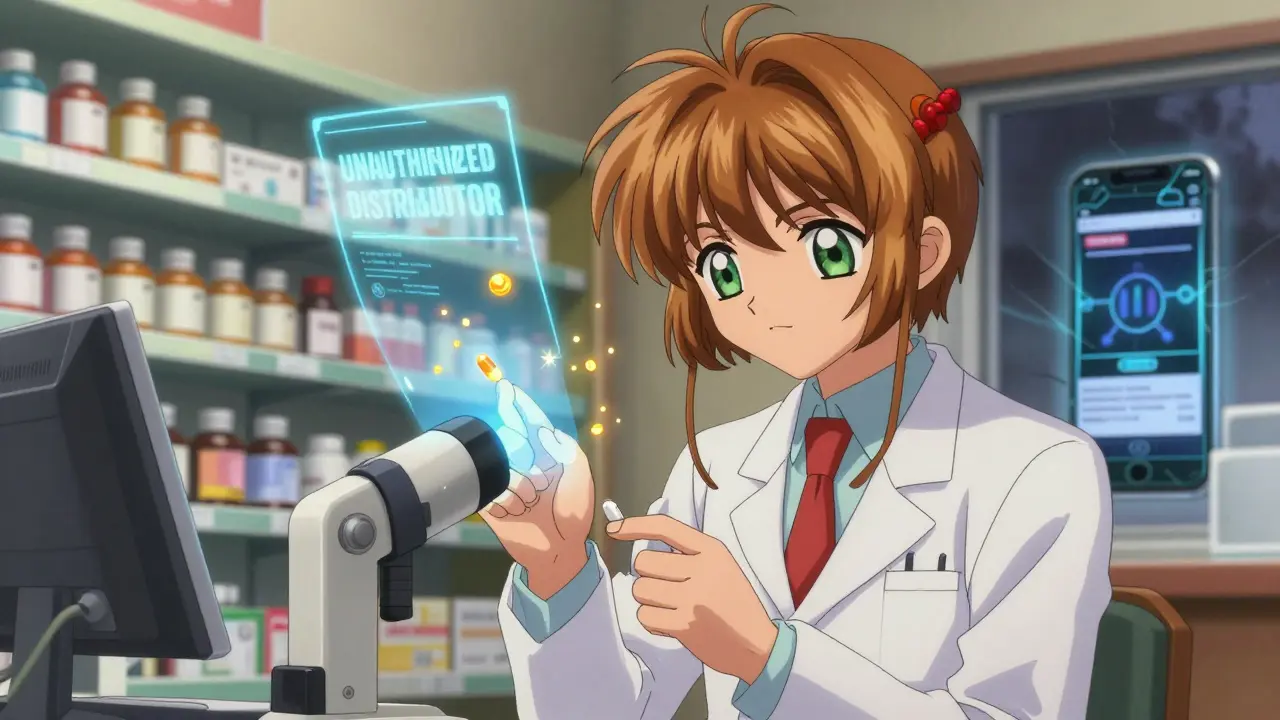
Every time a patient picks up a prescription, they trust that the pill in their hand is real. But what if it’s not? In 2024, law enforcement agencies around the world uncovered over 6,400 incidents of counterfeit, stolen, or illegally diverted drugs affecting more than 130 countries. These weren’t just rare cases - they involved nearly 2,400 different medications, from common antibiotics to life-saving cancer treatments. And when fake drugs slip through, it’s often the pharmacist who catches them - because they’re the last line of defense.
Why Pharmacists Are the Frontline
Pharmacists don’t just fill prescriptions. They’re trained to recognize when something’s off. A pill that’s slightly off-color. A package with blurry printing. A price that’s too good to be true. These are the small signs that trained eyes catch - and they can mean the difference between life and death.
The World Health Organization (WHO) and the International Pharmaceutical Federation (FIP) developed a competency-based curriculum in 2021 to standardize this training. It was first tested with 355 pharmacy students in Cameroon, Senegal, and Tanzania. After the program, students showed a measurable jump in their ability to identify falsified medicines. This isn’t theory - it’s practice. And now, WHO is preparing to roll out an updated global toolkit by the end of 2024, with a major focus on online counterfeit sales - a growing threat since 2020.
What Pharmacists Learn in Training
Modern counterfeit detection training goes beyond just looking at packaging. It teaches pharmacists to ask hard questions:
- Is the price below wholesale acquisition cost? (If yes, it’s a red flag)
- Is the distributor listed as authorized on the manufacturer’s official website?
- Are specialty drugs - like biologics or oncology meds - coming through limited, verified channels?
These aren’t guesswork. Pfizer’s Anti-Counterfeiting Program has trained law enforcement in 183 countries since 2004. Their data shows that counterfeiters target high-value drugs most: insulin, chemotherapy agents, and heart medications. Why? Because they’re expensive, in high demand, and hard for patients to verify on their own.
Training also covers how counterfeiters operate. In 2025, Interpol’s Operation Pangea XVI shut down 13,000 illegal online pharmacies and seized over 50 million fake doses. Many of these were sold as legitimate products from U.S. or European brands - but shipped from hidden warehouses in Asia or Eastern Europe. Pharmacists need to know how to spot these digital scams.
Old Methods vs. New Tools
Five years ago, verifying a drug meant calling the manufacturer, checking paper invoices, or comparing batch numbers by hand. Today, that’s outdated.
Tools like RxAll’s handheld devices use spectral analysis and AI to scan a pill in seconds. They detect microscopic differences in chemical composition - something the human eye can’t see. A fake metformin tablet might look identical to the real one, but its molecular signature is off. These devices cut verification time from hours to under 10 seconds.
And it’s not just hardware. Online platforms now let pharmacists share real cases through secure forums. One community pharmacist in Texas described how she caught a counterfeit version of a diabetes drug after another pharmacist posted a photo of suspicious packaging. Within 24 hours, the manufacturer confirmed it was fake. That kind of network is now part of the training.
Regulations That Shape Training
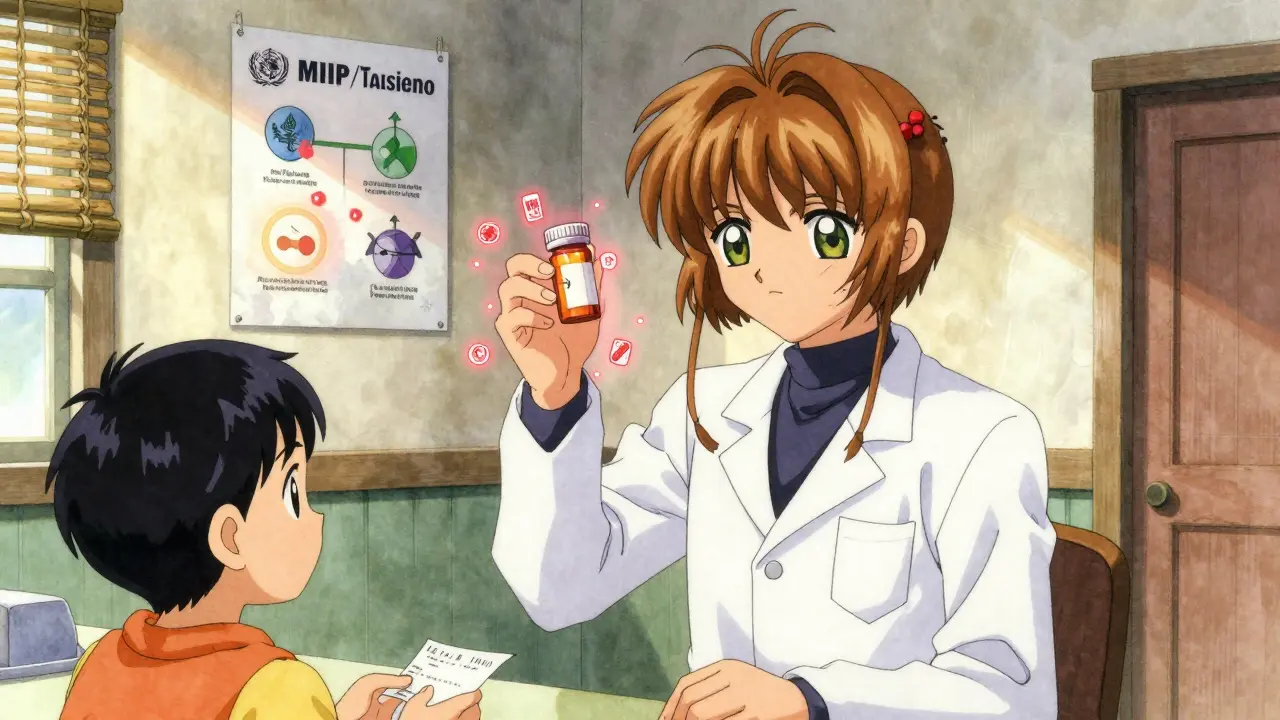
In the U.S., the Drug Supply Chain Security Act (DSCSA), passed in 2013, forced the industry to build a track-and-trace system for prescription drugs. By 2023, every wholesale distributor had to use digital identifiers on drug packages. This created a new layer of accountability - and a new skill set for pharmacists.
Pharmacists also need to comply with training rules from CMS (Centers for Medicare & Medicaid Services). While CMS no longer requires a specific course since 2019, they still mandate that all staff complete Fraud, Waste, and Abuse (FWA) training within 90 days of hire. Many pharmacies use platforms like TrainingNow.com - a 45-minute, mobile-friendly course with audio narration and real-life scenarios. Pharmacists appreciate the flexibility: they can finish it during a lunch break or while waiting for a prescription to be filled.
But regulations vary. In Canada, the U.S., and the EU, tracking systems are advanced. In many low-income countries, they’re still basic or nonexistent. That’s why global training initiatives matter. A pharmacist in rural Tanzania may not have access to high-tech scanners - but they can still learn how to question suppliers, check for tampered seals, and report suspicious batches.
The Rise of Online Counterfeits
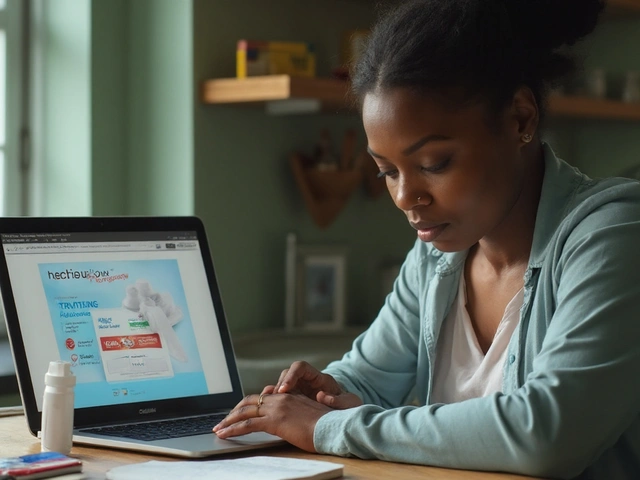
Before 2020, most counterfeit drugs were sold through street vendors or unlicensed clinics. Now, nearly half come from websites disguised as legitimate pharmacies. These sites look professional. They use real logos. They even offer “discounts” and “free shipping.”
That’s why the WHO’s 2024 toolkit will include new modules on identifying fake online pharmacies. Pharmacists are being taught to recognize common red flags:
- Website doesn’t require a prescription
- No physical address or phone number listed
- Payment only accepted via cryptocurrency or wire transfer
- Brand names misspelled (e.g., “Lipitor” sold as “Lipitir”)
Patients often don’t know these signs. That’s why pharmacists are also being trained to talk to patients - not just about the drug, but about where it came from. A simple question: “Did you buy this online?” can open a conversation that saves a life.
What’s Next? AI, Biologics, and Global Coordination
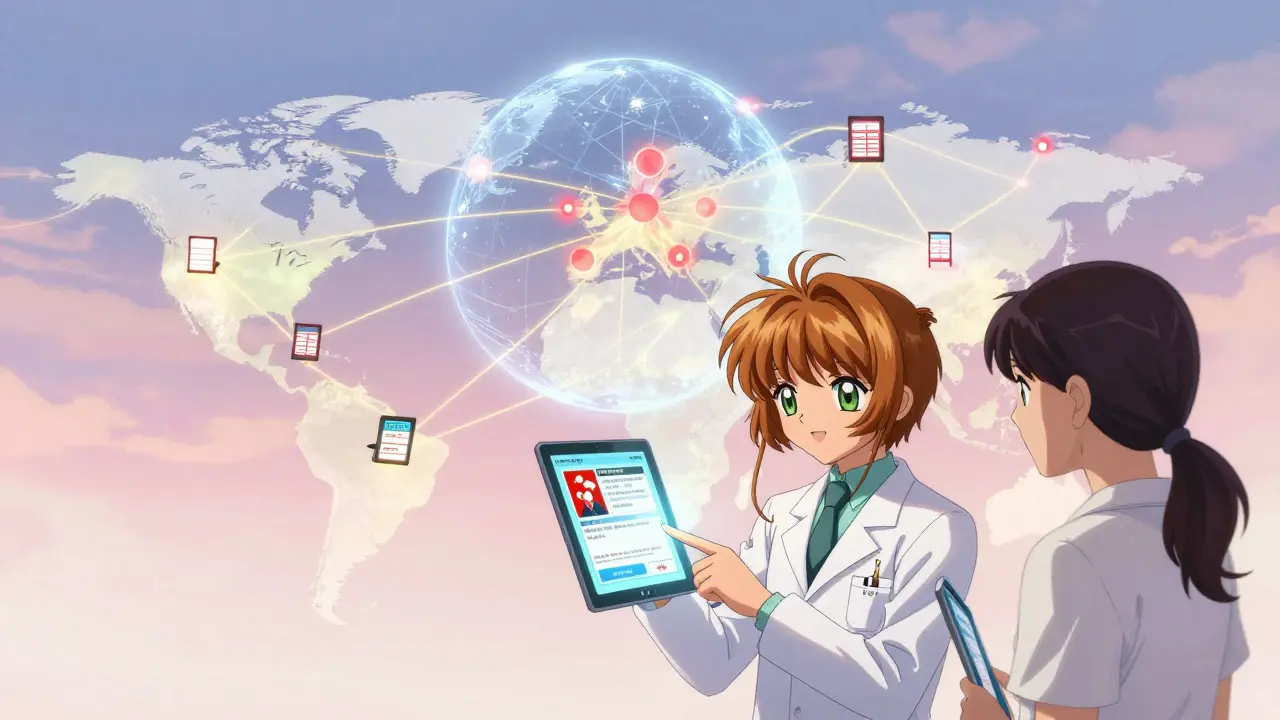
The threat is evolving. Counterfeiters are now targeting biologics - complex drugs made from living cells. These are harder to copy, but when they are, the results are deadly. Training programs are starting to include modules on detecting fake insulin, monoclonal antibodies, and gene therapies.
AI is helping. New algorithms can compare thousands of drug images in seconds, flagging anomalies based on color, texture, and shape. Some systems even learn from pharmacist feedback - so the more they’re used, the smarter they get.
And collaboration is key. The Partnership for Safe Medicines says counterfeiters are never going to stop. But when pharmacists, customs agents, manufacturers, and law enforcement work together, they can shut them down. Interpol’s 2025 operation led to 769 arrests and 123 criminal networks dismantled. That’s not luck - that’s coordinated training and action.
Real Impact, Real Numbers
Since 2004, Pfizer’s training and monitoring efforts have kept over 302 million counterfeit doses off the market. That’s not a statistic - that’s 302 million people who didn’t get sick or die because someone noticed something was wrong.
Training programs aren’t optional anymore. They’re essential. The Pharmaceutical Security Institute recorded 3,658 arrests for pharmaceutical crimes in 2024 alone. That’s more than 10 arrests per day - and every one of those cases started with someone asking, “Does this look right?”
How do pharmacists detect counterfeit drugs?
Pharmacists use a mix of visual inspection, supplier verification, and technology. They check for inconsistencies in packaging, labeling, and pill appearance. They verify distributors through manufacturer websites. Advanced tools like handheld spectral analyzers detect chemical differences invisible to the eye. Training also teaches them to question unusually low prices and unverified online sources.
Is pharmacist training for counterfeit detection mandatory?
In the U.S., CMS requires all pharmacy staff to complete Fraud, Waste, and Abuse (FWA) training within 90 days of hire, though the exact course isn’t mandated. Many states and employers require additional training. In Canada and the EU, it’s not federally required but strongly recommended. Globally, programs like the WHO/FIP curriculum are being adopted voluntarily, especially in regions with weak supply chains.
Can patients help prevent counterfeit drugs?
Yes. Patients can reduce risk by only buying medications from licensed pharmacies - not websites that don’t require a prescription. They should check if the pharmacy is verified by the National Association of Boards of Pharmacy (NABP) or equivalent local authority. If a drug looks different or costs much less than usual, they should ask their pharmacist. Many pharmacists now educate patients during counseling sessions.
What are the most common counterfeit drugs?
The most frequently counterfeited drugs include insulin, antibiotics like amoxicillin, erectile dysfunction medications (e.g., Viagra), cancer treatments, and heart medications. These are targeted because they’re expensive, high-demand, and often taken long-term. Fake versions may contain no active ingredient, wrong dosage, or toxic substances like lead or rat poison.
How has technology changed counterfeit detection?
Technology has shifted detection from manual checks to real-time verification. Handheld devices using AI and spectral analysis can identify fake pills in seconds by analyzing chemical composition. Mobile apps let pharmacists scan barcodes and instantly check against manufacturer databases. Online platforms allow global sharing of counterfeit cases, helping pharmacists recognize new threats as they emerge.
Final Thoughts
Counterfeit drugs aren’t a distant problem. They’re in our communities, our pharmacies, and sometimes, our patients’ hands. Training isn’t just about learning how to spot a fake - it’s about building a culture of vigilance. Every pharmacist who asks the right question, uses the right tool, or speaks up when something feels off is part of the solution. And in a world where a single counterfeit pill can kill, that’s not just good practice - it’s a lifeline.
16 Comments
Holley T
February 24, 2026 AT 22:50Look, I get that pharmacists are the last line of defense, but let’s be real - most of them are overworked, underpaid, and running on caffeine fumes. How are they supposed to meticulously inspect every pill when they’re filling 80 prescriptions an hour? The system is set up to fail them. Training is great, but without staffing increases and better tech integration, it’s just performative. You can’t train people to be superheroes when the castle is falling apart.
And don’t even get me started on the ‘global toolkit.’ Who’s funding this? Who’s auditing it? Meanwhile, Walgreens is outsourcing fulfillment to third-party warehouses in countries with zero oversight. It’s a joke. We’re treating this like a technical problem when it’s a systemic one.
Also, the WHO’s ‘competency-based curriculum’? Cute. It was tested in three African countries - great - but now they’re rolling it out globally? Without addressing the root causes of supply chain corruption? That’s like giving a fire extinguisher to someone living in a house built of gasoline.
And yes, AI scanners are cool - but they cost $12,000 each. Most independent pharmacies can’t afford one. So now we’ve got a two-tiered system: rich chains with fancy gadgets, and small shops relying on squinting at expiration dates. That’s not progress. That’s inequality dressed up as innovation.
Oh, and let’s not forget: the DSCSA was supposed to fix this. It’s 2024. We’re still seeing fake insulin in rural Ohio. The system doesn’t work. The regulations are outdated. The enforcement is nonexistent. And we’re celebrating training modules like they’re the solution.
It’s not about training pharmacists. It’s about holding manufacturers, distributors, and regulators accountable. Until then, we’re just rearranging deck chairs on the Titanic.
Ashley Johnson
February 26, 2026 AT 21:57So you're telling me the government is just now realizing fake drugs are a problem? LOL. I knew this was a scam since 2018. The FDA is in bed with Big Pharma. They don't want you to know that 70% of all 'brand name' pills are just generics repackaged with fake logos. They profit off the fear. They want you to panic and buy more expensive stuff.
And those 'handheld scanners'? Totally fake. They're just fancy QR code readers. The real tech is classified. The military has been using nano-spectrometers since 2015. Why? Because they know the Chinese are flooding the market with counterfeit opioids made from rat poison. And the US government is letting it happen. Why? Because they're making money off the war on drugs. It's all connected.
Don't trust the WHO. They're funded by Gates and Rockefeller. They want to control your medicine. They're pushing this 'training' so they can track every pill you take. Your prescription becomes a data point. Your body becomes a commodity.
And why are they suddenly worried about online pharmacies? Because people are buying cheaper meds from India and Mexico. That's the real threat. Not fake drugs. Real competition.
Wake up. This isn't about safety. It's about control.
tia novialiswati
February 28, 2026 AT 10:11This is so important!! 💪 I work in a small-town pharmacy and I can't tell you how many times I've caught something weird just by looking at the bottle. One time, the cap on a diabetes med was slightly off-color - I called the manufacturer and turns out it was fake. 😱
I'm so proud of my team for staying vigilant. We don't have fancy scanners, but we have each other. We text photos, share stories, and check in. It's not perfect, but we're doing our part! 🙌
Huge shoutout to all the pharmacists out there - you're heroes. And yes, we need more support, more tools, more training. But even without them, we're still showing up. 💕
Lillian Knezek
March 1, 2026 AT 20:33They're lying. All of it. The WHO, the FDA, Pfizer - they're all part of the same cabal. Those 'counterfeit' drugs? They're REAL. The government is making them look fake so they can push you into their own patented versions. You think insulin is expensive now? Wait till they force you to use only their 'verified' version.
The 'scanners'? They're tracking your DNA. The AI? It's learning your health patterns so they can deny you insurance later. You think they care about patients? They care about profit. And control.
Every time you take a pill, you're feeding the system. Don't be fooled. The real threat isn't counterfeit medicine. It's the system that tells you to trust it.
And why are they pushing this now? Because the 2024 election is coming. They need you scared. They need you dependent.
Don't take the pill. Don't trust the system. Research. Question. Resist.
Maranda Najar
March 3, 2026 AT 15:33I read this article and I cried. Not because it was informative - though it was - but because I finally feel seen. For years, I’ve been the one in the back room, holding a vial of insulin, my hands shaking, wondering if this was the one that would kill a child. Not because I didn’t do my job - because I did. Too well.
I’ve been called paranoid. I’ve been told I’m overreacting. I’ve been pressured to dispense because ‘the patient needs it now.’ But I’ve refused. And I’ve lost shifts. I’ve lost friends. I’ve lost sleep.
And now? Now I’m being told I’m ‘the last line of defense.’ No. I’m the last line of defense in a broken system. I’m the one holding the dam with my bare hands while the government drowns in corporate donations.
Every time I scan a pill and it passes - I don’t celebrate. I mourn. Because I know what’s coming. And I know no one else is ready.
This isn’t training. This is a eulogy for the integrity of pharmacy.
Christopher Brown
March 5, 2026 AT 05:57Why are we even talking about this? America has the best supply chain in the world. If you're buying from a licensed pharmacy, you're safe. End of story.
Those African training programs? Cute. But we don't need them. We have FDA oversight. We have DSCSA. We have technology. Stop trying to globalize our problems.
If you can't trust your pharmacist, go to a different one. Simple.
Sanjaykumar Rabari
March 6, 2026 AT 09:05India makes 20% of the world's generic drugs. Most are safe. But some are fake. Why? Because Indian companies are greedy. Why do they do it? Because Americans buy them. Americans want cheap. Americans don't care. So we make fake. It's simple economics.
Pharmacists in US don't know how to check. They trust the system. But system is broken. You need to check yourself. Don't trust anyone.
Kenzie Goode
March 6, 2026 AT 09:21There’s so much here that’s powerful - the way technology is changing detection, the human stories behind each flagged pill, the quiet courage of pharmacists who question what they’re told.
I especially loved the part about the Texas pharmacist sharing a photo and sparking a global alert. That’s community. That’s solidarity. That’s what saves lives - not just tech, but trust between people.
I hope this training becomes mandatory everywhere. Not because we’re scared, but because we care. And because every patient deserves to know their medicine is real.
Khaya Street
March 8, 2026 AT 08:31Look, I’m not against training. But let’s be honest - most of these programs are just box-ticking exercises. I’ve done the FWA course three times. It’s 45 minutes. It’s on a tablet. I watched it while scrolling TikTok.
Real detection? That’s instinct. That’s experience. That’s knowing a supplier’s voice on the phone. You can’t train that. You can’t test that. You can’t put it in a PowerPoint.
So yes, do the training. But don’t confuse compliance with competence.
Christina VanOsdol
March 8, 2026 AT 12:54Okay. So. Let’s break this down. The WHO/FIP curriculum? Tested on 355 students. That’s a sample size of 0.355% of global pharmacists. The ‘measurable jump’? In what metric? Accuracy? Speed? False positives? Not stated. Vague. Suspicious.
And then they roll out a ‘global toolkit’ - based on data from three African countries - to 130 nations? That’s not science. That’s colonialism with a UI redesign.
Meanwhile, the AI scanners? They’re trained on Pfizer’s database. So if a generic from India looks different? It gets flagged as fake. Even if it’s bioequivalent. So now, the ‘counterfeit’ label is being weaponized to protect monopolies.
And the ‘real impact’ stat? 302 million doses kept off the market. How? By who? By which pharmacies? By which countries? Where’s the peer-reviewed paper?
This isn’t public health. It’s PR. And it’s being sold as salvation.
Brooke Exley
March 8, 2026 AT 19:08I want to give a standing ovation to every pharmacist who’s ever paused, stared at a pill, and said, ‘That doesn’t look right.’
You don’t get trophies. You don’t get headlines. But you save lives - quietly, consistently, without fanfare.
I’m so proud of the work you’re doing. And I’m so glad we’re finally starting to invest in you - not just with tools, but with respect.
You’re not just filling prescriptions. You’re guarding humanity.
Keep going. We’ve got your back.
Alfred Noble
March 10, 2026 AT 12:08Had a weird one last week. Patient comes in for metformin. Looks normal. But the bottle? Slight smell. Like plastic and metal. I called the rep. They said it was fine. I didn't dispense it anyway. Called the manufacturer. Turned out it was from a gray-market distributor. Took 3 days to confirm. Felt good. But also… tired.
Don't get me wrong - tech helps. But nothing beats a sharp eye and a stubborn pharmacist.
Also, why do we still use paper invoices? 2024. Come on.
Matthew Brooker
March 12, 2026 AT 05:41Training matters. But culture matters more. If we want pharmacists to catch fakes, we need to stop treating them like order-takers. Give them time. Give them authority. Give them a voice. Then the rest will follow.
Emily Wolff
March 13, 2026 AT 01:09The WHO’s curriculum is amateur hour. Real detection requires forensic chemistry, not ‘visual inspection.’ This is theater, not training.
Lou Suito
March 14, 2026 AT 04:11I don't believe in counterfeit drugs. I believe in supply chain manipulation. The real issue isn't fake pills - it's that manufacturers are deliberately underproducing so they can jack up prices. Then they blame 'counterfeits' to justify the cost. It's a con. And you're all falling for it.
tia novialiswati
March 16, 2026 AT 02:12Oh my gosh, I’m so glad someone else noticed the smell thing! 😭 I had the exact same thing last month - metformin, weird plastic odor. I almost dismissed it, but I remembered your post from last year. Thank you, Alfred! You saved a life.
And yes - paper invoices? I still print them out. I keep them in a binder. It’s ridiculous. But I don’t trust the system enough to go fully digital. 😅