
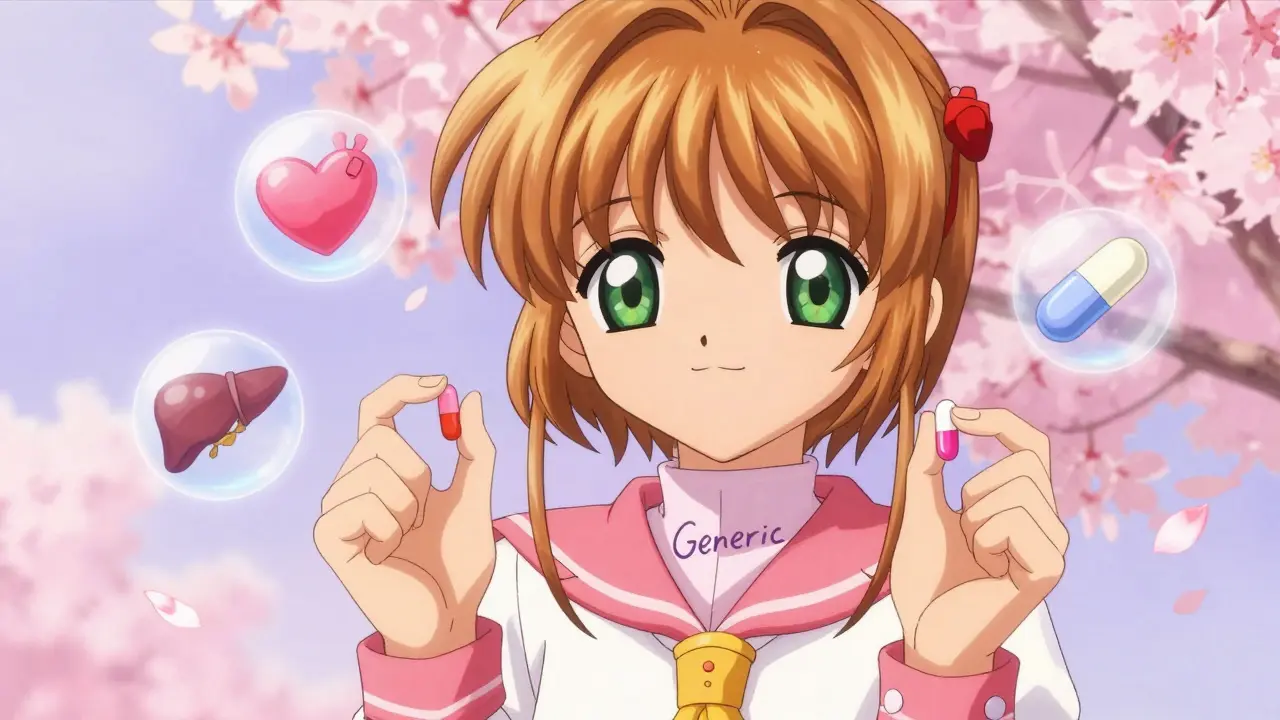
When you’re prescribed a new generic medication, how do you learn what it does, how to take it, or what side effects to watch for? For most people, it’s not the doctor’s office. It’s not the pharmacy pamphlet. It’s not even Google. It’s Instagram. TikTok. YouTube. Facebook groups. Social media has become the first stop for millions of patients trying to understand their medicines - especially generics.
Generics are the same as brand-name drugs in active ingredients, dosage, safety, and effectiveness. But they cost 80% less. That’s huge. Yet, many patients still don’t trust them. Why? Because they’ve never seen a clear, simple explanation of what generics really are. And they’re scared of getting something "inferior" - even though the FDA requires generics to meet the same standards as brand-name drugs.
That’s where social media education steps in. Not as ads. Not as sponsored posts. But as real, human-led content that answers the questions patients are already asking.
Why Patients Turn to Social Media for Medication Info
People don’t go to social media because they want to learn about pharmacology. They go because they’re worried. They’ve seen a friend post about a weird reaction. They’ve heard rumors online. They’re confused by the different pill colors or shapes. They need to know: "Is this the same as my old pill?"
According to a 2025 survey by the Canadian Health Information Network, 68% of adults over 18 have used social media to look up information about a medication they were prescribed. Of those, 73% said they trusted the information more if it came from someone who’d actually taken the drug - not a hospital brochure.
Platforms like TikTok and Instagram are where these conversations happen. Short videos show people comparing pill sizes. Reels explain how generics are approved. Stories answer FAQs like: "Why does my generic make me feel different?"
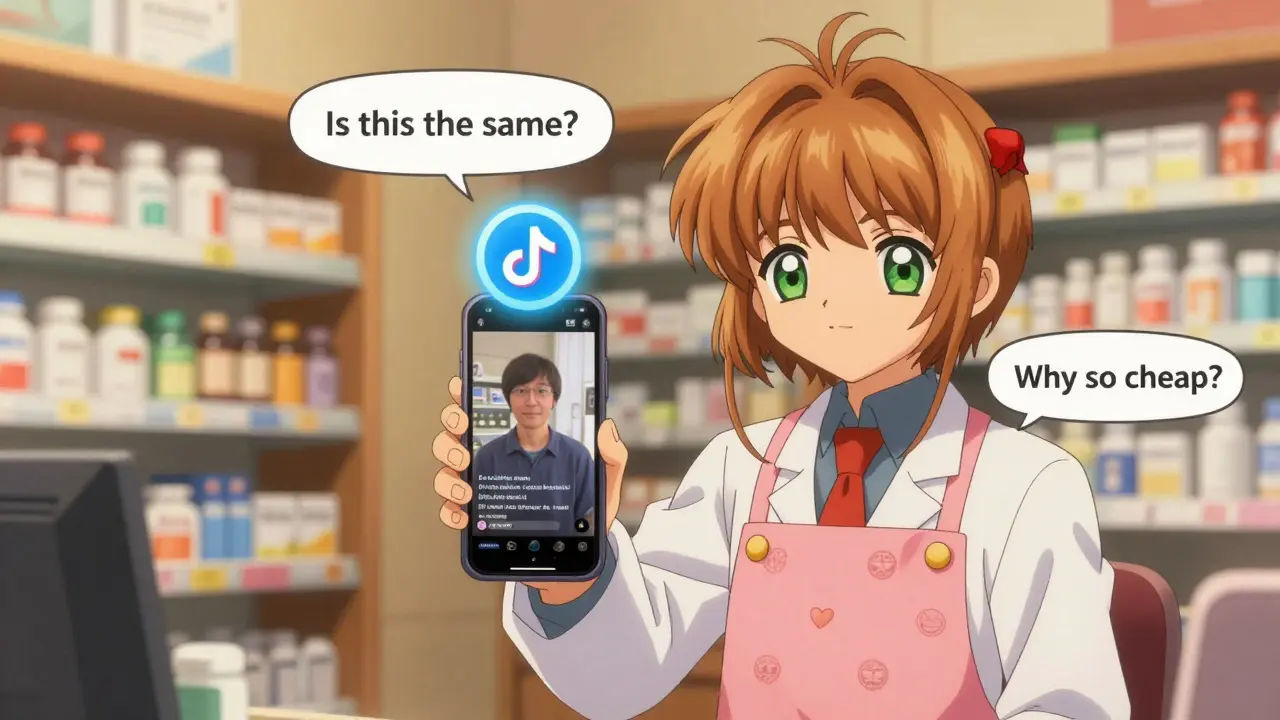
One post on TikTok by a pharmacist in Toronto - "Why your generic blood pressure pill looks different but works the same" - got 2.1 million views in 3 weeks. Comments flooded in: "I thought I was getting a cheap fake." "I stopped taking mine because it felt weaker." "Now I get it. Thank you."
How Social Media Platforms Are Used for Patient Education
Not all platforms work the same way. Each has its own role in patient education.
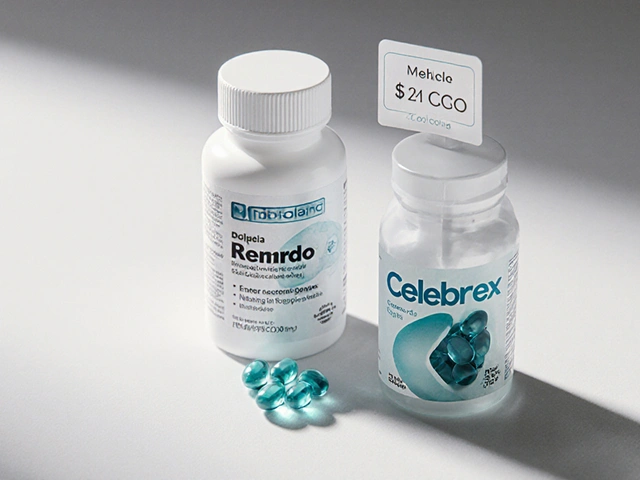
Instagram is where visuals win. A side-by-side photo of a brand-name pill and its generic, with labels showing identical active ingredients, gets more engagement than a 10-minute video. Instagram Stories with polls - "Have you ever refused a generic?" - spark real conversations. The new Broadcast Channels feature lets clinics send verified updates to thousands of followers at once.
TikTok is the fastest way to reach younger patients and those who distrust traditional sources. A 45-second video showing a pharmacist opening a generic bottle and reading the label aloud, then comparing it to the brand name, has a 4.2x higher completion rate than longer content. Captioned videos are essential - 89% of viewers watch without sound.
YouTube works for deeper dives. A 6-minute explainer on how the FDA approves generics, with real lab footage and patient testimonials, can build trust over time. Educational channels like "Medication Matters" now average 15.7 minutes of watch time per video - up from 12.3 minutes in 2024.
Facebook Groups are where patients share personal experiences. A group called "Generic Meds: Real Talk" has over 140,000 members. People post about side effects, cost savings, and how they switched from brand to generic. Moderators - often pharmacists or nurses - correct myths and link to official sources.
LinkedIn is less for patients, more for providers. Doctors and pharmacists use it to share research, post guidelines, and join discussions on drug accessibility. It’s where policy changes get discussed - like new rules requiring pharmacies to inform patients when they’re switching to a generic.
What Works: Real Examples from the Field
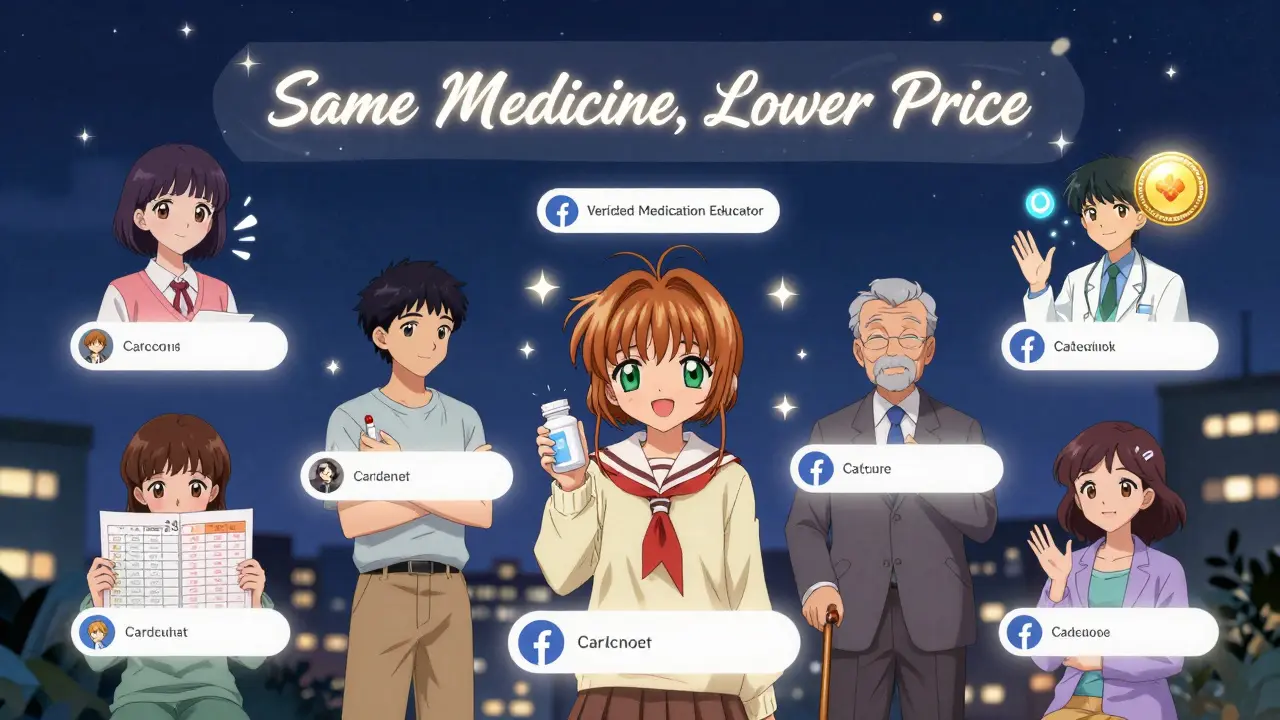
In Halifax, the Nova Scotia Pharmacy Association launched a social media campaign in early 2025 called "Same Medicine, Lower Price." They didn’t use fancy graphics or celebrity endorsements. They used real stories.
One video featured a single mom who saved $87 a month by switching her diabetes generic. Another showed a retired veteran who’d been taking the brand-name version for years - until his pharmacist sat down with him, showed him the FDA equivalence data, and helped him switch. He said: "I thought I was being cheated. Turns out, I was being helped."
They posted these on Instagram Reels and TikTok. Within six months, searches for "generic vs brand name Canada" increased by 127%. Calls to the provincial helpline about medication confusion dropped by 38%.
Another success came from a community pharmacy in Winnipeg. They trained their staff to record 60-second videos answering common questions: "Why does my generic make me sleepy?" "Can I switch back to the brand?" "Is this really the same?" They posted one per day. Engagement jumped 57%. Patients started tagging the pharmacy in their own posts.
What Doesn’t Work: The Mistakes Most Organizations Make
Not every social media effort helps. Some do more harm than good.
One hospital in Ontario posted a glossy brochure-style video titled "Our Generic Medication Program Is Safe and Effective." It had professional lighting, a calm voiceover, and a logo at the end. Comments were brutal: "This feels like an ad." "You’re trying to sell me, not teach me." "I don’t trust you."
That’s the authenticity paradox. Patients can spot when content is made to look official, not real. They want to hear from someone who’s been there - not a PR team.
Another mistake? Posting the same content everywhere. A Facebook post doesn’t work on TikTok. A long YouTube video won’t get traction on Instagram Stories. Cross-posting kills engagement. Each platform needs its own format.
And then there’s misinformation. In 2025, a viral TikTok claimed that "generic insulin causes kidney damage." It got 1.9 million views. The FDA had to issue a correction. But by then, thousands had stopped taking their meds.
That’s why verification matters. Some platforms now have educational content verification badges. Pharmacists who complete a 3-hour training can get a "Verified Medication Educator" label on their profile. It’s small - but it builds trust.
How to Start: A Simple Plan for Clinics and Pharmacies
You don’t need a big budget. You don’t need a marketing team. You just need to start where your patients are.
Step 1: Pick one platform. If your patients are 18-35, start with TikTok or Instagram. If they’re 50+, try Facebook Groups. Don’t try to do everything at once.
Step 2: Answer one question. What’s the #1 thing patients ask about generics? Write a 60-second video answering it. No jargon. No fluff. Just clear, honest info.
Step 3: Use captions. 92% of social video is watched without sound. Add clear, easy-to-read text.
Step 4: Invite real voices. Ask a patient who switched to a generic to share their story. Even a 15-second clip helps.
Step 5: Moderate. Set up a simple system to respond to comments. Correct myths. Thank people for sharing. Delete hate. Don’t ignore it.
Step 6: Track what works. Look at views, saves, shares. Not likes. People save content they want to remember. If a video gets saved more than 100 times, make more like it.
The Future Is Authentic, Not Perfect
Social media isn’t replacing doctors or pharmacists. It’s replacing silence.
For years, patients were left to figure out generics on their own - or worse, believe the myths. Now, they’re finding answers in real time, from real people.
The goal isn’t to make your clinic look perfect. It’s to make patients feel seen. To answer their fears with facts. To turn confusion into confidence.
By 2027, 41% of medication decisions will be influenced by social media content. That’s not a threat. It’s an opportunity. The clinics and pharmacies that show up - honestly, consistently, humanly - will be the ones patients trust.
It’s not about having the fanciest video. It’s about being the voice that says: "I get it. You’re scared. Let me help."
Are generic medications really as effective as brand-name drugs?
Yes. By law, generic medications must contain the same active ingredient, strength, dosage form, and route of administration as the brand-name version. They must also meet the same strict standards for purity, stability, and bioequivalence set by the FDA and Health Canada. Studies show generics work just as well - in fact, many are made in the same factories as the brand-name drugs. The only differences are in inactive ingredients (like color or filler), which don’t affect how the medicine works.
Why do some people feel different when switching to a generic?
Some patients report feeling different - like more tired, less effective, or more side effects - after switching. This is often due to psychological factors, like expecting the generic to be weaker. But it can also be caused by differences in inactive ingredients, which affect how quickly the drug is absorbed. For most drugs, this difference is tiny and harmless. But for narrow-therapeutic-index drugs (like warfarin or thyroid meds), even small changes can matter. That’s why pharmacists always check with your doctor before switching these types of medications.
Can I trust information about generics on TikTok or Instagram?
Some posts are accurate, some are misleading. Look for verified profiles - like pharmacists, nurses, or official health organizations. Check if the info matches what’s on Health Canada’s website or the FDA’s database. Avoid posts that say "This drug is dangerous" or "Never take this generic" without citing sources. If a video says "I was cured by this" or "This caused my cancer," it’s likely not reliable. Stick to content that explains how generics are approved, not personal horror stories.
How can I find reliable social media accounts for medication info?
Look for accounts run by licensed pharmacists, public health departments, or accredited hospitals. In Canada, check out @pharmacistsca (Canadian Pharmacists Association), @healthcanada, or your provincial pharmacy association. On YouTube, channels like "Medication Matters" and "Pharmacist Approved" are regularly reviewed by medical experts. Avoid accounts that sell products, push supplements, or use fear-based language like "big pharma is hiding this."
What should I do if I see false info about generics online?
Don’t just ignore it. If you’re a patient, comment with a fact: "I checked with my pharmacist - this generic is FDA-approved and works the same." If you’re a provider, post a clear correction. Many platforms now let verified health professionals flag misinformation. You can also report false content directly through the app. The more accurate info is out there, the harder it is for myths to spread.



11 Comments
Raushan Richardson
December 27, 2025 AT 23:04OMG I just switched my blood pressure med to generic last month and I was terrified-but I’ve felt better than ever. No more brain fog, cheaper copay, and my pharmacist even sent me a little card with the FDA equivalence chart. Why do we still treat generics like they’re second-class? 🙃
Liz Tanner
December 29, 2025 AT 18:49This is so important. My grandma refused her generic diabetes med for a year because she thought it was ‘fake.’ I showed her a TikTok from a pharmacist in Ohio-same pill, different color. She cried. Then she started saving $90 a month. Social media saved her life, quietly.
Nicola George
December 30, 2025 AT 14:25Let’s be real-most of these ‘educational’ posts are just pharma’s new ad budget with a filter. You think a 24-year-old in Lagos cares about FDA equivalency? They care about whether the pill makes them stop shaking. Stop overthinking it.
Janice Holmes
December 31, 2025 AT 03:33THEY’RE NOT THE SAME!! I switched to generic levothyroxine and I turned into a zombie for six weeks! My heart was racing, I couldn’t sleep, I cried for no reason. My doctor said ‘it’s placebo’-BUT MY BODY KNEW. The fillers are different, the absorption is different, and NO ONE TELLS YOU THIS. This is a public health crisis.
Olivia Goolsby
December 31, 2025 AT 21:17Of course you’re being manipulated-do you really think the FDA and Big Pharma aren’t using TikTok to quietly push generics so they can kill the brand-name market? They’ve been doing this since the 90s! The ‘same active ingredient’ line? That’s a lie. The bioequivalence window is 80%-125%-that’s a 45% swing! You could be getting a pill that’s half as strong-or worse! And don’t get me started on the Chinese factories…
James Bowers
January 2, 2026 AT 07:29While the anecdotal evidence presented is compelling, it lacks empirical rigor. The assertion that social media serves as a primary educational channel for pharmacological literacy is not substantiated by peer-reviewed longitudinal studies. Furthermore, the normalization of unvetted user-generated content as a proxy for clinical guidance represents a significant epistemological risk to public health.
Will Neitzer
January 2, 2026 AT 14:04It is both commendable and concerning that patients are turning to social platforms for essential medical information. While the humanization of healthcare through authentic storytelling is laudable, the absence of standardized verification protocols creates a dangerous information asymmetry. We must advocate for institutional partnerships with verified health professionals-not influencers-to ensure fidelity and safety in dissemination.
Babe Addict
January 3, 2026 AT 16:21Bro, you’re all missing the point. Generic meds are just brand-name drugs with the logo painted over. Same factory, same chemist, same everything. The only difference? The price tag and the placebo effect. People feel weird because they think they’re getting ripped off. It’s not the pill-it’s the mindset. Also, if you’re on warfarin, yeah, stick to brand. But for 95% of meds? Chill.
Robyn Hays
January 5, 2026 AT 13:20I used to think generics were sketchy too-until I started asking my pharmacist questions and found out my anxiety med was made in the same plant as the brand. I started filming little 30-second clips of us talking about it and posted them on Instagram. People started DMing me: ‘Can you explain my thyroid med?’ ‘What about my antidepressant?’ Now I’ve got a whole mini-series. Turns out, people just want to feel like they’re not alone in being scared.
Chris Garcia
January 5, 2026 AT 21:52Let us not forget that in the African context, where access to branded pharmaceuticals is often a luxury, generics are not merely an economic alternative-they are a lifeline. To dismiss the power of social media in this arena is to ignore the reality of millions who rely on community knowledge networks to survive. A grandmother in Lagos learns about her hypertension pill not from a pamphlet, but from her daughter’s Instagram story. That is not failure-it is adaptation. That is resilience. That is medicine, reimagined.
Alex Lopez
January 6, 2026 AT 05:12Wow. So the solution to misinformation is… more misinformation? Brilliant. Let’s just have random TikTokers explain bioequivalence while wearing glow-in-the-dark lab coats. /s I’m just saying-if you’re going to use social media, at least link to the FDA’s database in your bio. And maybe don’t say ‘trust me bro’ when someone asks about insulin. Just a thought.