
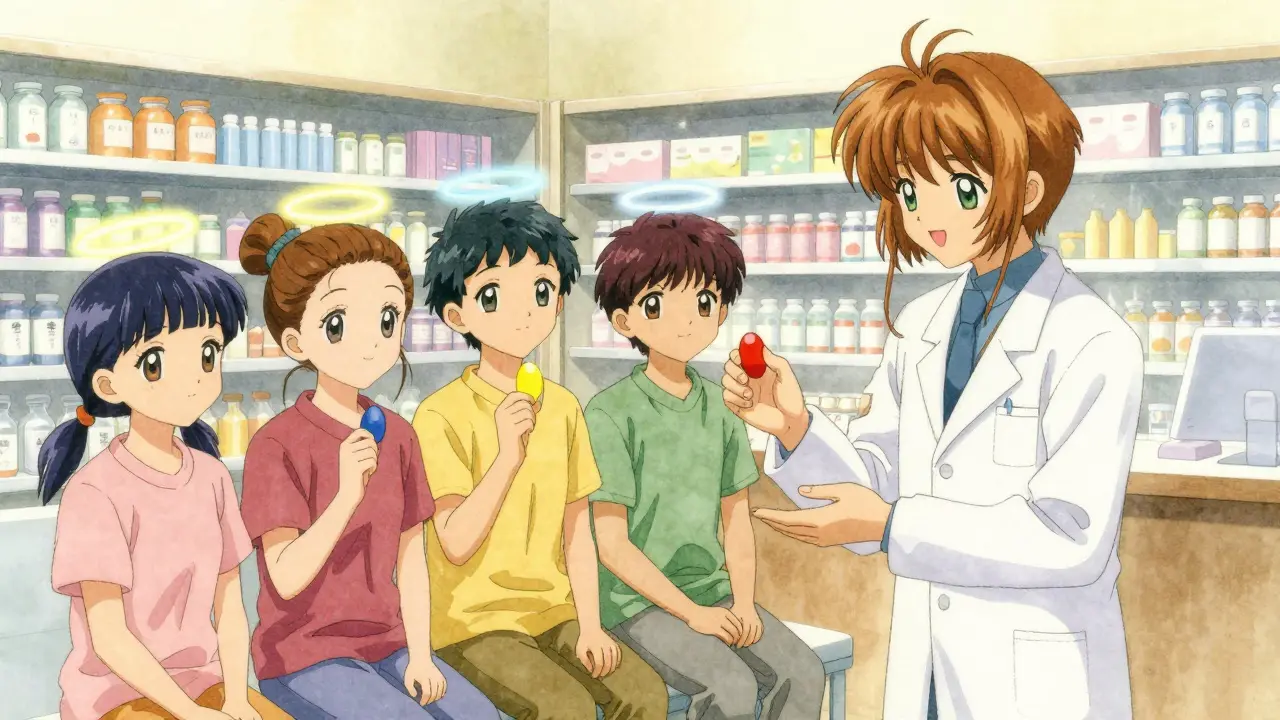
When a pharmacist hands you a small white pill instead of the blue one you’ve been taking for years, you might not think much of it. But for many people around the world, that change isn’t just about cost-it’s about trust, belief, and even faith. Generic medications are identical in active ingredients to their branded versions, but they often look different. And in some cultures, how a pill looks, what it’s made of, or even its color can make all the difference in whether someone takes it-or refuses it altogether.
Why Appearance Matters More Than You Think
In many cultures, the physical form of medicine carries meaning. A red pill might signal danger or illness in one community, while in another, it’s seen as powerful and healing. In parts of Asia, patients often associate bright colors with potency. A pale yellow tablet might be dismissed as weak, even if it contains the exact same dose of blood pressure medication as the branded version. In some African and Latin American communities, patients report avoiding generics because they look "too simple" or "cheap," believing the brand’s packaging means better quality. A 2022 FDA survey found that 28% of African American patients worried generics were less effective than brand-name drugs. Among non-Hispanic White patients, that number was just 15%. This gap isn’t about science-it’s about history. Decades of unequal treatment in healthcare, combined with limited access to clear information, have left many communities skeptical. When a patient sees a different pill every time they refill, it’s easy to wonder: Is this the same medicine? Or did someone give me the leftover stuff?What’s Inside the Pill: Religious and Cultural Ingredients
The active ingredient in a generic drug is strictly regulated. But the fillers, coatings, and capsules? Those are often different-and sometimes, they’re not acceptable in certain faiths. For example, gelatin is commonly used in capsules. It’s cheap, stable, and widely available. But for Muslims, gelatin made from pork is strictly forbidden. For Jews following kosher laws, gelatin from non-kosher animals is also off-limits. In both cases, even if the active drug is halal or kosher, the capsule can make the whole medication unacceptable. One pharmacist in Toronto told a story about a Muslim patient who refused a generic version of a diabetes pill because the capsule contained pork gelatin. The pharmacist spent two hours calling manufacturers and distributors to find a vegetarian alternative. Eventually, they found a liquid form made with plant-based capsules. But not every pharmacy has the time-or the resources-to do that. A 2023 study found that 63% of pharmacists in urban areas get questions about excipients at least once a week. Patients don’t always know the right questions to ask. They might say, "This pill feels different," or "I don’t trust this one." Behind that is often a deeper concern: "Does this violate my beliefs?"Language, Labels, and the Hidden Gaps in Patient Education
Instructions on a pill bottle might say "Take once daily," but if the patient reads only Spanish, Arabic, or Punjabi, that instruction might as well be in invisible ink. Many generic medications come with printed inserts in English only-even in cities where over half the population speaks another language at home. Even when translated, the wording can be misleading. In some cultures, the word "generic" carries a negative connotation, like "second-rate" or "imitation." In others, the idea of substituting a medication without the doctor’s direct approval feels like a betrayal of trust. Patients may not speak up because they fear being judged, or because they don’t know they have the right to ask for a different option. The Food and Drug Omnibus Reform Act (FDORA) of 2022 pushed for better communication with diverse populations. But the reality on the ground is still lagging. Only 37% of generic medication packages in the U.S. include full details about inactive ingredients. In the EU, that number is 68%. That means many patients are left guessing-about what’s in their medicine, and whether it’s safe for them to take.
What’s Being Done-And What’s Not
Some companies are starting to wake up. Teva Pharmaceutical launched its Cultural Formulation Initiative in 2023, aiming to document all excipients across 15 major drug categories by the end of 2024. Sandoz, the global generics arm of Novartis, announced a Global Cultural Competence Framework in early 2024 to make it easier for pharmacists to find culturally appropriate alternatives. A few pharmacy chains in Canada and the U.S. have created digital tools that let staff quickly check whether a generic version contains pork gelatin, alcohol, or other restricted ingredients. One chain in Toronto cut the time to find a halal alternative from two hours to under five minutes. But these are exceptions. Only 22% of community pharmacies in the U.S. have formal training programs on cultural considerations for generics. Most pharmacists learn on the job-through trial and error, or from a patient’s quiet complaint. The market is growing fast. Generics make up 70% of all medicines sold in Europe by volume. In the U.S., they’re the go-to for cost savings. But without cultural competence, that savings comes at a cost: lower adherence, worse outcomes, and deeper health inequities.What Patients Can Do
If you’re taking a generic medication and feel unsure:- Ask your pharmacist: "What’s in this pill besides the active ingredient?"
- Request a copy of the full ingredient list-especially if you follow religious dietary rules.
- Don’t assume the generic is the same as the brand just because it works the same. If it looks different and makes you uncomfortable, speak up.
- Ask if there’s a vegetarian, halal, or kosher version available.
- Request printed instructions in your preferred language.
What Pharmacies and Providers Can Do
Healthcare providers need to move beyond one-size-fits-all education. Here’s what works:- Train staff on common religious restrictions around gelatin, alcohol, and animal-derived ingredients.
- Keep a digital database of generic medications and their excipients-updated monthly.
- Offer multilingual patient education materials-not just translated, but culturally adapted.
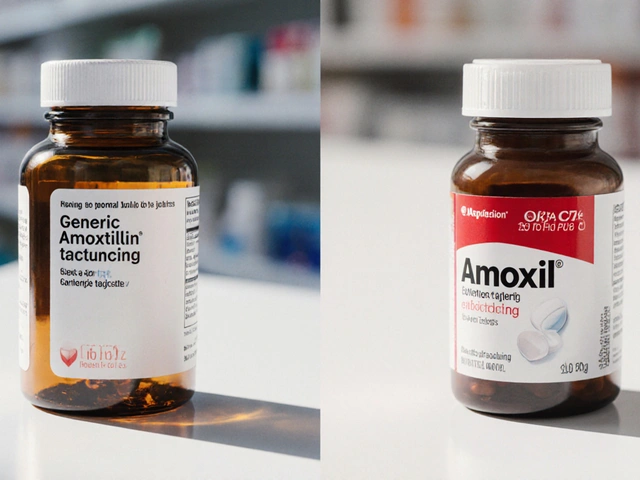
- When switching to a generic, explain why. Don’t just say "It’s cheaper." Say: "This has the same active ingredient as your old pill, but the shape and color changed because it’s made by a different company. It’s just as effective. Here’s the full list of ingredients."
- Partner with community leaders, faith groups, and cultural organizations to build trust.
The Bigger Picture: Culture Isn’t a Bonus-It’s Core to Care
Treating culture as an afterthought in pharmacy practice doesn’t just hurt patients-it wastes money. When people don’t take their meds because they don’t trust them, hospital visits go up. Complications rise. Life expectancy drops. Research shows that culturally competent care can improve adherence by up to 40% in minority populations. That’s not just a nice-to-have. It’s a lifeline. The global generic drug market is worth hundreds of billions. Companies like Teva, Sandoz, and Sun Pharma dominate it. But the real opportunity isn’t just selling more pills-it’s building trust. The next big innovation in generics won’t be a new chemical. It’ll be a pill that respects who you are.Medicine isn’t just about science. It’s about people. And people don’t live in a cultural vacuum. If we want generics to work-for everyone-we have to stop treating culture as a side note and start treating it as part of the prescription.
Why do some people refuse generic medications even when they’re cheaper?
Many people refuse generics because they believe the look, size, or color of the pill means it’s less effective. Cultural beliefs play a big role-some associate certain colors with healing or danger. Others worry about ingredients like gelatin that may come from pork or non-kosher animals. Past experiences with poor healthcare access or discrimination also make some communities distrustful of substitutions they didn’t ask for.
Are generic medications safe for Muslims and Jews?
Generic medications can be safe for Muslims and Jews, but only if the inactive ingredients-like gelatin, dyes, or alcohol-are halal or kosher certified. Many capsules use pork-based gelatin, which is not allowed in Islam or Judaism. Patients should ask their pharmacist for alternatives, such as plant-based capsules or liquid forms. Some pharmacies now keep lists of halal and kosher-approved generics to help with this.
How can I find out what’s in my generic pill?
Ask your pharmacist for the full list of inactive ingredients, also called excipients. This includes fillers, coatings, and capsule materials. Many U.S. generic labels don’t list these clearly, but pharmacists can often get the info from the manufacturer. In the EU, this information is required by law. If you’re unsure, request a printed fact sheet or check online databases maintained by some pharmacy chains that track halal, kosher, and vegetarian options.
Is it true that some cultures think different pill colors mean different strengths?
Yes. In parts of Asia, Latin America, and the Caribbean, patients often believe brighter pills are stronger. A pale yellow tablet might be seen as weak, even if it has the same dose as a bright blue one. This belief isn’t based on science-it’s cultural. That’s why changing the color of a generic pill can cause patients to stop taking it, even if the medicine is exactly the same.
What’s being done to fix this problem?
Some major generic drugmakers like Teva and Sandoz are now tracking excipient ingredients and developing cultural compatibility guides. A few pharmacy chains have built digital tools that let pharmacists quickly find halal, kosher, or vegetarian alternatives. Regulatory agencies are pushing for better labeling, especially after the 2022 FDORA law. But progress is slow-only 22% of U.S. pharmacies have formal training on these issues. Real change needs more funding, better data sharing, and patient education that speaks to cultural values, not just medical facts.



10 Comments
Gloria Parraz
December 20, 2025 AT 03:03When I first saw my blood pressure pill change from blue to pale yellow, I almost didn't take it. I thought they'd swapped my meds by mistake. Turns out, it was the same active ingredient-but the color made me feel like I was being given second-rate care. I didn't say anything until my mom asked why I looked so upset. She’s from Mexico and said her abuela would never take a "weak-looking" pill. That stuck with me. We treat medicine like it’s magic, not chemistry. And sometimes, that’s the real barrier to health.
Pharmacists should be trained to explain this upfront-not just say "it’s cheaper." We need to hear: "This is the same drug, just made by a different company. The color changed because they use different dyes. It’s not weaker. It’s not fake. It’s just different." That’s all it takes to rebuild trust.
I started asking for ingredient lists. I found out my generic had gelatin. I switched to a liquid. No more anxiety. Just peace of mind.
Sahil jassy
December 21, 2025 AT 15:12In India we dont care about color much but if capsule is made from pig fat we will not touch it even if its free. My uncle took a generic for diabetes and got sick because he didnt know the capsule had gelatin. He thought all pills are same. Pharmacist never told him. Now he only takes branded ones. Waste of money but better than dying
Kathryn Featherstone
December 21, 2025 AT 16:43I work in a community pharmacy in Chicago. We have patients from over 40 countries. One of the most common questions I get is: "Is this halal?" or "Does this have pork?" And honestly, most of us don’t know the answer. We don’t have a database. We don’t get training. We Google it during lunch. It’s ridiculous.
I started keeping a notebook. I write down which generics have plant-based capsules, which ones use alcohol-based dyes, which ones are kosher-certified. It’s not perfect, but now when someone asks, I can say, "I’ve got you." One woman cried because she’d been skipping her meds for six months because she thought all generics had gelatin. She didn’t know alternatives existed.
It’s not about politics. It’s about dignity. People deserve to take their medicine without having to choose between faith and health.
William Storrs
December 21, 2025 AT 17:50Let’s stop pretending this is just a "cultural issue." It’s a systemic failure. The FDA doesn’t require full ingredient disclosure on generics. Manufacturers don’t label them clearly. Pharmacists aren’t trained. Patients are left guessing. And then we act shocked when people don’t take their meds.
This isn’t about belief. It’s about transparency. If a pill has pork gelatin, say so. If it has alcohol, say so. If it’s made in a factory with no cultural awareness, say so. People aren’t irrational-they’re being lied to by silence.
Teach pharmacists. Fund databases. Mandate labeling. Stop treating culture like a bonus feature. It’s the foundation of care.
Nina Stacey
December 22, 2025 AT 04:26so like i just found out that my generic omeprazole has gelatin and i totally freaked out because i thought it was vegan and then i realized i never even asked and now i feel so dumb like why didnt i think to check before i took it for two years and also the bottle had no info in spanish even though i speak it better than english and the pharmacist just shrugged and said oh you can ask for a different one but no one ever does so they dont stock them and now i have to call three places to find one without gelatin and i just want to cry because its not fair that i have to work so hard just to take a pill that should be simple and why is this even a thing in 2024 like come on
also my mom says the yellow ones are for weak people and i used to think she was just being dramatic but now i get it and i think we need to stop acting like people are being silly when they say this stuff its not silly its survival
Kevin Motta Top
December 22, 2025 AT 23:17Culture isn’t a footnote in medicine. It’s the context. A pill doesn’t exist in a vacuum. It’s held in hands shaped by history, faith, and fear. If we want adherence, we need to meet people where they are-not where we assume they should be.
Simple fix: every generic package should have a QR code linking to a page listing all ingredients, certifications, and cultural notes in 10+ languages. Done. No excuse.
Chris porto
December 23, 2025 AT 00:23It’s interesting how we assign meaning to objects we don’t fully understand. A pill is just chemistry. But to the person holding it, it’s a symbol of safety, power, or betrayal. We’ve built a system that treats patients like data points, not humans with beliefs. Maybe the real problem isn’t the generic pill-it’s the arrogance of assuming everyone sees medicine the same way we do.
Science gives us the same active ingredient. But trust? That’s built slowly, through language, through listening, through respecting the invisible lines people draw around their bodies and beliefs.
Maybe the next big breakthrough isn’t a new drug. Maybe it’s a pharmacist who says, "Tell me what this means to you."
William Liu
December 23, 2025 AT 01:12I used to think generics were just a cost-saving trick. Then my cousin in Georgia stopped taking her heart meds because the new pill was white and she said "it looked like chalk." She didn’t say it was cheaper-she said it looked like it didn’t work. I asked her why she didn’t ask the pharmacist. She said, "They never ask if I’m okay. They just hand me the pill."
That hit me. We’re not failing because people are ignorant. We’re failing because we stopped listening.
mary lizardo
December 23, 2025 AT 09:38It’s astounding how this article romanticizes superstition under the guise of "cultural sensitivity." The fact that some individuals refuse scientifically identical medications because of color or gelatin is not a systemic failure-it’s a failure of education and personal responsibility. If you cannot distinguish between pharmaceutical science and folklore, perhaps you should not be making medical decisions. The FDA regulates efficacy-end of story. The rest is emotional indulgence masquerading as equity.
jessica .
December 23, 2025 AT 22:48Who is really behind this "cultural competence" push? Big Pharma wants you to think generics are unsafe so you keep buying their overpriced brands. This whole thing is a distraction. The real issue? The government is forcing pharmacies to switch to generics so they can cut Medicare costs. They don’t care if you believe in your pill-they care if you take it. And if you don’t? Well, that’s your fault for being "culturally sensitive."
Also, why do they keep saying "gelatin" like it’s some secret? It’s in every candy bar, every marshmallow. If you’re Muslim or Jewish, you should know that already. Stop blaming the system. Start reading labels. Or stop taking pills. Simple.