
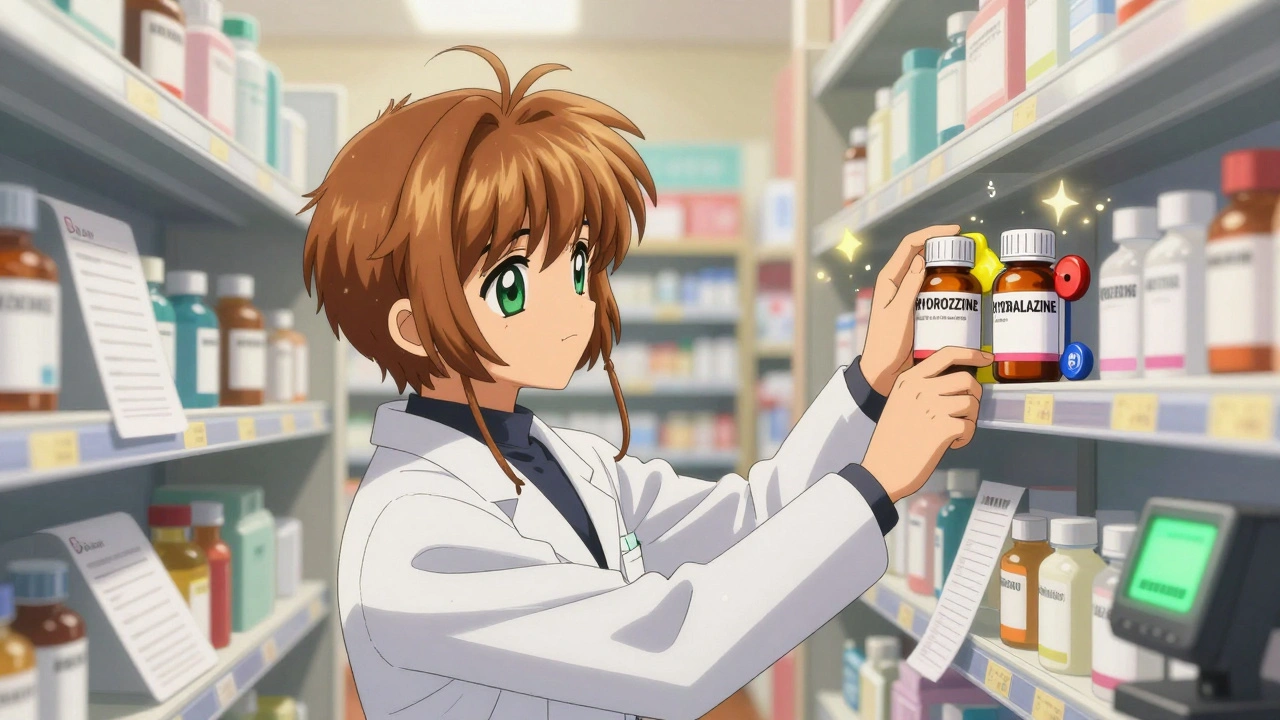
Every year, thousands of patients in the U.S. receive the wrong medication-not because of a mistake in prescribing, but because two pills look too much alike on the shelf. One bottle says hydralazine, another says hydroxyzine. One label reads spironolactone, another spiramycin. To the untrained eye, they’re nearly identical. In a busy pharmacy, under pressure, in dim lighting, it’s easy to grab the wrong one. And when you do, the consequences can be deadly.
Why Look-Alike Packaging Is a Silent Killer in Pharmacies
It’s not just about names that sound alike. It’s about packaging that looks alike. The same color, same font, same shape, same placement of text. The Institute for Safe Medication Practices (ISMP) reports that 20% of all medication errors stem from confusing packaging and labeling-not just similar drug names. That’s one in five errors caused by something as simple as how a bottle is designed.
In 2022-2023, over 10,000 medication errors in the U.S. were directly linked to look-alike/sound-alike (LASA) drugs. These aren’t theoretical risks. They’re real events: a patient given insulin instead of heparin, a child given a high-dose antihypertensive instead of an antibiotic. The U.S. Food and Drug Administration (FDA) estimates that these errors contribute to around 7,000 deaths annually.
And here’s the scary part: most of these errors happen in community pharmacies, not hospitals. That’s where pharmacists are juggling 150 prescriptions an hour, often with minimal support. The system isn’t broken-it’s overwhelmed. But it can be fixed.
Physical Separation: The Simplest, Most Effective Fix
One of the most powerful tools you already have? Space.
Separating look-alike drugs physically-putting them on different shelves, in different drawers, even in different bins-cuts errors by up to 62%, according to a 2020 study from the University of Arizona. You don’t need fancy tech. You need discipline.
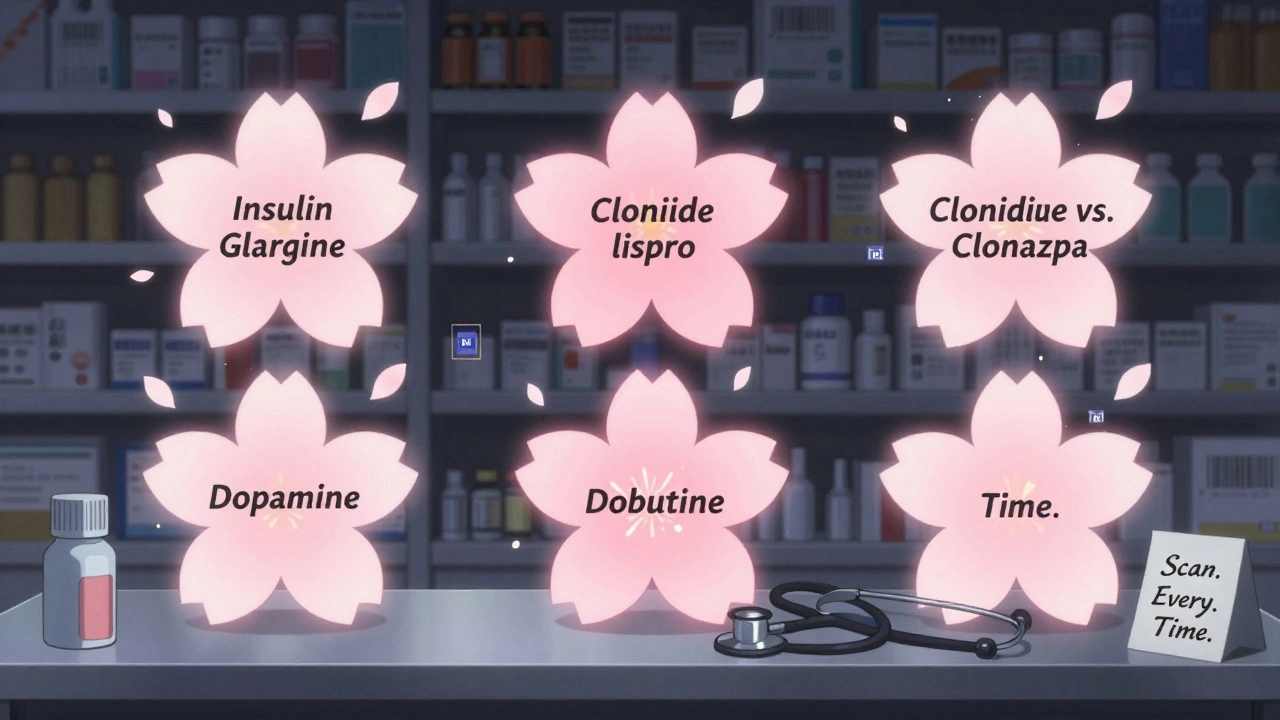
Start by identifying your top 10 most dangerous LASA pairs. ISMP’s 2024 list includes:
- DOPamine vs. DoBUTamine
- Clonidine vs. Clonazepam
- Epinephrine vs. Epoprostenol
- Insulin glargine vs. Insulin lispro
- Hydralazine vs. Hydroxyzine
Then, physically separate them. Use colored shelf dividers ($200-$500 total for a whole pharmacy), different storage bins, or even just tape lines on the floor. If one drug is kept in the top left drawer of your automated dispensing cabinet (ADC), put its look-alike in the bottom right. Make it impossible to grab the wrong one without reaching across the whole cabinet.
A hospital pharmacist in Michigan told me: “We moved all insulin products to a locked, separate cabinet. Wrong-insulin errors dropped from 3-4 per month to zero in 18 months.” No software. No training. Just space.
Tall Man Lettering: Make the Difference Visible
Tall Man Lettering (TML) is the practice of capitalizing the parts of drug names that differ. Instead of writing “hydroxyzine” and “hydralazine,” you write “HYDROXYZINE” and “HYDRALAZINE.” The difference-“ZINE” vs. “LAZINE”-jumps out.
Studies show TML reduces selection errors by 47%. It’s cheap, easy to implement, and works across EHRs, labels, and computer screens. The FDA and ISMP both recommend it for high-risk pairs.
But here’s the catch: it only works if everyone uses it the same way. A 2022 survey found only 68% of hospitals use standardized TML formats. If your EHR shows “DOPamine” but the label on the bottle says “Dopamine,” you’ve created a new risk.
Fix it by:
- Configuring your pharmacy software to auto-apply TML to ISMP’s current list
- Printing labels with TML (not just displaying it on screen)
- Training staff to look for the capital letters-not just the name
Don’t rely on TML alone. It fixes name confusion, but not packaging confusion. A 2022 JAMA study found that 35% of LASA errors come from packaging-same color, same size, same logo. TML won’t help if two bottles look identical.
Barcode Scanning: Your Final Safety Net
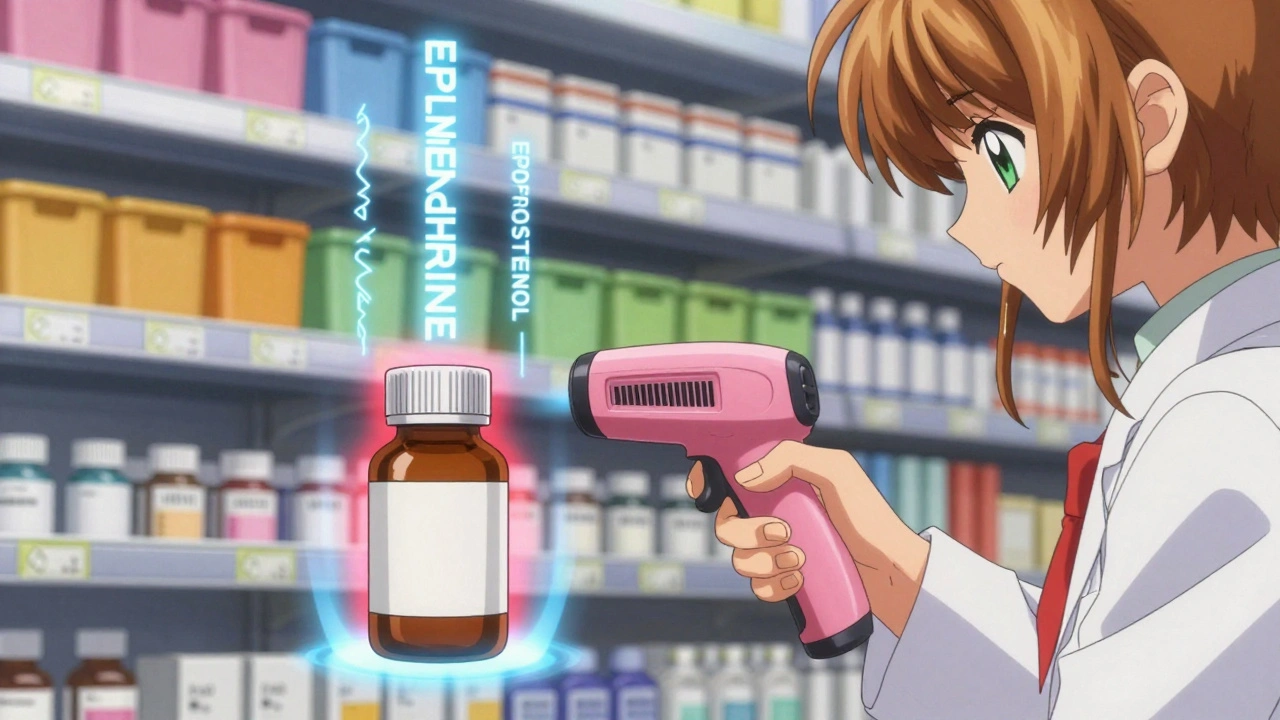
Barcode scanning is the most powerful tool in the toolbox. When a pharmacist scans a prescription and then scans the drug before dispensing, the system checks: Is this the right drug? Right dose? Right patient? Right time?
According to the Agency for Healthcare Research and Quality (AHRQ), barcode scanning reduces medication administration errors by 86%. That’s not a small number. That’s almost eliminating the problem.
But it only works if staff don’t bypass it. A 2021 study at UCSF found that 5-12% of scans were skipped-usually during rush hours, when pharmacists thought “I know this one.” That’s when mistakes happen.
Fix it by:
- Setting your ADCs to require a scan before dispensing
- Posting signs: “Scan. Every. Time.”
- Adding a quick audit: randomly check 5 scans per shift
Costs range from $15,000 to $50,000 per pharmacy, depending on your system. But the return? Mayo Clinic saved $287,000 in one year by preventing just 12 major errors. That’s a 6x return on investment.
Combining Strategies: The 94% Solution
Here’s the truth: no single fix works 100%. But when you layer them, you get near-perfect results.
A 2023 study in the American Journal of Health-System Pharmacy found that pharmacies using physical separation + TML + barcode scanning reduced LASA errors by 94%. That’s not a theory. That’s what happened at Mayo Clinic, where they eliminated 100% of potential heparin/saline mix-ups over 12 months.
Start small. Pick one high-risk pair. Apply all three fixes. Track your error rate for 3 months. Then move to the next. You don’t need to overhaul everything at once.
What Doesn’t Work (And Why)
Some “solutions” sound good but don’t deliver:
- Color-coded stickers-They fade, peel, or get ignored. One pharmacy found 70% of stickers were missing after 6 months.
- Staff reminders-“Be careful!” doesn’t work. Human memory fails under pressure.
- Just training-Training alone reduces errors by only 10-15%. It’s helpful, but not enough.
What works? Systems. Structures. Tools that force safety, even when you’re tired.
Getting Started: Your 30-Day Action Plan
You don’t need a big budget. You don’t need permission. Start today.
- Week 1: Download ISMP’s 2024 List of Confused Drug Names. Highlight your top 5 most dangerous pairs in your pharmacy.
- Week 2: Physically separate those drugs. Use dividers, bins, or reorganize shelves. Take a photo before and after.
- Week 3: Check your EHR and printer settings. Make sure Tall Man Lettering is turned on for those 5 pairs.
- Week 4: If you have barcode scanners, enforce their use. If you don’t, talk to your manager about funding. Use the Mayo Clinic ROI example to make your case.
By day 30, you’ll have cut your risk of a deadly error by at least 50%. That’s not just good practice. That’s patient safety.
What’s Coming Next
The future of medication safety is getting smarter. The FDA is finalizing new labeling rules for 25 high-risk drugs, requiring standardized Tall Man Lettering by 2026. The National Council for Prescription Drug Programs (NCPDP) is rolling out a new data format in late 2025 that will let EHRs automatically flag look-alike drugs before they’re even ordered.
Some hospitals are testing AI that scans drug packaging images and flags visual similarities before a pharmacist even touches the bottle. Early results at Johns Hopkins show 98% accuracy.
But none of that matters if you don’t start now. The tools you need are already here. The data is clear. The cost of inaction? Lives.



8 Comments
Kaitlynn nail
December 11, 2025 AT 21:59So we’re just supposed to trust that a capital Z in HYDROXYZINE is gonna save someone’s life? Cute. Meanwhile, the guy behind the counter is still juggling 150 scripts while his coffee goes cold.
Aidan Stacey
December 13, 2025 AT 04:55I used to work at a community pharmacy in Ohio where we had a near-miss with hydralazine/hydroxyzine. We started using colored bins-red for the scary ones, green for the safe ones. Didn’t cost much. Staff hated it at first. Now they won’t let anyone touch the shelves without the colors. We haven’t had a mix-up in 22 months. It’s not glamorous. It’s just smart.
Paul Dixon
December 14, 2025 AT 10:44Love this breakdown. Honestly, the fact that we’re still talking about this in 2025 is wild. We’ve got barcode scanners that can read a QR code on a grain of rice, but we’re still letting pharmacists squint at labels like it’s 1998. Physical separation + TML is basically pharmacy 101. Why isn’t this mandatory everywhere?
Vivian Amadi
December 15, 2025 AT 14:56STOP pretending color-coded stickers don’t work. I’ve seen pharmacies where they’re used perfectly-clean, replaced weekly, staff trained to check them. It’s not the tool, it’s the lazy management that lets them fade. You blame the sticker? I blame the manager who didn’t enforce it. And no, TML won’t fix a bottle that looks like its twin. DUH.
Taylor Dressler
December 15, 2025 AT 17:04Just to clarify a common misconception: barcode scanning reduces *administration* errors by 86%, but in community pharmacies, the error often occurs at the *dispensing* stage-before the patient even leaves. That’s why scanning the drug *before* it’s handed over matters more than scanning the prescription. Also, the Mayo Clinic ROI figure is correct-$287K saved on 12 preventable errors means each error cost roughly $24K in liability, litigation, and lost trust. That’s not just money. That’s reputation.
Jean Claude de La Ronde
December 16, 2025 AT 19:17so like… we spend 50k on scanners so we dont grab the wrong pill… but we still let the same guy who forgot his coffee drink a whole bottle of insulin because he was ‘sure’ it was saline? sounds like we’re fixing the lock while the door’s wide open. capitalism: making safety expensive so we can feel good about not doing the cheap thing.
Mia Kingsley
December 18, 2025 AT 06:13Wait-so you’re telling me we’ve known about this for 20 years and we’re still using ‘Tall Man Lettering’ like it’s some revolutionary hack? I’ve seen bottles where they capitalized the wrong letters. Like ‘HYDROXyZINE’ instead of ‘HYDROXYZINE’. That’s not safety. That’s a meme. And don’t even get me started on ‘color-coded bins’-one guy’s red is another’s pink. And why is no one talking about how the fonts are all the same? Same font. Same size. Same damn thing. This is a design failure, not a training problem.
Katherine Liu-Bevan
December 19, 2025 AT 19:58Thank you for this. As a pharmacist with 18 years in community practice, I’ve seen every ‘quick fix’ come and go. The only thing that sticks is consistency. We implemented the three-pronged approach you mentioned-physical separation, standardized TML, and mandatory scanning-and within six months, our error logs went from 12 per quarter to 1. Not because we trained harder. Because we made it impossible to skip the steps. The real win? Our staff feel safer. Patients feel safer. That’s the metric that matters.