

Many new mothers worry: Can I take this medication and still breastfeed? It’s a real concern. You’re not alone if you’ve felt torn between treating your own health and protecting your baby. The truth? Most medications are safe to take while breastfeeding. In fact, the American Academy of Pediatrics says only a tiny fraction of drugs are truly contraindicated. The bigger problem isn’t the medicine-it’s the fear, misinformation, and outdated advice that leads many women to stop breastfeeding unnecessarily.
What Makes a Medication Safe During Breastfeeding?
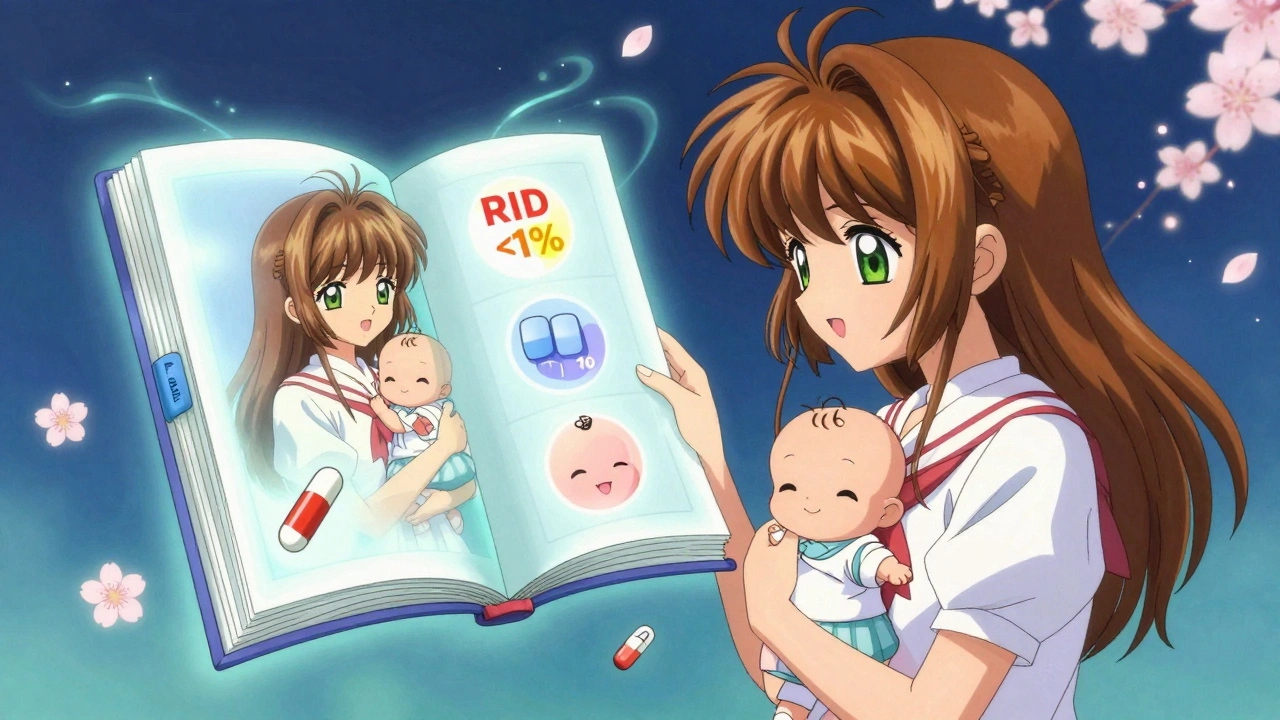
Not all drugs behave the same way in breast milk. Safety depends on three things: how much of the drug gets into your milk, how much your baby absorbs, and whether that amount could cause harm. The key metric doctors use is the Relative Infant Dose (RID)-this tells you what percentage of your dose ends up in your baby’s system. If the RID is under 10%, it’s generally considered low risk. Most safe medications have RIDs under 1%.Another important factor is the drug’s half-life. Short-acting drugs clear out of your system faster, meaning less time for your baby to be exposed. That’s why ibuprofen and acetaminophen are top choices-they leave your body quickly and barely show up in milk.
Pain Relief: What You Can Take Without Worry
For headaches, sore muscles, or postpartum pain, you have two rock-solid options: acetaminophen (Tylenol) and ibuprofen (Advil, Motrin). Both are recommended by the American Academy of Family Physicians, Mayo Clinic, and LactMed. Acetaminophen has an RID of just 0.04-0.23%, and ibuprofen is around 0.38-1.85%. Neither has ever been linked to side effects in breastfed babies.What about naproxen (Aleve)? It’s okay for occasional use, but not for daily or long-term use. Its half-life is 12-17 hours, and there are rare reports of infant bleeding or anemia. Stick to ibuprofen or acetaminophen instead.
For stronger pain, opioids are tricky. Codeine is off-limits because some people metabolize it too quickly, turning it into dangerous levels of morphine in their milk. The FDA issued a black box warning for this in 2010. Morphine and hydromorphone are safer if used at the lowest dose for the shortest time. Always monitor your baby for excessive sleepiness or trouble feeding.
Antibiotics: Common Prescriptions and What’s Safe
If you’ve got an infection, you don’t need to stop breastfeeding. Most antibiotics pass into milk in tiny amounts and don’t harm babies. The safest choices? Penicillins like amoxicillin (RID: 0.3-1.5%) and cephalosporins like cephalexin. No side effects reported in thousands of cases.Macrolides like azithromycin are also low-risk (RID: 0.05-0.1%). Erythromycin is mostly safe but has a small theoretical link to infant pyloric stenosis-only four cases ever reported. Fluoroquinolones like ciprofloxacin (RID: 0.5-1.0%) are considered safe despite old concerns about cartilage damage in animals. No cases of joint problems have been seen in breastfed infants.
Doxycycline is okay for short courses-up to 21 days. While it can stain teeth in young children if taken long-term, no such cases have occurred from breastfeeding. Vancomycin? It’s not absorbed from the gut, so even if it gets into milk, your baby won’t absorb it. That makes it safe too.
Antidepressants and Anxiety Meds: What Works Without Risk
Postpartum depression and anxiety are common, and you don’t have to suffer in silence. Sertraline (Zoloft) is the gold standard. It has the lowest transfer into milk among SSRIs, with RIDs between 1.7% and 7.0%. Studies show babies exposed to sertraline have undetectable or near-zero levels in their blood. Paroxetine (Paxil) is also well-studied and safe, with similar low transfer.Fluoxetine (Prozac)? Avoid it if you can. It sticks around in your system for days-its half-life is 4-6 days. That means it builds up in milk. One study found 2% of exposed infants had irritability or poor feeding.
For anxiety, lorazepam (Ativan) is the go-to benzodiazepine. It’s short-acting (10-20 hour half-life) and has an RID under 1%. Clonazepam (Klonopin) is riskier because it lingers longer-30-40 hours-so it can build up in your baby’s system.
Antipsychotics like quetiapine (Seroquel) and risperidone (Risperdal) are also used safely. Quetiapine at doses up to 400 mg daily produces milk levels less than 1% of your dose. Long-term follow-up shows normal infant development.
Allergy and Cold Medicines: Avoid These Mistakes
Allergies don’t stop after birth. But not all allergy meds are equal. Nasal sprays like fluticasone (Flonase) and budesonide (Rhinocort) are ideal. They barely enter your bloodstream, so almost none reaches your milk.For oral antihistamines, stick to second-generation options: loratadine (Claritin), cetirizine (Zyrtec), and fexofenadine (Allegra). All have RIDs under 0.5% and no documented side effects in babies. Cetirizine might cause mild drowsiness in a small number of infants, but it’s rare.
Avoid diphenhydramine (Benadryl). It’s a first-gen antihistamine with a higher RID (1-2%) and a 2-9 hour half-life. There are documented cases of sleepy, fussy babies after moms take it. And don’t use pseudoephedrine (Sudafed)-it cuts milk supply by about 24% on average. One in ten women see a major drop. Try saline sprays or a humidifier instead.

When You Must Stop Breastfeeding
There are a few situations where breastfeeding isn’t safe. Radioactive iodine (I-131), used for thyroid conditions, requires you to stop breastfeeding for 3-6 weeks. Your milk becomes radioactive, and your baby’s thyroid could be damaged.Chemotherapy drugs are generally avoided during breastfeeding. Most are too toxic, and there’s no safe threshold. Talk to your oncologist about timing and alternatives.
Lithium, used for bipolar disorder, is tricky. It crosses into milk easily-infants can absorb 30-50% of your dose. It has a narrow safety window. If you’re on lithium, your baby’s blood levels need to be checked weekly. Only use it if you’re closely monitored.
Where to Find Reliable Info-No Guesswork
Don’t rely on Google, friends, or even your doctor’s memory. Use trusted, evidence-based tools:- LactMed from the National Library of Medicine: Free, updated quarterly, covers over 1,000 drugs with RIDs, milk/plasma ratios, and infant effects.
- InfantRisk Center: Run by Dr. Christina Chambers, they answer over 15,000 questions a year. Call or visit their website for real-time advice.
- MotherToBaby: Offers free, personalized consultations through regional centers. Their data comes from real-world studies of breastfeeding moms.
Dr. Thomas Hale’s Medications and Mothers’ Milk is the standard reference. He created the Lactation Risk Categories (L1-L5). L1 means “safest”-this includes acetaminophen, ibuprofen, sertraline, and loratadine. L5 means “contraindicated”-like radioactive iodine.
Here’s a simple rule of thumb: If a drug is safe for a newborn to take directly, it’s usually safe for a breastfeeding mom. But always check-because some drugs that are safe for babies aren’t safe in milk, and vice versa.
Final Thoughts: You Can Do Both
Breastfeeding and taking medication aren’t mutually exclusive. In fact, continuing to breastfeed while managing your health is often the best choice-for you and your baby. Stopping breastfeeding because of fear of medication can lead to worse outcomes: increased maternal depression, higher risk of breast infections, and loss of the immune benefits your baby gets from breast milk.Always talk to your provider, but don’t accept “I don’t know” as an answer. Ask: “What’s the RID?” “Is there data on this in breastfeeding?” “Is there a safer alternative?” Use LactMed to look it up together. You deserve clear, accurate information.
You’re not choosing between being a good mom and being healthy. You can be both. The science says so.




12 Comments
Eric Vlach
December 3, 2025 AT 04:14Just wanted to say this post saved my sanity last year when I was on antibiotics for mastitis and terrified to keep nursing
Turns out amoxicillin was totally fine and my kid didn't even hiccup
So many moms quit because they're scared, not because they have to
Souvik Datta
December 4, 2025 AT 21:11There’s a beautiful paradox here - we are conditioned to fear chemicals, yet we willingly expose infants to secondhand smoke, processed sugars, and plastic-laden bottles without blinking
Medications? Those are the villains
But the real villain is misinformation wrapped in the guise of caution
Science doesn’t fear - it measures. And it tells us: you can heal and nurture at the same time
Irving Steinberg
December 6, 2025 AT 01:39IBUPROFEN FOR LIFE 🤘
My kid slept through a 10-hour flight after I took two Advil
Zero drama
Also why is Benadryl still a thing??? 😅
Lydia Zhang
December 7, 2025 AT 20:16My OB told me to stop breastfeeding for Zoloft. I didn't. Kid's fine.
Kay Lam
December 8, 2025 AT 02:04I think what’s really missing from this conversation is how much pressure mothers feel to be perfect - like if we take one pill, we’re somehow poisoning our children, but if we drink coffee or eat sushi or sleep with a phone next to the crib, that’s just parenting
And the truth is, we’re not supposed to be perfect - we’re supposed to be alive
And being alive sometimes means taking medicine that helps us show up for our kids
Not just as a mom, but as a person who has needs too
And the fact that we still have to argue this point in 2025 is exhausting
But thank you for compiling this - I’m printing it out and handing it to every new mom I know
Courtney Co
December 8, 2025 AT 15:56I took lithium while breastfeeding and my baby had seizures
So yeah, maybe don’t just trust some website
My kid’s fine now but I’ll never forgive myself for listening to LactMed
Priyam Tomar
December 10, 2025 AT 15:43Everyone’s so quick to say sertraline is safe but have you read the actual LactMed studies?
There’s a 7% transfer rate - that’s not low
And what about long-term neurodevelopmental effects? No one talks about that
And why is everyone ignoring the fact that some babies metabolize drugs differently?
You’re not a scientist, you’re just repeating what you read
Matt Dean
December 11, 2025 AT 03:51So basically if you’re a mom and you’re scared, you’re just dumb?
And if your doctor says no, you should go find a blog instead?
Wow. Real empowering.
Some of us don’t have time to read 12 pages of pharmacokinetics before we take a pill
And that’s not weakness - it’s reality
Bee Floyd
December 12, 2025 AT 16:38My sister took Zoloft while nursing my niece - kid’s now 8, plays soccer, doesn’t scream when you say ‘no’
Meanwhile, I stopped breastfeeding because I was scared of ibuprofen
Turned out I just needed a nap and a hug
But I didn’t know that then
So yeah - this post? Needed.
Thanks for making it feel less lonely
Jeremy Butler
December 13, 2025 AT 01:51It is of paramount importance to underscore the epistemological foundation upon which the assertion of medication safety during lactation is predicated - namely, the quantitative pharmacokinetic parameters derived from controlled clinical trials and population pharmacokinetic modeling
One must not conflate anecdotal experience with evidence-based practice
Though the sentiment is commendable, the reductionist framing of this discourse risks undermining the nuanced risk-benefit calculus inherent in perinatal pharmacotherapy
Shashank Vira
December 14, 2025 AT 07:11Oh, so now we’re supposed to trust a website run by a guy who wrote a book in 1998?
That’s like trusting a 2005 iPhone manual to fix your quantum computer
And let’s not forget - the FDA didn’t even require breastfeeding data until 2015
So everything you’re citing? It’s basically educated guessing with a fancy acronym
Real science doesn’t come from LactMed - it comes from randomized trials with control groups
And guess what? We don’t have those for most drugs in lactating women
So don’t pretend you’re giving truth - you’re giving hope dressed as data
Jack Arscott
December 16, 2025 AT 01:06Just had my third kid and I’m on sertraline again
Used this post as my cheat sheet - printed it, laminated it, stuck it on the fridge
My husband even read it
And for once, I didn’t feel like a bad mom for taking a pill
Thanks for this 🙏❤️