
What Deep Brain Stimulation Actually Does for Parkinson’s
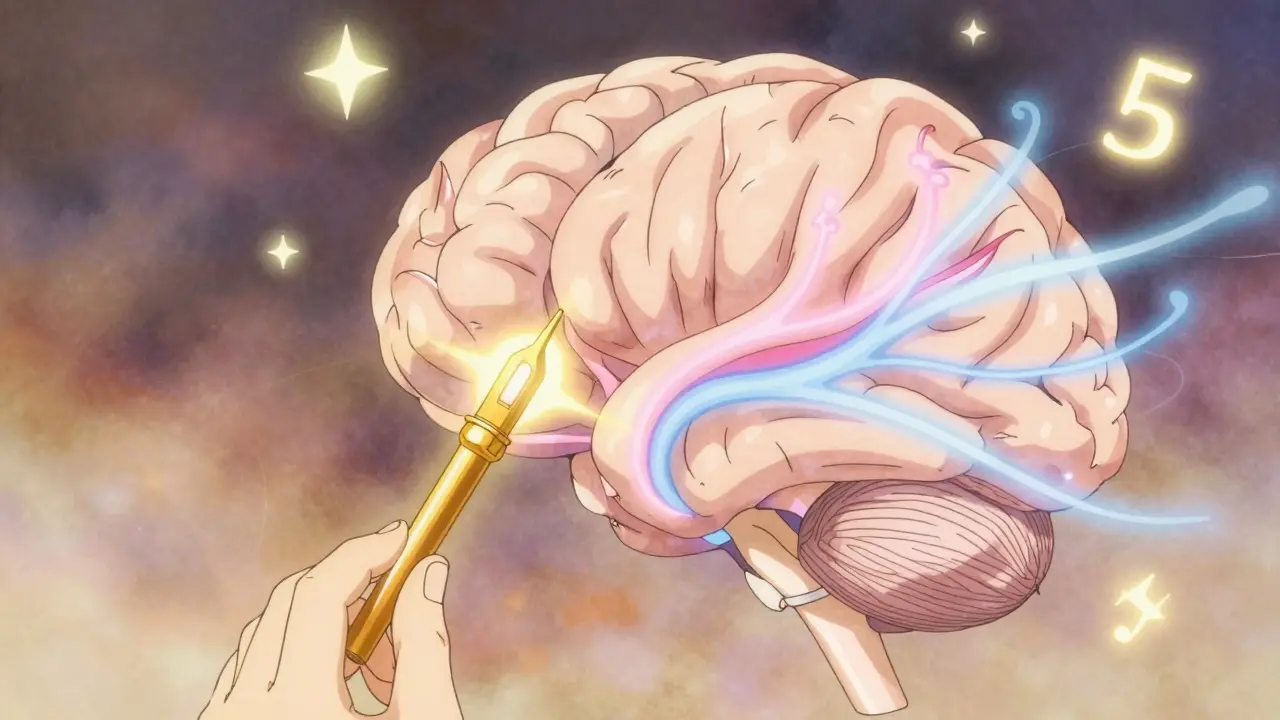
Deep Brain Stimulation, or DBS, isn’t a cure for Parkinson’s. It doesn’t stop the disease from progressing. But for many people, it changes everything. If your tremors, stiffness, or freezing episodes are getting worse despite taking the right meds, DBS can bring back control-sometimes dramatically. It works by sending tiny electrical pulses to specific spots in the brain that control movement. These pulses don’t kill brain cells or remove anything. They just reset the noisy signals causing the symptoms.
Think of it like a pacemaker for your brain. Electrodes are placed in either the subthalamic nucleus (a small structure deep in the brain that becomes overactive in Parkinson’s) or the globus pallidus interna (another target that helps control movement and reduce involuntary movements). Wires run under your skin to a battery pack, usually placed near your collarbone or belly. The device stays on all day, every day, adjusting your brain’s electrical activity to smooth out your movements.
Who Benefits Most From DBS?
Not everyone with Parkinson’s is a candidate. The best candidates have had the disease for at least five years and still respond well to levodopa. That’s the key. If your symptoms improve significantly after taking your medication, DBS will likely help too. If your tremors disappear when you take levodopa but come back before your next dose, you’re probably a good fit.
Studies like the EARLYSTIM trial (a landmark 2013 study published in The New England Journal of Medicine) showed that people who got DBS early in their course of motor complications had a 23-point improvement in quality of life scores-nearly double the improvement seen with medication alone. That’s not just less shaking. It’s being able to button your shirt, walk without freezing, or sleep through the night again.
But if your main problems are falling, balance issues, speech problems, or memory loss-symptoms that don’t improve with levodopa-DBS won’t fix those. In fact, if you have dementia or severe depression, you’re usually not considered a candidate. The brain targets used in DBS don’t help those symptoms, and the surgery can sometimes make them worse.
The Real-World Selection Process
Getting approved for DBS isn’t just a quick doctor’s visit. It’s a months-long process. First, a movement disorders neurologist confirms you have idiopathic Parkinson’s-not something else like progressive supranuclear palsy, which won’t respond to DBS. Then comes the levodopa challenge test: you’re assessed on and off your medication to measure how much your motor score improves. You need at least a 30% improvement on the UPDRS-III scale to qualify.
Next, you’ll spend a full day or two with a neuropsychologist. Tests check your memory, attention, problem-solving, and mood. A score below 24 on the MMSE or 21 on the MoCA usually rules you out. Why? Because DBS can sometimes make thinking slower or harder to focus, especially if you’re already at risk.
Then comes the MRI. You need a high-resolution 3T scan to map your brain precisely. Surgeons use this to plan where to place the electrodes. No guesswork. Every millimeter matters. After all that, a team of neurologists, neurosurgeons, and psychologists meet to decide if you’re ready. Many centers skip this step, but the best ones don’t. A multidisciplinary review cuts down on bad outcomes.
DBS Targets: STN vs. GPi
There are two main spots for DBS electrodes: the subthalamic nucleus (STN) and the globus pallidus interna (GPi). Both work well for movement symptoms. But they have different trade-offs.
STN is the most common choice. It allows people to cut their levodopa dose by 30% to 50%. That means fewer side effects like nausea, hallucinations, or sudden, wild movements (dyskinesias). But it can also cause more mood or speech issues. Some people report trouble finding words or feeling more depressed after STN DBS.
GPi doesn’t reduce medication as much, but it’s better at controlling dyskinesias directly. It’s often chosen for people who already have severe involuntary movements or who are at higher risk for cognitive side effects. A 2009 VA/NINDS trial found GPi led to 70% dyskinesia reduction versus 46% with STN. If your biggest problem is being stuck in a state of over-movement, GPi might be the safer pick.
There’s no universal answer. The choice depends on your symptoms, age, cognitive health, and goals. A 65-year-old with mild memory issues and bad dyskinesias? GPi. A 55-year-old with stiff limbs and high medication side effects? STN. Your team will walk you through it.
What the Technology Looks Like Today
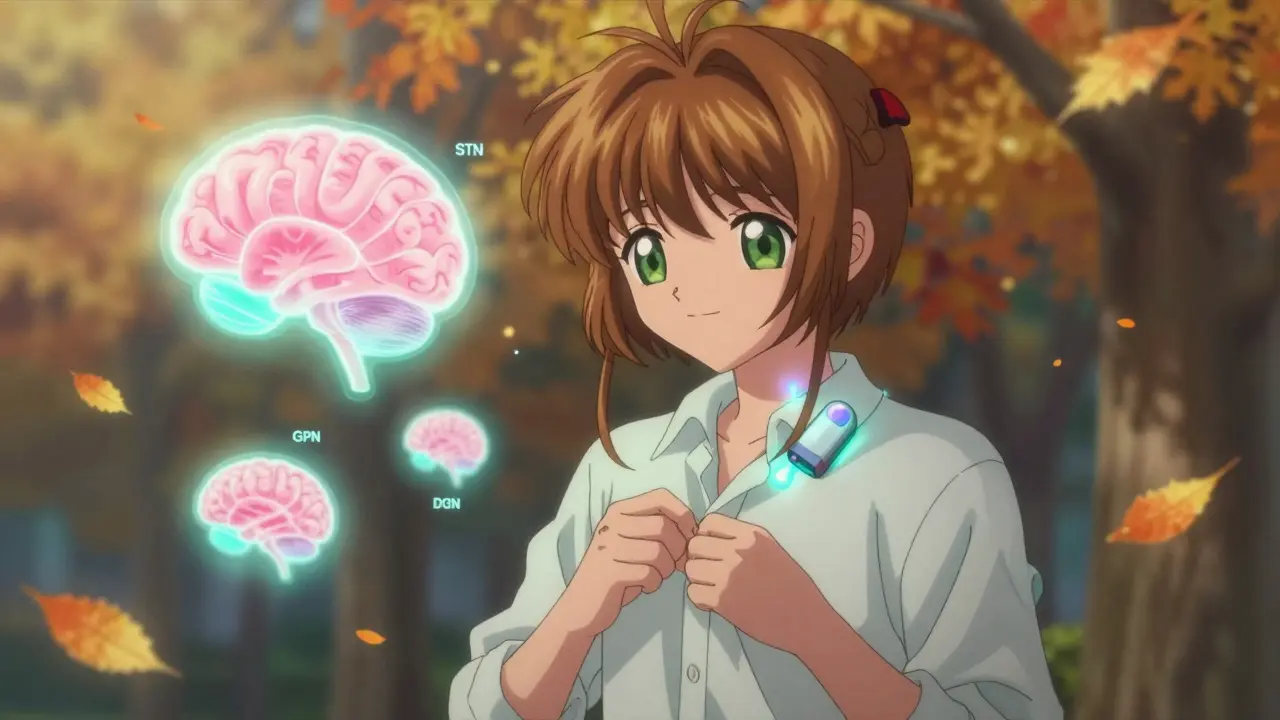
DBS isn’t the same as it was 20 years ago. Modern devices are smarter. The Medtronic Percept™ PC (FDA-approved in 2020, the first DBS system with sensing capability) can actually listen to your brain. It detects abnormal brain waves-beta rhythms between 13 and 35 Hz-that spike when symptoms worsen. Some newer systems use this data to auto-adjust stimulation in real time, called closed-loop DBS. The INTREPID trial showed this approach improved symptom control by 27% over traditional constant stimulation.
Electrodes now have directional tips, letting doctors steer the current to avoid side effects. Batteries last longer, too. Rechargeable models can go 9 to 15 years before needing replacement. Non-rechargeable ones last 3 to 5 years and require another surgery. Most patients get rechargeable now, especially if they’re younger.
Bluetooth connectivity lets your neurologist adjust settings remotely. No more long drives to the clinic for every tweak. You can send symptom logs from your phone, and your doctor can fine-tune the device from their office. It’s a big step toward personalized care.
The Risks and the Reality
Surgery carries risks. About 1-3% of patients have a brain bleed during the procedure. That’s rare but serious. Infection happens in 5-10% of cases-sometimes requiring hardware removal. Lead wires can shift over time, needing revision. Hardware failure (battery, wire, connector) occurs in 5-15% of patients over 5-10 years.
Then there are the side effects you might not expect. Some people get tingling, muscle tightness, or vision changes during stimulation. These usually go away with a quick programming tweak. Others report word-finding trouble, reduced motivation, or feeling emotionally flat. These are subtle but real. One Reddit user said, “My tremors are gone, but I struggle with planning meals-it takes three times longer.” That’s executive function decline. It’s not dementia, but it’s enough to make daily life harder.
And yes, it’s expensive. In the U.S., the total cost runs $50,000 to $100,000. Medicare and most private insurers cover it if you meet criteria, but getting approval can take months. You’ll need documentation showing you’ve tried and failed on optimal medication therapy. Many people give up before they even get to surgery.
Why So Few People Get It
Here’s the shocking part: only 1-5% of people who qualify for DBS actually get it. Why? Because most doctors don’t know when to refer. Patients think it’s a last resort. They wait until they’re too weak, too confused, or too scared. By then, it’s too late.
Dr. Michele Tagliati says it plainly: “Too many patients are never referred at all.” The Parkinson’s Foundation calls it a major gap in care. People think DBS is for the very advanced. But the best results come when it’s done earlier-before the body breaks down from years of uncontrolled movement.
Also, there’s misinformation. Some think DBS will stop the disease. It won’t. Others think it’s a miracle cure. It’s not. It’s a tool. A powerful one, but only for specific symptoms. If you expect it to fix your balance, speech, or memory, you’ll be disappointed.
What Happens After the Surgery
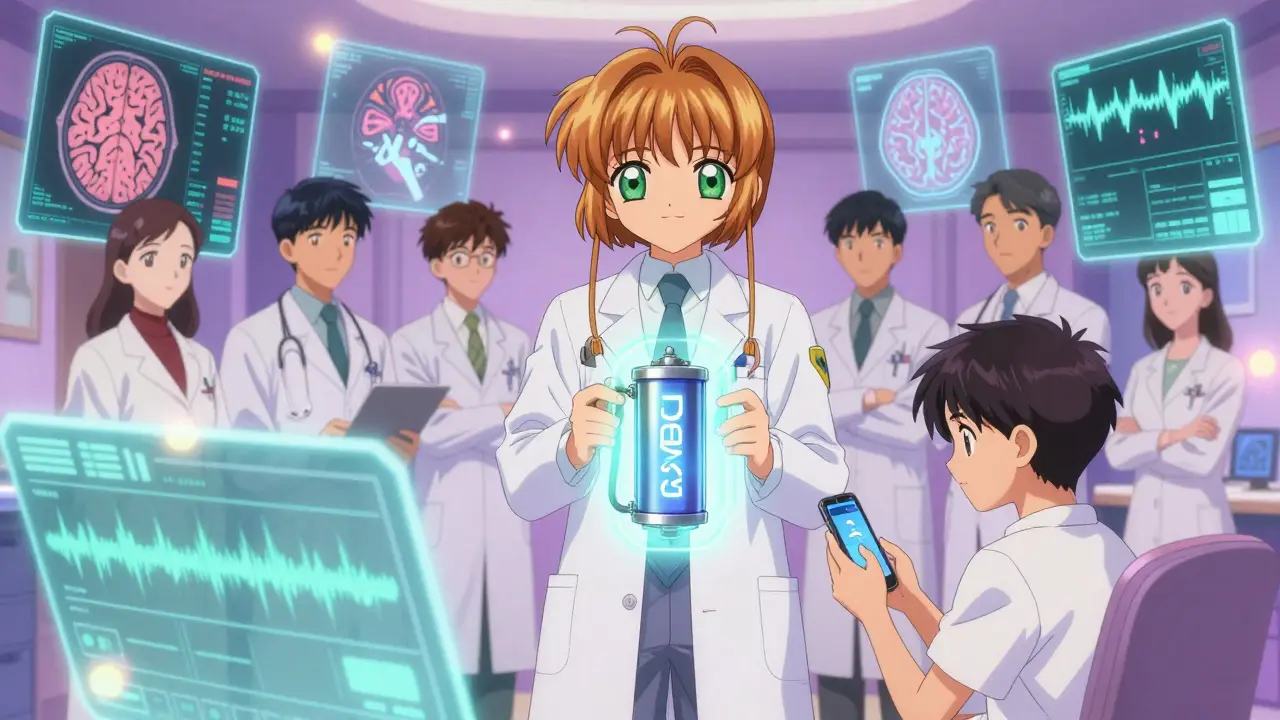
The device is turned on about 2-4 weeks after surgery. That’s when the real work begins. Programming isn’t one appointment. It’s a journey. The first few months involve weekly or biweekly visits. Each session adjusts voltage, frequency, and pulse width. You’ll need to keep a symptom diary-note when you’re stiff, shaky, or slow. That’s how your clinician finds the sweet spot.
It can take 6 to 12 months to get it right. Some people feel better immediately. Others feel worse before they feel better. That’s normal. The brain needs time to adapt. You’ll also need to learn how your meds and stimulation interact. Sometimes, lowering your levodopa too fast makes you rigid again. It’s a balancing act.
Long-term, 85% of patients still benefit 10 years after implantation. But axial symptoms-walking, posture, freezing-don’t improve much. Only 20-30% improvement there. That’s the biggest limitation. DBS doesn’t fix everything. But for the motor symptoms that respond to levodopa? It’s often life-changing.
What’s Next for DBS
The field is moving fast. Researchers are testing DBS in people with just 3 years of Parkinson’s-much earlier than before. The EARLYSTIM-2 trial is exploring whether early intervention slows decline. Early data looks promising.
There’s also work on using genetic markers. People with the LRRK2 gene mutation respond better to DBS-15% more improvement, according to a 2023 Lancet Neurology study. Future selection might include genetic testing.
And then there’s digital integration. Apple Watch apps now track tremor patterns. Imagine your DBS device syncing with your watch, adjusting stimulation automatically when it detects a tremor spike. That’s not science fiction-it’s happening in pilot programs now.
Final Thoughts: Is It Right for You?
If you’ve had Parkinson’s for five or more years, your meds are losing their edge, and your symptoms still respond to levodopa-talk to your neurologist about DBS. Don’t wait until you’re too far gone. Don’t assume it’s too risky. Don’t believe the myths.
DBS won’t fix everything. But for the right person, it gives back the things that matter: walking without help, speaking without slurring, dressing without frustration. It’s not a cure. But it’s one of the most effective tools we have to reclaim your life.



9 Comments
Katie Mccreary
January 27, 2026 AT 17:16I got DBS last year. Tremors? Gone. Freezing? Mostly gone. But now I can't remember where I put my keys. Worth it? Maybe. My husband says I'm less fun to talk to now. 🤷♀️
SRI GUNTORO
January 29, 2026 AT 05:01I'm from India and we can't even afford levodopa properly. You people talk about $100k brain pacemakers like it's a new iPhone. This is why healthcare is broken.
Kevin Kennett
January 29, 2026 AT 12:49Look, if you're reading this and you're in your 50s with good levodopa response - stop waiting. I waited 3 years because I was scared. My wife cried when I could button my shirt again. Don't be the person who says 'I wish I'd done it sooner.'
Jess Bevis
January 31, 2026 AT 03:05DBS in the US is a luxury. In Japan, it's covered like a knee replacement. We need to stop treating neurological care like a lottery.
Howard Esakov
January 31, 2026 AT 05:50The EARLYSTIM trial? Cute. But have you read the 2024 meta-analysis in Nature Neuro? STN has a 38% higher rate of apathy than GPi. Still wanna go for the 'magic button'? 😏
Rhiannon Bosse
January 31, 2026 AT 17:23Okay but what if your neurologist is just lazy and doesn't refer you? I got told 'you're not bad enough' for 4 years. Then my mom had a stroke and I realized I was gonna die in my own body. So I went rogue. Got a second opinion. Got approved. Now I'm alive again. Don't let them gaslight you.
Bryan Fracchia
February 1, 2026 AT 22:33It's wild how we treat the brain like a machine you can just upgrade. We fix the wiring but forget the soul still has to live in it. DBS gives you back your hands, but sometimes it steals your voice - not in the way you think. It steals the quiet moments of struggle that made you who you were.
fiona vaz
February 1, 2026 AT 23:51My mom had GPi in 2019. Her dyskinesias dropped 80%. But she still needs help with balance. The tech helps, but it's not magic. Just one tool. And the programming? Took 11 visits. Patience is key.
Sue Latham
February 2, 2026 AT 03:23Honestly, if you're still on meds and haven't tried DBS by now, you're just clinging to denial. I've seen so many people wait until they're in a wheelchair. Then it's too late. Don't be that person. You're not special. Your disease doesn't care about your fear.