

Every year, millions of people reach for ibuprofen or naproxen to ease a headache, back pain, or arthritis flare-up. These drugs work fast. But what most users don’t realize is that every pill carries hidden risks-risks that can quietly damage the stomach, intestines, and kidneys long before symptoms show up. In fact, NSAIDs are responsible for over 100,000 hospitalizations and 16,500 deaths in the U.S. each year, according to the American College of Gastroenterology. This isn’t about rare side effects. This is about common, preventable harm.
How NSAIDs Hurt Your Stomach (Even When You Feel Fine)
NSAIDs don’t just block pain-they block protective chemicals in your gut. These drugs inhibit COX-1 enzymes, which produce prostaglandins that keep the stomach lining healthy. Without them, acid eats away at the lining, leading to ulcers, bleeding, and perforations. The scary part? Half of these injuries happen with zero warning. You might feel fine until you suddenly pass black, tarry stool-or collapse from internal bleeding.
Up to 50% of long-term NSAID users develop some form of stomach damage, called gastropathy. About 15% end up with peptic ulcers. And it’s not just the stomach. The lower GI tract gets hit too-tiny tears in the small intestine, inflammation, and bleeding that’s harder to detect and even harder to treat. A 2020 study in Gut and Liver found no proven way to fully prevent this damage. That means if you’re taking NSAIDs regularly, your gut is under constant stress.
Kidney Damage Isn’t Just for the Elderly
Your kidneys rely on prostaglandins to keep blood flowing through them. NSAIDs cut that flow. For healthy people, this might cause a temporary dip in kidney function. But for those over 65, dehydrated, diabetic, or already with kidney disease, it can trigger acute kidney injury. About 1% to 5% of NSAID users develop this condition, and it can happen within days of starting the drug.
Chronic use leads to more serious damage: interstitial nephritis, papillary necrosis, and even permanent loss of kidney function. The FDA now requires boxed warnings on all prescription NSAIDs for kidney risks in patients over 65. But many people don’t know this. A 2023 Medicare analysis showed only 52% of NSAID users had their creatinine checked within 90 days of starting the drug. That’s like driving with no oil gauge.
Not All NSAIDs Are Created Equal
Some NSAIDs are riskier than others. A 2023 meta-analysis found naproxen increases the risk of upper GI bleeding by 4.2 times compared to non-users. Ibuprofen isn’t much better-it’s 2.7 times more likely to cause stomach bleeding than celecoxib, according to the European Medicines Agency. Celecoxib, a COX-2 selective inhibitor, cuts GI risk in half, but it’s not risk-free. It still raises heart attack and stroke risk, especially in people with existing heart disease.
Here’s the real trade-off: choosing a safer NSAID doesn’t mean you’re safe. If you’re on blood thinners like warfarin or aspirin, or antidepressants like SSRIs, your bleeding risk jumps. One study found SSRIs combined with NSAIDs increase bleeding risk by 3.38 times. And if you’re taking steroids? That’s another 1-point risk multiplier.
Monitoring: What You Must Track
There’s no magic pill to make NSAIDs safe. But there are simple steps to catch problems early:
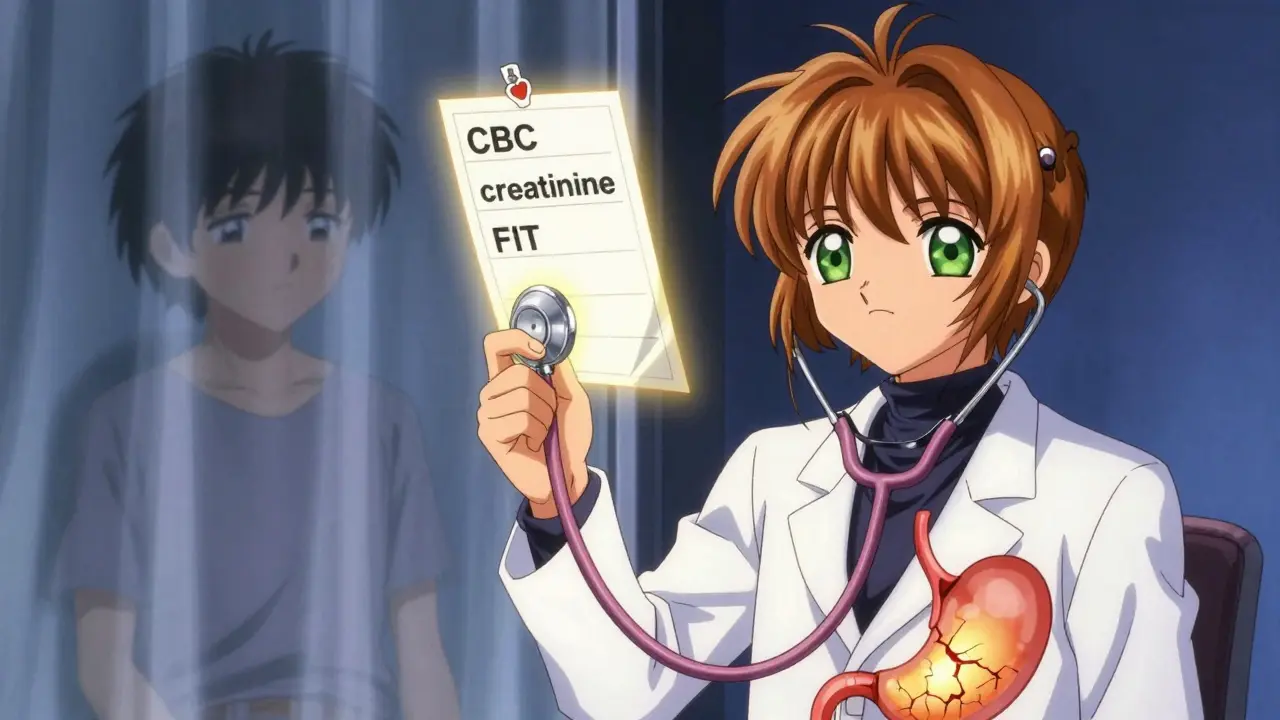
- Check creatinine and BUN within 30 days of starting NSAIDs, then every 3-6 months if used long-term.
- Get a complete blood count (CBC) annually to catch hidden bleeding that causes iron deficiency.
- For high-risk patients, do fecal occult blood testing every 6 months. New point-of-care FIT tests (launched in 2024) detect bleeding with 92% accuracy.
- Track symptoms: persistent nausea, dark stools, swelling in legs, reduced urine output, or unexplained fatigue.
The American College of Gastroenterology has a simple risk calculator: add points for age over 65 (2 points), past ulcer (3 points), anticoagulant use (2 points), or steroid use (1 point). If you hit 4 or more points, you’re high risk. That means you need protection-not just a painkiller.
Protecting Your Gut: PPIs and the Hidden Cost
Doctors often prescribe proton pump inhibitors (PPIs) like omeprazole with NSAIDs to protect the stomach. And yes, PPIs reduce ulcer risk by 70-90%. But here’s the catch: they don’t protect your intestines. And they come with their own dangers.
A 2022 study found that taking NSAIDs and PPIs together for 4-12 months increases the risk of microscopic colitis by over six times. This condition causes chronic diarrhea and can be hard to diagnose. Some patients end up with lifelong digestive issues because they thought they were being protected.
And here’s the irony: many people stop taking their PPI because they don’t feel sick. A 2022 study found 38% of high-risk patients skip their gastroprotective meds. That’s like wearing a seatbelt only when you think you might crash.
When to Stop NSAIDs Altogether
Experts agree: the safest NSAID is the one you don’t take. Dr. Charlotte H. Clarke, lead author of a major NSAID safety review, says: “Limiting duration is the single most effective prevention strategy. Each additional week of use increases complication risk by 3-5%.”
For people with osteoarthritis-by far the largest group of long-term NSAID users-there are better options. Physical therapy, weight management, topical capsaicin, and even acupuncture have strong evidence for pain relief without systemic damage. The 2024 American College of Cardiology guidelines now say: avoid all NSAIDs if you have stage 3+ chronic kidney disease (eGFR under 60).
Even if you’re young and healthy, ask yourself: Do I really need this pill every day? Could I take it every other day? Or just for a few days when the pain is worst? Every dose adds up.

The Future: New Drugs and Better Tools
There’s hope on the horizon. In 2023, the FDA approved naproxcinod-a new NSAID that releases nitric oxide, which helps protect blood vessels and the gut lining. In trials, it caused 58% fewer ulcers than regular naproxen. And in 2024, a new fecal immunochemical test (FIT) became available that’s calibrated specifically for NSAID users, catching bleeding earlier than ever.
AI is also stepping in. European researchers are testing AI-powered endoscopy tools that can spot early signs of intestinal damage before symptoms appear. But these tools aren’t widely available yet. Until then, the best protection is awareness and vigilance.
What You Can Do Today
- Don’t take NSAIDs daily unless absolutely necessary. Use the lowest dose for the shortest time.
- Know your risk: Are you over 65? Do you have a history of ulcers? Are you on blood thinners or steroids?
- Ask your doctor for a baseline kidney test before starting NSAIDs.
- If you’re on PPIs long-term, ask if you still need them-and if there’s a safer alternative.
- Watch for symptoms: black stools, swelling, fatigue, or reduced urine output. Don’t wait for pain.
- Explore non-drug options: physical therapy, heat/cold therapy, weight loss, or TENS units.
NSAIDs are powerful. But they’re not harmless. The goal isn’t to scare you off them entirely-it’s to make sure you use them with your eyes open. Pain matters. But so does your gut. So does your kidney. And the longer you ignore the signs, the harder it becomes to fix what’s broken.
Can I take NSAIDs if I have high blood pressure?
NSAIDs can raise blood pressure and interfere with some blood pressure medications like ACE inhibitors or diuretics. If you have hypertension, avoid long-term or high-dose NSAIDs. Talk to your doctor about alternatives like acetaminophen or non-drug therapies. Regular blood pressure checks are essential if you use NSAIDs at all.
Is ibuprofen safer than naproxen?
No. While ibuprofen is often seen as milder, it carries a higher risk of stomach bleeding than naproxen. Naproxen lasts longer, so you take it less often, but it’s still hard on the gut. Celecoxib is safer for the stomach but increases heart risk. There’s no perfect NSAID-only the one that’s least risky for your personal health profile.
How do I know if NSAIDs are hurting my kidneys?
Early kidney damage often has no symptoms. That’s why blood tests matter. A rising creatinine level or falling eGFR (estimated glomerular filtration rate) signals trouble. Swelling in your ankles, fatigue, or reduced urine output are late signs. If you’re on NSAIDs long-term, get your kidney function checked every 3-6 months-even if you feel fine.
Are OTC NSAIDs safer than prescription ones?
No. The same drugs are in both. You can buy 200 mg ibuprofen over the counter, but taking two every 6 hours for weeks is the same as a prescription dose. The danger isn’t the label-it’s the dose and duration. Many people don’t realize they’re taking a daily dose that’s just as risky as a prescription.
Should I take a PPI with my NSAID?
Only if you’re high risk-age over 65, history of ulcers, or on blood thinners. For low-risk people, PPIs add cost and risk without clear benefit. Long-term PPI use increases chances of microscopic colitis, bone fractures, and nutrient deficiencies. Don’t take it just because your doctor suggested it-ask if it’s right for you.
What are the best alternatives to NSAIDs for chronic pain?
For joint pain, physical therapy is more effective long-term than NSAIDs. Topical diclofenac gel works well for localized pain without systemic effects. Acetaminophen is safer for the gut and kidneys (though not for the liver at high doses). Other options include TENS units, weight loss, heat therapy, and in some cases, low-dose antidepressants for nerve-related pain. Always discuss alternatives with your provider.
What Comes Next
If you’ve been taking NSAIDs for months-or years-it’s not too late to reassess. Talk to your doctor about your risk factors. Get your kidney and blood checked. Review whether you still need the drug every day. And consider what non-drug strategies might work for you. Pain doesn’t have to be managed with pills that silently damage your body. There are smarter, safer ways to move through life without pain.





8 Comments
Prachi Chauhan
January 11, 2026 AT 14:51It's wild how we treat pain like it's the enemy, not a signal. We swallow pills like candy and act surprised when our guts revolt. Maybe the real problem isn't the drug-it's that we've forgotten how to listen to our bodies. I used to take ibuprofen like it was coffee. Now I stretch, ice, and breathe through it. Turns out, my body was screaming, not just aching.
Katherine Carlock
January 12, 2026 AT 08:13I had no idea NSAIDs could wreck your kidneys so fast. My mom’s on them for arthritis and she’s 72. I’m going to send her this post right now. Also, I just realized I’ve been taking 800mg ibuprofen every day for my back pain for like… two years. Oh god. Time to call my doctor. Thanks for the wake-up call.
Sona Chandra
January 12, 2026 AT 09:42THIS IS WHY PEOPLE DIE WITHOUT KNOWING IT. YOU’RE NOT JUST TAKING A PILLS YOU’RE PLAYING RUSSIAN ROULETTE WITH YOUR ORGANS. DOCTORS DON’T TELL YOU THIS BECAUSE THEY’RE TOO BUSY SELLING PRESCRIPTIONS. PPIs DON’T FIX YOUR INTESTINES THEY JUST MAKE YOU DEPENDENT ON MORE DRUGS. STOP BLINDLY TRUSTING MEDICINE. YOUR BODY ISN’T A MACHINE.
Jennifer Phelps
January 13, 2026 AT 04:58So if I’m on SSRIs and take naproxen am I basically signing a death warrant or is that exaggerated I mean I’ve been doing it for three years and I feel fine but maybe I’m just lucky or maybe I’m already damaged and don’t know it
Sonal Guha
January 13, 2026 AT 05:5816500 deaths a year and you think this is news The system is designed to keep you medicated not healed. PPIs cause bacterial overgrowth and nutrient loss. NSAIDs cause GI bleeds. You’re trading one problem for another. No one talks about the economic incentives. Pharma profits from chronic illness. Your pain is their business model
TiM Vince
January 14, 2026 AT 03:45In my village in Nigeria, people use ginger tea, warm compresses, and massage for joint pain. No pills. No side effects. We don’t have the same access to meds but we also don’t have the same hospital bills. Maybe the answer isn’t better drugs-it’s better habits. Simple things, done consistently, work better than strong chemicals.
gary ysturiz
January 14, 2026 AT 08:00Great post and seriously important info. I used to think NSAIDs were harmless because they were OTC. Now I know better. I switched to topical diclofenac gel for my knees and it’s been a game-changer. No stomach issues, no kidney stress. And I started walking 30 minutes a day-pain is down, energy is up. Small changes make a huge difference. You got this.
Jessica Bnouzalim
January 15, 2026 AT 12:26Wait wait wait-so PPIs can cause microscopic colitis?? And I’ve been on omeprazole for 5 years because my doc said ‘just in case’?? I thought I was being PROTECTIVE?? I feel so stupid right now. I’m literally gonna cancel my next prescription. I need to talk to my doctor about this. Like, TODAY. Thank you for saying this. I didn’t even know to ask.