
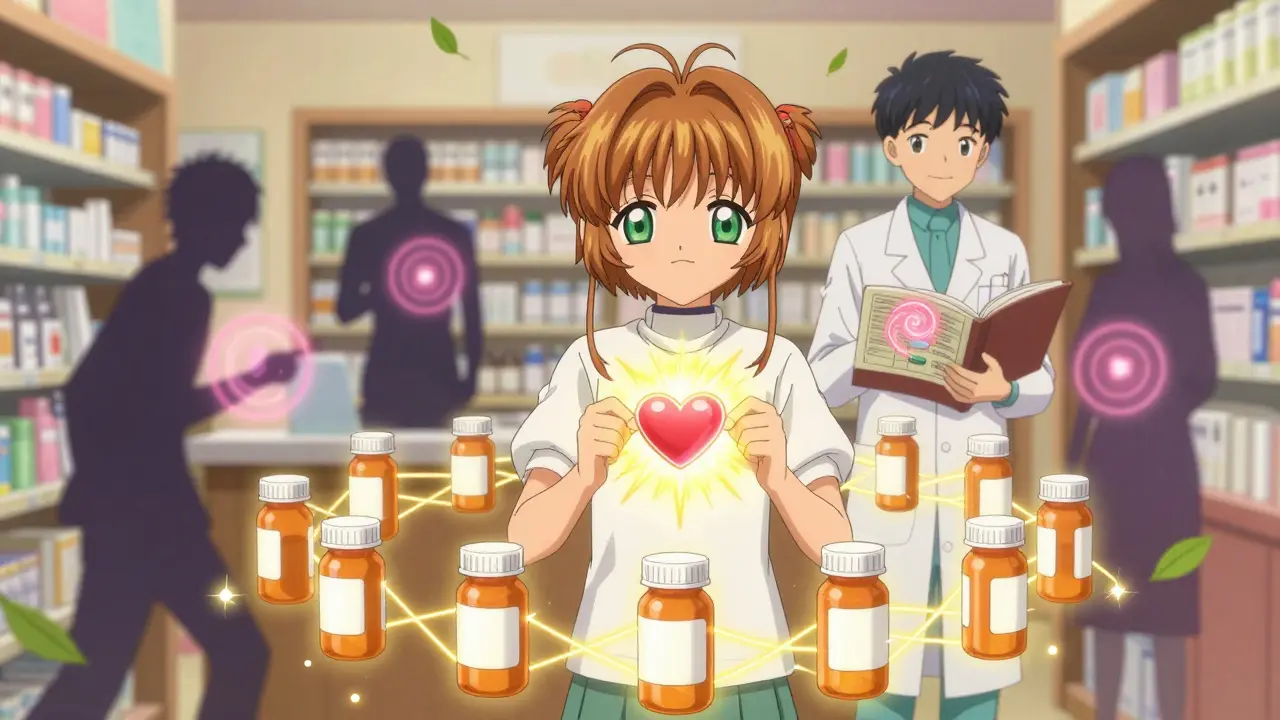
Medication Interaction Checker
Check Your Medications for Dangerous Interactions
Enter all medications you're taking (prescriptions, OTC drugs, supplements) to see if you have dangerous combinations. Using one pharmacy helps pharmacists catch these risks before they happen.
Think about this: you take five different prescriptions. Your blood pressure pill, your diabetes medicine, your cholesterol drug, an antidepressant, and a pain reliever. Now imagine each one comes from a different pharmacy. One week you pick up your statin at the corner store. Next week, you grab your insulin at the big chain. Then you get your blood thinner from the pharmacy near your mom’s house. Sounds convenient? It’s not. It’s risky.
Why One Pharmacy Matters More Than You Think
Using one pharmacy for all your prescriptions isn’t just a suggestion-it’s a safety strategy backed by hard data. When you fill every prescription at the same place, your pharmacist sees your full picture. Not just what’s in your current bottle, but everything you’ve ever been prescribed. That includes over-the-counter meds, supplements, and even herbal remedies. Most people don’t realize their pharmacist can spot dangerous combinations before they happen. But only if they have the full list.According to a 2014 study published in the Journal of Managed Care & Specialty Pharmacy, people who use multiple pharmacies face a 34% higher chance of dangerous drug interactions. That’s not a small number. It means nearly one in three people who split their prescriptions are putting themselves at risk. The most common dangerous combo? Warfarin (a blood thinner) and NSAIDs like ibuprofen. Together, they can cause serious internal bleeding. A single pharmacy’s system catches this before the prescription even leaves the counter.
How Your Pharmacist Becomes Your Safety Net
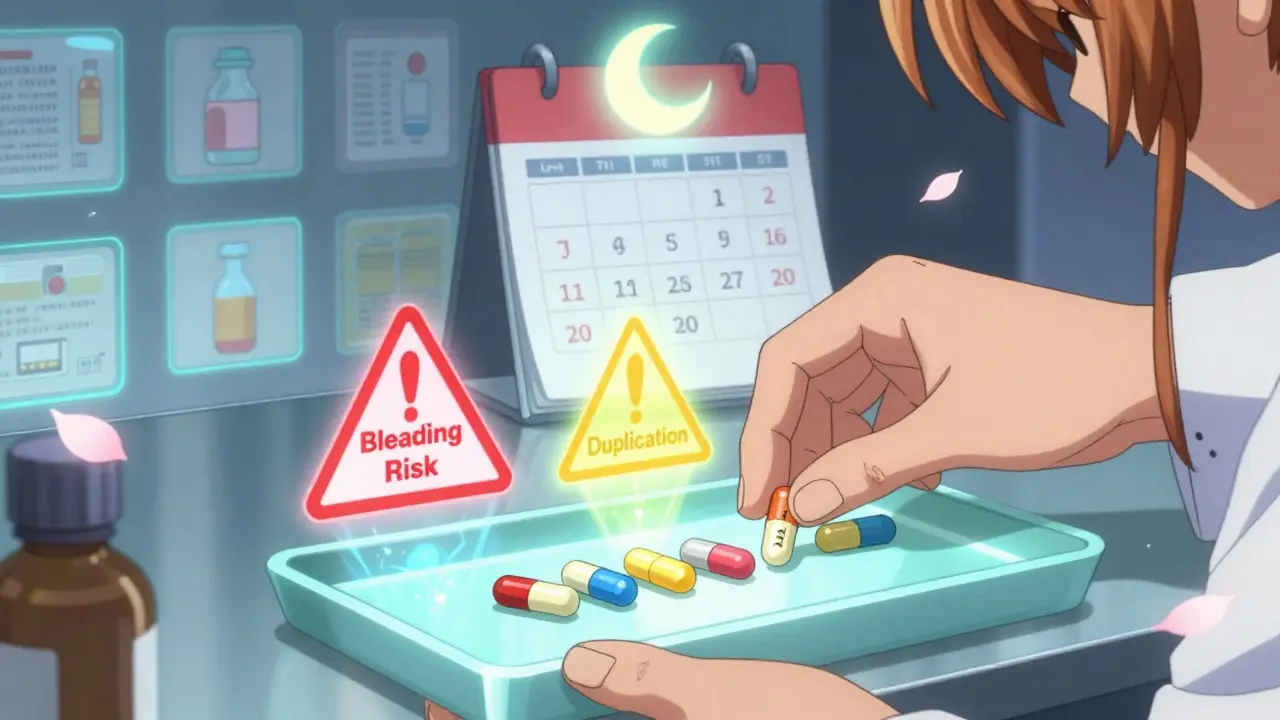
Your pharmacist isn’t just handing out pills. They’re monitoring your entire medication profile. Modern pharmacy software checks every new prescription against your full history-over 10,000 possible drug interactions. But here’s the catch: if you use three different pharmacies, each one only sees part of your story. One pharmacy might know about your heart meds. Another might know about your painkillers. But none of them see the full picture. That’s why pharmacists override 80% of interaction alerts when patients use multiple locations. They don’t trust the data. And neither should you.When you stick with one pharmacy, your pharmacist builds a relationship with you. They remember your allergies. They know if you’ve had trouble with side effects before. They notice if you’re taking two pills that do the same thing-like two different brands of acetaminophen. That’s called therapy duplication. It happens in 7% of people who use multiple pharmacies. But in people who use just one? It drops to 0.3%. That’s not luck. That’s coordination.
Med Sync: The Simple System That Keeps You on Track
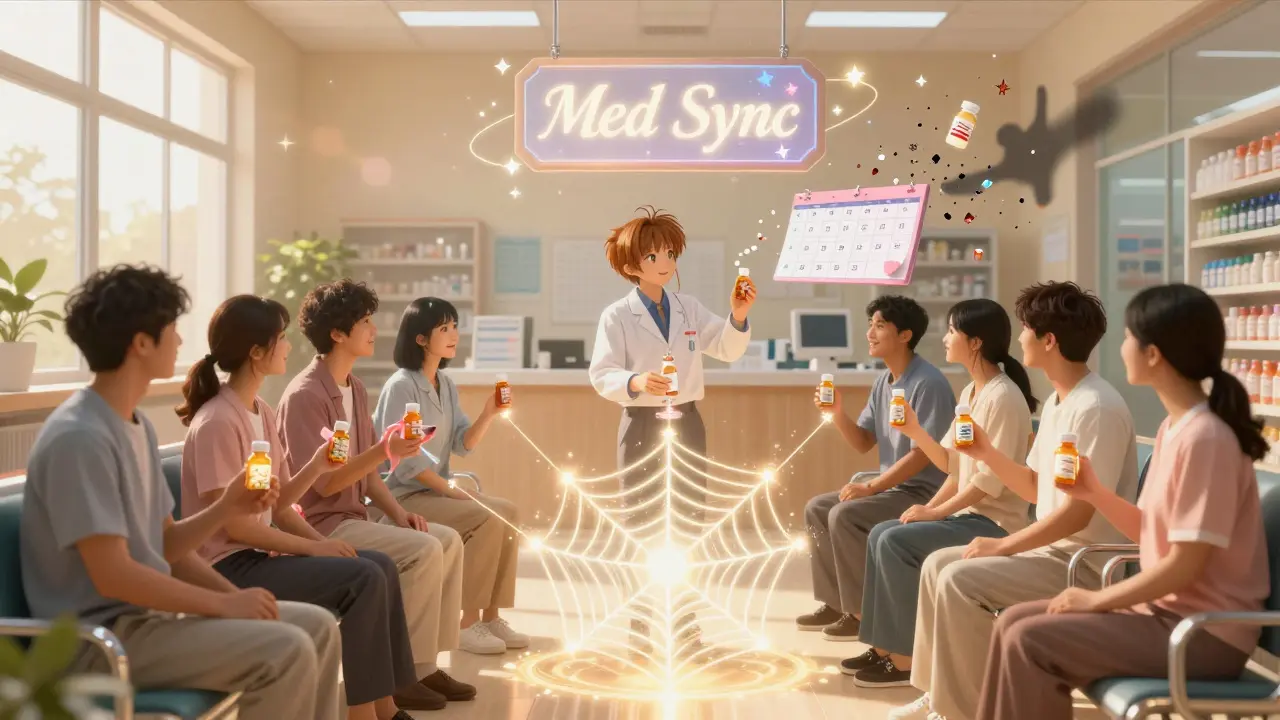
One of the biggest hidden benefits of using one pharmacy is something called medication synchronization, or “med sync.” It’s not complicated. Your pharmacy takes all your refills and lines them up to be due on the same day each month. So instead of three separate trips for three different pills, you make one trip every four weeks. You get everything at once. No more forgetting which pill you’re supposed to take when.The process is simple: you talk to your pharmacist, they review your whole list, then they adjust your refill dates by giving you short-term fills until everything lines up. It usually takes 2-4 weeks. After that, you show up on the same day every month. No calls. No reminders. Just grab your meds and go. CVS, Walgreens, and other major chains have been using this for years. And they report 85-90% adherence rates among patients enrolled in med sync. That means people actually take their meds as prescribed. That’s huge.
The Real Cost of Splitting Your Prescriptions
Some people think using multiple pharmacies saves money. And sometimes, it does. You might find a better price on your diabetes medicine at one store and a discount on your blood pressure pill at another. But here’s what nobody tells you: the cost of a single preventable drug interaction can be $8,750. That’s the average hospital bill from a bad reaction, according to the Agency for Healthcare Research and Quality. And if you’re on five or more medications-like 15% of American adults-you’re already in the highest-risk group.SingleCare’s 2023 data shows 63% of people using multiple pharmacies do it to save $150-$300 a year. But that savings disappears fast if you end up in the ER. And it’s not just money. It’s time. It’s stress. It’s fear. One patient in Cleveland was hospitalized with serotonin syndrome after two different pharmacies filled conflicting antidepressants. Neither pharmacist had the full picture. That could’ve been prevented.
What You Need to Do Right Now
If you’re on more than two prescriptions, it’s time to consolidate. Here’s how:- Make a complete list of everything you take: prescriptions, over-the-counter meds, vitamins, herbs. Don’t skip anything.
- Choose one pharmacy you trust. It doesn’t have to be the cheapest. Pick the one that’s easiest to get to and where the staff knows you.
- Call your current pharmacies and ask them to transfer all your prescriptions to your chosen location. It usually takes 2-5 business days.
- Ask if they offer med sync. If they do, sign up. If they don’t, ask why-and if they can start.
- Bring your list to your next appointment. Let your pharmacist review it with you. Ask: “Is there anything here that shouldn’t be taken together?”
Most pharmacists will help you for free. No appointment needed. Just walk in. And if they push back? Find another pharmacy. This isn’t optional. It’s essential.
What’s Changing in 2026
The system is catching up. In 2023, the Pharmacy Quality Alliance started requiring pharmacies to complete comprehensive medication reviews as part of their performance metrics. In 2024, Medicare Part D proposed new rules that reward pharmacies with higher patient adherence rates. And by 2025, AI tools from the University of Southern California’s Polypharmacy Research Group will start helping pharmacists predict dangerous combinations before they happen.But here’s the truth: technology can’t fix what people don’t do. If you keep splitting your prescriptions, no algorithm will save you. Only you can decide to take control. And the easiest, most effective way to do that is simple: use one pharmacy.
It’s not about loyalty. It’s about survival. Your life depends on the full picture. And only one pharmacy can give you that.
Can I still use different pharmacies if I want to save money?
Yes, but it’s risky. While some people save $150-$300 a year by shopping around, they increase their chance of dangerous drug interactions by 34%. The average cost of one preventable hospitalization from a bad interaction is $8,750. The savings aren’t worth the risk-especially if you take five or more medications.
Does my pharmacy automatically know all my medications?
No. Pharmacists only see what’s filled at their location. If you use multiple pharmacies, each one has a partial record. That’s why interaction alerts get overridden 80% of the time-pharmacists don’t trust incomplete data. You must tell them everything, even OTC pills and supplements.
What is med sync and how does it help?
Med sync is when your pharmacy lines up all your prescription refills to be due on the same day each month. It reduces missed doses, cuts down on trips to the pharmacy, and ensures your pharmacist sees your full medication list every time you refill. Patients in med sync programs have 85-90% adherence rates, meaning they actually take their meds as prescribed.
Is it hard to switch to one pharmacy?
Not at all. You just call your current pharmacies and ask them to transfer your prescriptions to your new one. The process takes 2-5 business days. Then, ask about med sync. Most pharmacies offer it for free. No paperwork, no fees. Just walk in with your list of meds and say, “I want to use just you from now on.”
Do I need to tell my doctor about using one pharmacy?
You don’t have to, but it helps. Your doctor and pharmacist can work together better if they know you’re using one pharmacy. It makes communication smoother. But even if your doctor doesn’t know, your pharmacist still has the full picture-and that’s what matters most for safety.
What if I don’t trust my local pharmacy?
Find another one. You have options. Look for a pharmacy where the staff remembers your name, asks about your meds, and doesn’t rush you. It’s not about size-it’s about connection. A small pharmacy that knows you is safer than a big chain that doesn’t.




8 Comments
Thomas Jensen
March 20, 2026 AT 12:39I’ve been using three different pharmacies for years because I’m tired of being overcharged. But now I’m wondering… what if the whole system is rigged? What if the big pharmacies are pushing this ‘one pharmacy’ thing so they can track every single pill you take and sell your data to insurers? I’m not paranoid-I’ve seen the documentaries. They’re building a profile on you. And when you’re on five meds? You’re basically a walking surveillance target. I’m switching… but I’m using a mail-order compounding pharmacy that doesn’t even have a website. 🕵️♂️
Nishan Basnet
March 21, 2026 AT 02:17This is one of those rare pieces of advice that’s both profoundly simple and life-saving. I’ve seen elderly patients in India collapse from drug interactions because their family members scattered prescriptions across five different shops-each one unaware of the others. The pharmacist who knew my grandmother’s full regimen? He caught the overlap between her aspirin and turmeric supplements before it turned into a bleed. It’s not magic. It’s just care. And care requires continuity. One pharmacy. One record. One person who remembers you’re not just a prescription number.
Allison Priole
March 21, 2026 AT 18:06Okay I just read this and I’m crying? Not because I’m emotional (I’m chill, I swear) but because my grandma died in 2021 from a bleeding ulcer and we never knew she was taking both warfarin and ibuprofen for her arthritis. Her pharmacy was ‘convenient’-she’d pick up pills wherever she was. I didn’t even know she was on five meds. I thought she just took ‘the heart pill’ and ‘the pain pill.’ I’m switching to one pharmacy TODAY. I just called CVS and they said they’ll transfer everything and set up med sync. I’m gonna bring my whole pill organizer and ask them to look at it. I’m not gonna let this happen again. 💔🫂
Casey Tenney
March 22, 2026 AT 02:03This isn’t advice. It’s a mandate. And if you’re still hopping between pharmacies, you’re not just careless-you’re dangerous. You’re a walking public health hazard. One person’s ignorance is someone else’s ER visit. Stop being lazy. Consolidate. Now. Your life isn’t a coupon clipping game.
Sandy Wells
March 23, 2026 AT 09:47I find it fascinating how people romanticize the pharmacist as some kind of guardian angel when in reality most are overworked and underpaid and just want to get you out the door so they can clock out. The idea that one pharmacy magically prevents interactions is a marketing myth. If you’re on five meds you should be seeing a clinical pharmacist-not just some guy behind a counter who doesn’t even know what serotonin syndrome is. Also med sync? Sounds like a corporate ploy to reduce foot traffic and increase refill compliance. I’m not signing up.
Timothy Olcott
March 23, 2026 AT 14:30USA 100% this is why we need to stop letting foreigners run our pharmacies. You think some guy in India or Mexico is gonna know what your American meds do? No. One pharmacy means one system. One system means one country. One country means safety. Also I use one pharmacy because I’m patriotic. 💪🇺🇸
Desiree LaPointe
March 24, 2026 AT 22:18Oh sweetie. You really think your pharmacist is going to ‘build a relationship’ with you? Honey, they’ve seen 147 people today. You’re the 148th. And the ‘full picture’? That’s a fantasy. The software’s glitchy. The data’s siloed. And don’t get me started on the fact that most pharmacies don’t even track OTCs unless you yell it across the counter like a lost child. This isn’t safety-it’s performative wellness. You’re paying for the illusion of care. I’d rather pay $300 a year and take my chances than fund a corporate PR campaign disguised as public health.
Jackie Tucker
March 26, 2026 AT 02:00The entire premise rests on the assumption that pharmacists are omniscient, that software is flawless, and that humans are capable of perfect disclosure. How quaint. In reality, we live in a fractured, profit-driven system where ‘one pharmacy’ merely consolidates your data for insurance underwriting, not safety. The 34% statistic? Likely inflated by cherry-picked studies funded by pharmacy conglomerates. And med sync? A brilliant behavioral nudge to turn patients into predictable, automated consumers. I’ll take my 7% duplication risk over being monetized by CVS’s loyalty algorithm any day. 🤷♀️