
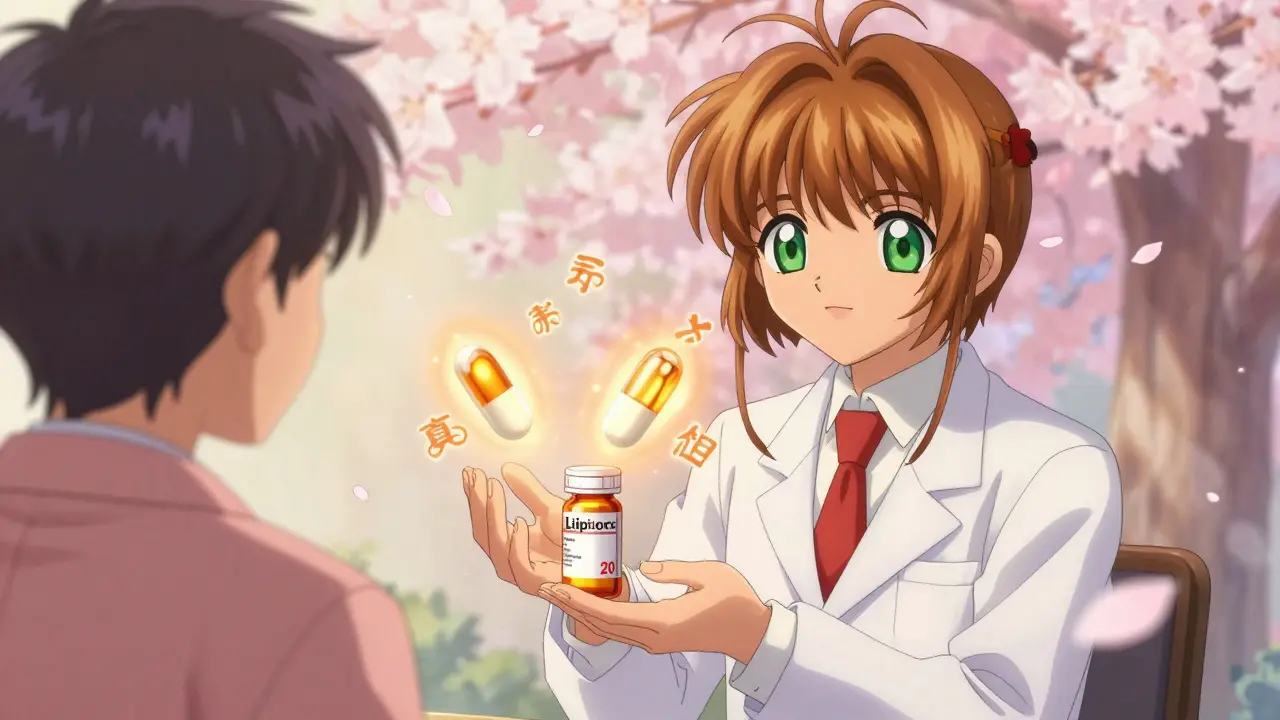
When you fill a prescription for a brand-name drug like Lipitor or Prozac, you might see a different-looking pill in the bottle-same size, same color, maybe even the same imprint-but no brand name on it. That’s an authorized generic. And if you’ve ever wondered whether it’s truly the same as the original, the answer is simpler than you think: yes, it is.
What Exactly Is an Authorized Generic?
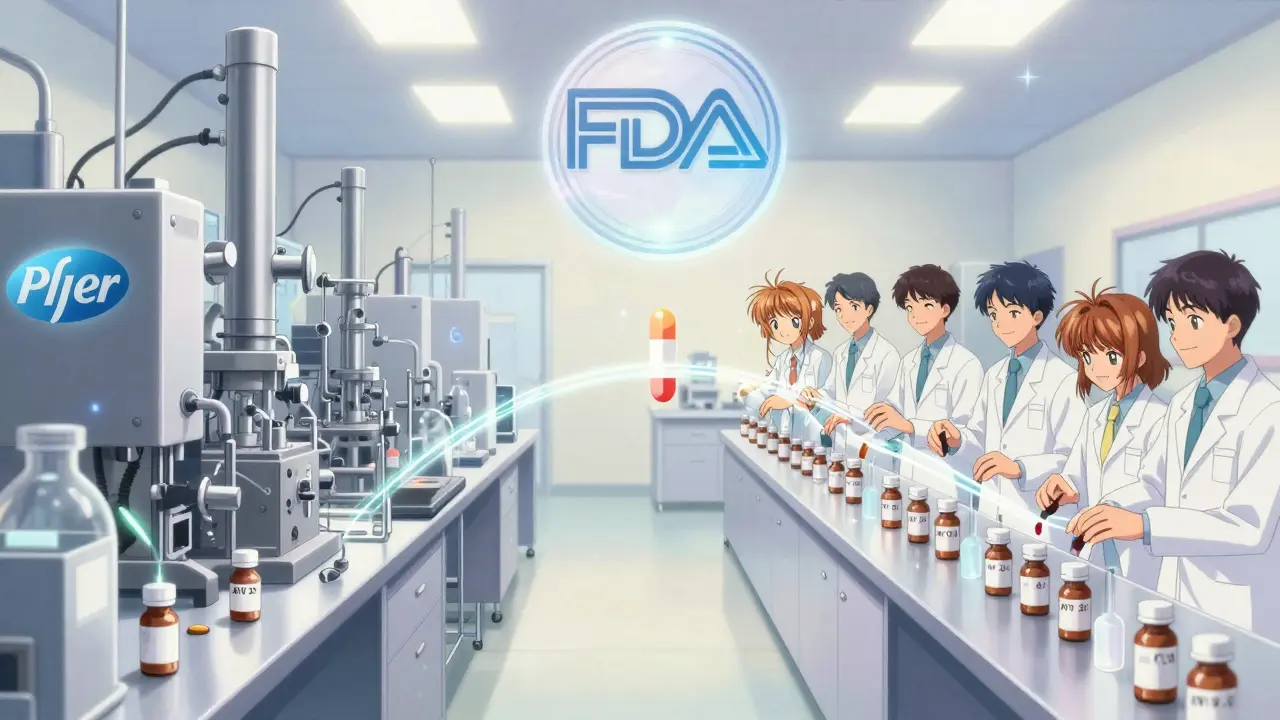
An authorized generic is not a copy. It’s not a knockoff. It’s the exact same medication, made in the same factory, using the same ingredients, under the same quality controls as the brand-name version. The only difference? It doesn’t carry the brand name on the label. The company that originally developed the drug-say, Pfizer for Lipitor-can legally produce and sell this identical version under a different label, often at a lower price.
This isn’t some loophole. It’s built into U.S. drug law. The Hatch-Waxman Act of 1984 created a system where brand companies could introduce their own generic version when patent protection started to expire. The FDA defines it clearly: an authorized generic is "approved brand name drugs that are marketed without the brand name on its label. Other than the fact that it does not have the brand name on its label, it is the exact same drug product as the branded product."
So if your doctor prescribes "atorvastatin 20 mg," and you get a white oval pill labeled "ATV 20" instead of "Lipitor 20," you’re holding an authorized generic. It was made on the same production line, with the same batch of active ingredient, same fillers, same coating, same everything.
How Is It Different from Regular Generics?
This is where things get confusing. Most people think all generics are the same. They’re not.
Regular generics-also called "ANDA generics"-go through a different approval process. They must prove they’re "bioequivalent" to the brand. That means they deliver about the same amount of medicine into your bloodstream within a narrow range (usually 80-125% of the brand). But they can have different inactive ingredients: different dyes, binders, or preservatives. That’s why a generic version of a birth control pill might look completely different from the brand, or why some people report feeling "off" after switching.
Authorized generics skip that whole process. They don’t need to prove bioequivalence because they’re not a different product. They’re the brand product with a new label. They’re approved under the original New Drug Application (NDA), not the Abbreviated New Drug Application (ANDA) used for regular generics. That’s why you won’t find them in the FDA’s Orange Book-where all approved generics are listed. They’re invisible to the system that tracks typical generics.
Think of it this way: a regular generic is like a copy of a photo printed on different paper. An authorized generic is the same photo, same printer, same ink, just printed without the logo on the bottom.
Are They Really Therapeutically Equivalent?
The short answer: yes. And the evidence backs it up.
A 2018 study published in the Journal of Managed Care & Specialty Pharmacy looked at over 5,000 patients who switched from brand-name drugs to generics. The study compared outcomes between those who got authorized generics and those who got regular generics. The results? No meaningful differences in hospital visits, emergency room trips, or how often people stopped taking their medication.
Even the small differences that showed up-like a slightly higher rate of emergency visits for authorized generics-were statistically insignificant. The researchers concluded: "Generics were clinically no worse than their proxy brand comparator."
The FDA has been clear for years: authorized generics are therapeutically equivalent. Janet Woodcock, former head of the FDA’s drug division, stated plainly that they provide "the same therapeutic effect as the brand-name product." Why? Because they’re the same product.
Some worry about drugs with a narrow therapeutic index-like blood thinners or seizure medications-where tiny changes in dosage can cause problems. But even here, the data doesn’t support concern. The FDA requires every batch of drug, whether branded or authorized generic, to meet identical quality standards. In fact, the agency investigates every reported side effect, whether it comes from a brand, a regular generic, or an authorized generic. If there’s a pattern, they act. No exceptions.
Why Do Authorized Generics Cost Less?
Price is the big reason people choose them. Authorized generics are almost always cheaper than the brand-name version. But they’re not always the cheapest option. Sometimes, regular generics cost even less.
Why? Because authorized generics are sold by the original manufacturer, who still has overhead costs-marketing, distribution, staffing. Regular generics are often made by third-party companies that specialize in low-cost production. They don’t have the same brand-name baggage.
Still, for many patients, the peace of mind matters. A 2017 survey in Pharmacy Times found that people switching from brand to generic were more likely to stick with treatment if they got an authorized generic. Why? Because they didn’t have to worry about inactive ingredients. For example, someone on birth control might be nervous about switching to a generic with a different filler that could affect absorption. With an authorized generic, that worry disappears.
What About Insurance and Pharmacy Systems?
Here’s the practical snag: pharmacies don’t always make it easy.
Authorized generics have their own National Drug Code (NDC), so they show up as a separate product in pharmacy software. If your insurance plan has a tiered formulary, it might cover the brand, the authorized generic, and the regular generic at different cost levels. That means your copay could change depending on which version you get-even if they’re identical.
Pharmacists need to know the difference. If you ask for a generic and get an authorized one, you might be surprised by the price. Or worse, your insurer might deny coverage because they expected a regular generic. Always ask: "Is this an authorized generic?" And if you’re switching from brand to generic, check the label. If it looks exactly like your old pill but has no brand name on it, you’re likely getting the authorized version.
Why Don’t More People Know About Them?
Because they’re hidden. The FDA doesn’t list them in the Orange Book. Insurance formularies don’t always label them clearly. Many doctors don’t even know they exist.
Brand companies sometimes introduce authorized generics as a way to keep market share when a patent expires. It’s a smart business move-they keep selling the same drug, just under a cheaper label. But that also means they’re not always upfront about it. Patients aren’t told, "We’re giving you the same pill, just without the name on it."
As a result, many people think generics are risky. They assume "generic" means "inferior." But authorized generics remove that fear entirely. They’re the only type of generic that’s truly identical.
What’s the Future for Authorized Generics?
The market for authorized generics is small-about 5-7% of all generics sold-but growing. The Congressional Budget Office predicts that number will hold steady through 2028, especially for complex drugs where consistency matters: epilepsy meds, thyroid hormones, psychiatric drugs.
The FDA has taken steps to improve transparency. In 2022, they launched the GDUFA III plan to make authorized generics easier to track. In 2023, they updated labeling rules to ensure authorized generics match the brand’s packaging exactly, except for the name.
More health systems are starting to include them in formularies-not because they’re cheaper than regular generics, but because they’re more reliable. For patients who’ve had bad experiences with typical generics, authorized generics offer a bridge back to adherence.
Bottom Line: Should You Choose Authorized Generics?
If you’re switching from a brand-name drug and you’ve had issues with regular generics-unusual side effects, feeling off, trouble sticking with treatment-ask your pharmacist about the authorized version. It’s not always available, but it’s worth asking.
If cost is your biggest concern, compare the copays. Sometimes the regular generic is cheaper. But if you want absolute certainty that the pill in your hand is identical to the one you’ve been taking for years, the authorized generic is your best bet. No guesswork. No bioequivalence testing. Just the same drug, same company, same quality.
The FDA, the research, and the real-world data all agree: authorized generics are therapeutically equivalent to brand-name drugs. The only difference is the label. And sometimes, that’s enough to make all the difference.
Are authorized generics the same as brand-name drugs?
Yes. Authorized generics are manufactured by the same company that makes the brand-name drug, using the exact same active and inactive ingredients, in the same facility, under the same quality controls. The only difference is the label-no brand name appears on it. The FDA states they are "exactly the same drug product" as the brand.
Why aren’t authorized generics listed in the FDA’s Orange Book?
The Orange Book only lists drugs approved through the Abbreviated New Drug Application (ANDA) process, which applies to typical generics. Authorized generics are approved under the original brand’s New Drug Application (NDA), so they’re not included. This doesn’t mean they’re less safe or effective-it just means they’re legally classified differently.
Can authorized generics cause different side effects than the brand?
No. Because authorized generics are chemically and physically identical to the brand-name drug-including inactive ingredients-they should not cause different side effects. If you experience a change after switching, it’s more likely due to other factors like dosage timing, diet, or stress-not the medication itself.
Are authorized generics cheaper than regular generics?
Not always. Authorized generics are usually cheaper than the brand-name version but can sometimes cost more than regular generics. That’s because regular generics are made by third-party manufacturers focused on low-cost production. Authorized generics are sold by the original brand company, which may still have higher overhead.
Should I ask for an authorized generic when filling a prescription?
If you’ve had trouble switching to regular generics-like feeling unwell or stopping your medication-yes. Authorized generics offer the same formulation as the brand, so they’re ideal if you’re concerned about inactive ingredients or consistency. Always ask your pharmacist: "Is there an authorized generic available for this drug?"



12 Comments
Lebogang kekana
March 3, 2026 AT 10:32Man, I just switched to an authorized generic for my blood pressure med and I swear I felt like a new person. No more dizziness, no more brain fog. I was scared to switch because I thought generics were "cheap junk," but this? Same pill, same factory, just no fancy label. Why did no one tell me this before? I’m telling everyone now.
Pharmacies act like they don’t even know these exist. I had to ask three times before the pharmacist dug it up. Ridiculous.
Justin Rodriguez
March 3, 2026 AT 13:19As a pharmacist for 18 years, I can confirm this. Authorized generics are the gold standard. I’ve seen patients panic when they get a different-looking pill-even if it’s chemically identical. But when they find out it’s the same brand, just unlabeled? Relief. Pure relief.
Biggest issue? Insurance systems. They treat authorized generics like they’re different products. Sometimes they’re more expensive than regular generics because the system doesn’t recognize they’re the same thing. We have to manually override it. Patients shouldn’t have to fight for the best option.
Raman Kapri
March 3, 2026 AT 20:33You’re all being naive. Just because it’s made in the same factory doesn’t mean it’s identical. Production lines aren’t perfect. Cross-contamination, batch variations, calibration drift-these aren’t myths. The FDA’s "exact same" claim is marketing fluff wrapped in regulatory language.
And don’t get me started on the Hatch-Waxman Act. It was designed to let big pharma maintain monopoly pricing by creating pseudo-generics. This isn’t consumer protection-it’s corporate strategy dressed up as transparency.
Megan Nayak
March 4, 2026 AT 16:59Oh wow, so we’re just supposed to trust Big Pharma now? The same companies that hid opioid addiction risks, padded profit margins on insulin, and sued patients for using generics? You think they’d just... give us the exact same drug for cheaper? Out of the goodness of their hearts?
Let me guess-next you’ll tell me the moon landing was real and the Earth isn’t flat. I’ve seen too many people get sick after switching to "authorized" generics. Coincidence? Or just the kind of "statistically insignificant" data they want you to believe?
Tildi Fletes
March 6, 2026 AT 09:49The regulatory framework surrounding authorized generics is both elegant and underutilized. The FDA’s classification under the original NDA-rather than the ANDA pathway-ensures pharmacokinetic equivalence without redundant bioequivalence trials. This is an efficient use of scientific resources and reduces unnecessary barriers to therapeutic continuity.
However, the lack of inclusion in the Orange Book creates significant information asymmetry between prescribers, pharmacists, and patients. Standardized labeling protocols and electronic health record integration would significantly improve adoption rates and reduce patient anxiety.
Siri Elena
March 7, 2026 AT 11:50So let me get this straight: you’re excited because you got the same pill... but without the logo? Like, congrats, you saved $10 on a pill that looks exactly the same as the one you’ve been taking for five years. Bravo. You’re basically a pharmaceutical Sherlock Holmes.
Meanwhile, I’m over here wondering why we’re celebrating corporate strategy as if it’s a public health breakthrough. The brand company didn’t do this because they care about you. They did it because they’re scared of losing market share. You’re not saving the system-you’re just their loyal customer who doesn’t know he’s being played.
Pankaj Gupta
March 8, 2026 AT 21:04It is important to distinguish between chemical equivalence and perceived equivalence. While authorized generics are indeed identical in composition, the psychological impact of brand recognition cannot be dismissed. Placebo effects, no matter how subtle, influence therapeutic adherence.
That said, the data supports the clinical non-inferiority of authorized generics. The 2018 study referenced is methodologically sound, with a large sample size and appropriate control variables. One might argue that the perceived benefit is partly psychosocial, yet the outcome-improved adherence-is clinically meaningful.
Betsy Silverman
March 9, 2026 AT 11:08I’ve been on an authorized generic for my antidepressant for two years now. No issues. No side effects. My doctor didn’t even mention it-I just noticed the pill looked the same but had no name on it. I asked the pharmacist, and he said, "Yeah, it’s the same stuff, just cheaper."
My mom switched to a regular generic and had a panic attack because the pill was blue instead of white. She thought it was a different drug. That’s the real problem-not the medication, but the fear. We need better education. Not just for patients, but for doctors too.
Ivan Viktor
March 9, 2026 AT 23:52So you’re telling me the pill I’ve been taking for years is still the same pill, but now it’s got a different label? Wow. Mind blown. I guess I’ll stop crying into my cereal now that I know I didn’t get scammed.
Also, I just found out my pharmacy has been giving me the authorized version for six months and I didn’t even know. Guess I’m lucky I didn’t turn into a zombie.
Zacharia Reda
March 11, 2026 AT 10:30Wait-so if the authorized generic is the same pill, why don’t we just call it what it is? Why hide it? Why not just say, "Here’s your Lipitor, but we’re not charging you for the marketing?"
It’s like buying a Nike shoe and getting the same exact shoe, but without the swoosh, and then paying less. You’d think the company would slap a "Same Shoe, No Logo" sticker on it. But no. They want you to think you’re getting a bargain… and then they act like you’re lucky to even get it.
Also, why is this so hard to find? I had to Google it. My pharmacist didn’t know. My doctor didn’t know. That’s not transparency. That’s a glitch in the system.
Jeff Card
March 12, 2026 AT 12:53I’ve been on the same meds for 12 years. Switched to an authorized generic last year. Didn’t notice a thing. My anxiety went down because I stopped worrying about whether I was getting a "fake."
My sister switched to a regular generic and said she felt "weird" for a week. Couldn’t tell you why. She’s not a doctor. She’s just a person who’s been on meds since college. She thought the change was the drug. It wasn’t. It was the dye. The filler. The placebo effect of thinking it was different.
Authorized generics? They’re the quiet heroes of the pharmacy aisle. Nobody talks about them. But if you’ve ever felt off after switching? Ask for one. It’s not magic. It’s just science.
Matt Alexander
March 14, 2026 AT 05:00Same pill, different label. Cheaper. No side effects. That’s it. No need to overthink it. Just ask your pharmacist. If it looks like your old pill but has no brand name, you got it. Save money. Stay healthy. Done.