Most fatal overdoses don't happen because someone took too much of one drug. They happen because they mixed two or more substances that work against each other in the body. This is called polysubstance use, which refers to consuming multiple types of drugs simultaneously, including prescription meds, over-the-counter pain relievers, illicit substances, and alcohol. Understanding these red flag combinations is not just about avoiding party mistakes; it’s a critical safety measure for anyone managing chronic pain, anxiety, or mental health conditions. When you know how specific molecules interact, you stop guessing and start protecting your respiratory system and heart.
The danger isn't always obvious. Sometimes, mixing a stimulant with a depressant feels like the effects are canceling out, but underneath, your organs are working overtime. Other times, two depressants stack up so heavily that your breathing slows down without you realizing it until it's too late. Let’s break down the specific chemical pairings that medical professionals flag as high-risk, why they are dangerous, and what you can do to keep your treatment plan safe.
The Silent Killers: CNS Depressant Stacking
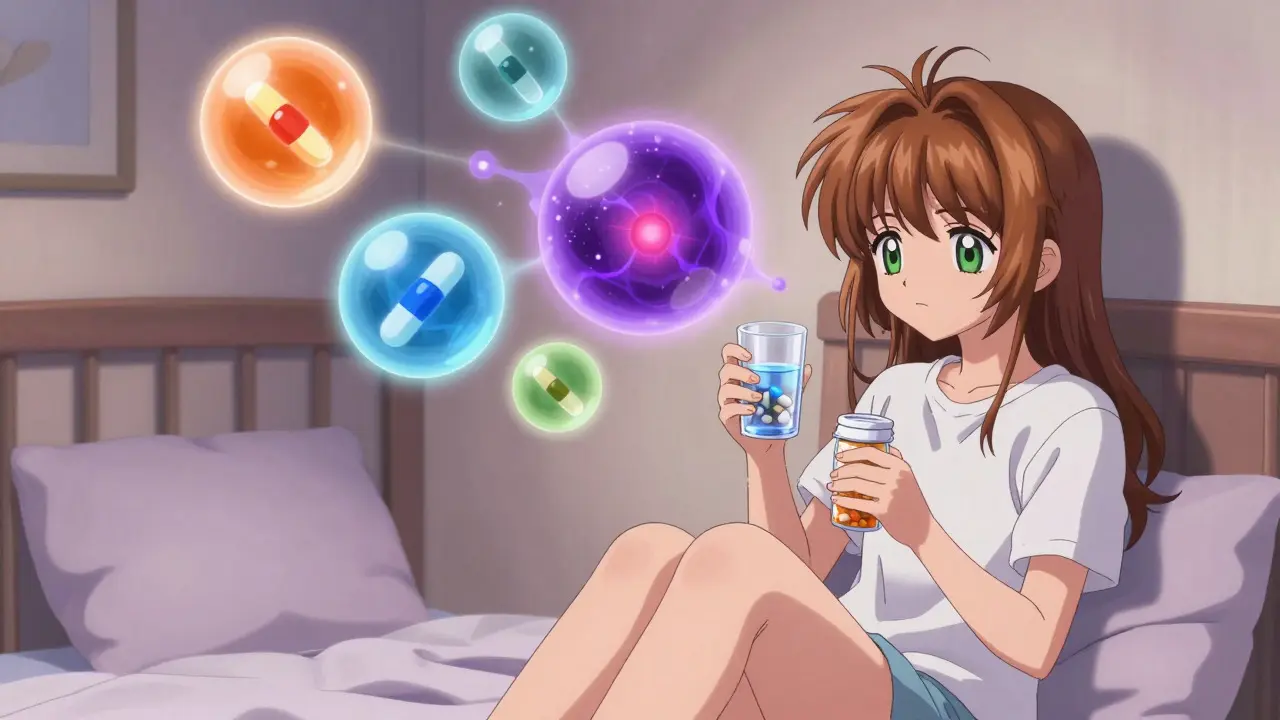
The most common cause of medication-related death involves Central Nervous System (CNS) depressants. These are drugs that slow down brain activity. The big three here are opioids, benzodiazepines, and alcohol. Individually, they carry risks. Together, they create a synergistic effect where the total danger is greater than the sum of its parts.
Opioids, such as oxycodone, hydrocodone, and morphine, bind to receptors in the brain to block pain signals. However, they also suppress the part of the brain that controls breathing. Benzodiazepines, often prescribed for anxiety or insomnia (like alprazolam, diazepam, or lorazepam), enhance the effect of the neurotransmitter GABA, which calms neural activity. When you combine these two, the risk of respiratory depression skyrockets. Research from the Journal of Clinical Pharmacology shows a 4.5-fold increase in respiratory depression risk when opioids are combined with other CNS depressants compared to using them alone.
Add alcohol to this mix, and the situation becomes precarious. Alcohol is a potent CNS depressant on its own. The National Institute on Alcohol Abuse and Alcoholism (NIAAA) reports that alcohol-medication interactions contribute to roughly 20% of adverse drug events requiring emergency department visits. If you take a prescribed dose of an opioid for dental surgery and then have two standard drinks, you might feel "fine" or even alert due to the initial stimulation, but your blood oxygen levels could be dropping dangerously low. This is why many healthcare providers now issue explicit written warnings about alcohol consumption for patients on opioids or benzodiazepines.
The Push-Pull Effect: Stimulants and Depressants
There is a persistent myth that mixing a stimulant with a depressant cancels out the bad effects. Think of the classic "speedball," which combines cocaine (a stimulant) and heroin (an opioid). For years, users believed the high energy of cocaine would offset the sedation of heroin. In reality, this creates a chaotic "push-pull" dynamic on the cardiovascular and respiratory systems.
Cocaine blocks the reuptake of dopamine and norepinephrine, spiking heart rate and blood pressure. Heroin slows everything down. When taken together, the body experiences extreme stress. Acute cases can see blood pressure spike to 180/110 mmHg and heart rates ranging from 110 to 160 beats per minute. The danger here is twofold: first, the sheer strain on the heart increases the risk of heart attack or aneurysm; second, the opposing effects mask the signs of overdose. You might not feel sleepy enough to realize your breathing has slowed, or you might not feel wired enough to notice your heart is racing into arrhythmia territory.
Another insidious pairing is alcohol and cocaine. When these two meet in the liver, they form a new metabolite called cocaethylene. Cocaethylene extends the euphoric effects of cocaine by about 30 minutes but is significantly more toxic. It carries a 25% higher risk of immediate death compared to cocaine alone and is strongly linked to liver damage and seizures. Because the alcohol masks the intensity of the cocaine, users often consume more than they intended, leading to unpredictable physiological responses.
Prescription Traps: Beyond Painkillers
Dangerous interactions aren't limited to pain management. Many psychiatric medications have severe interactions with alcohol and other drugs. Selective Serotonin Reuptake Inhibitors (SSRIs) and Serotonin-Norepinephrine Reuptake Inhibitors (SNRIs) are widely used for depression and anxiety, but they require careful monitoring when combined with other substances.
For example, combining duloxetine (Cymbalta) with alcohol may increase the risk of liver toxicity by approximately 40%. Similarly, venlafaxine (Effexor) lowers the threshold for fatal alcohol overdoses. If you are on these medications, "moderate" drinking isn't just less effective-it can actively change how your body processes the drug, leading to accumulation in the bloodstream. Buprenorphine, a partial opioid agonist used for addiction treatment, also poses significant risks when mixed with alcohol. This combination can cause hypotension (blood pressure dropping below 90/60 mmHg) and profound sedation, potentially leading to coma if not monitored closely.
It is crucial to understand that "prescription" does not mean "safe." A prescription indicates that a doctor deemed the single drug appropriate for your condition, not that it is compatible with every other substance in your cabinet or fridge.

Why the Body Fails: Mechanisms of Toxicity
To truly appreciate the risk, you need to look at what happens inside the body during these interactions. The primary mechanisms of fatality in polysubstance use fall into three categories: respiratory depression, cardiovascular collapse, and metabolic toxicity.
- Respiratory Depression: This is the most common cause of death in opioid-benzodiazepine-alcohol combinations. The brainstem stops sending regular signals to the diaphragm. Breathing becomes shallow and slow. Unlike a stimulant overdose, where the victim might thrash or sweat profusely, a depressant overdose can look like deep sleep. This makes it easy for friends or family members to miss the warning signs until the skin turns blue or gray.
- Cardiovascular Complications: Stimulant-depressant mixes place massive strain on the heart. The vessel walls constrict while the heart tries to pump harder. This mismatch can trigger arrhythmias, heart attacks, or strokes. The unpredictability of street drugs, particularly fentanyl contamination, makes this even worse. The DEA reported in 2023 that 6 out of 10 illegally manufactured pills contain a potentially lethal dose of fentanyl, meaning any combination involving street supplies is a roll of the dice.
- Metabolic Toxicity: Some combinations create new chemicals in the body that are more toxic than the originals. Cocaethylene from cocaine and alcohol is the prime example. Other metabolic pathways can be overwhelmed, leading to liver failure or kidney stress, especially if the user has pre-existing conditions or takes other hepatotoxic medications like acetaminophen.
Practical Steps for Safer Treatment
You don't need to be a pharmacist to protect yourself, but you do need to be proactive. Here is how to approach your medication regimen with a safety-first mindset.
- Master Your Full List: Keep a single, updated list of every substance you take. This includes prescriptions, over-the-counter cold medicines, supplements, vitamins, and yes, alcohol. Bring this list to every doctor's appointment. Many adverse events happen because the cardiologist doesn't know you're seeing a psychiatrist, or the dentist doesn't know you're on a blood thinner.
- Ask About Interactions Explicitly: Don't assume the doctor knows what you're doing outside the clinic. Ask specifically: "Does this interact with alcohol?" or "Can I take ibuprofen with this?" Studies show that patient-provider communication gaps are a leading cause of preventable drug errors.
- Use Digital Tools Wisely: Apps and websites like WebMD or Medscape offer drug interaction checkers. While not a replacement for professional advice, they are excellent secondary checks. The market for these tools is growing rapidly, projected to reach $3.8 billion by 2027, reflecting increasing consumer awareness. Always verify findings with your pharmacist before making changes.
- Keep Naloxone Handy: If you are taking opioids, benzodiazepines, or have a history of polysubstance use, having naloxone (Narcan) in your home is a life-saving insurance policy. Community-based harm reduction programs report that providing naloxone alongside education reduces overdose fatalities by up to 22%.
- Watch for Warning Signs: Learn the signs of an overdose in others. For depressants, look for pinpoint pupils, slow or stopped breathing, unresponsiveness, and clammy skin. For stimulants, look for agitation, rapid pulse, high fever, and confusion. Time matters. Call emergency services immediately if you suspect an interaction is going wrong.
Comparing High-Risk Combinations
To visualize the differences in risk profiles, consider the following comparison of common dangerous pairings. Note that "Risk Factor" refers to the primary mechanism of injury, while "Prevalence" indicates how often this combination appears in overdose statistics.
| Combination | Primary Risk Mechanism | Key Statistic | Common Context |
|---|---|---|---|
| Opioid + Benzodiazepine | Respiratory Depression | 30.1% of opioid deaths involve benzos | Chronic pain & Anxiety treatment |
| Opioid + Alcohol | Sedation & Respiratory Failure | 4.5x increased respiratory risk | Post-surgical pain & Social use |
| Cocaine + Heroin | Cardiovascular Stress | 50% of cocaine ODs involve heroin | Illicit polysubstance use |
| Cocaine + Alcohol | Cocaethylene Toxicity | 25% higher immediate death risk | Social/Nightlife settings |
| SNRI + Alcohol | Liver Toxicity & Lowered OD Threshold | 40% increased liver risk (Duloxetine) | Mental health maintenance |
Frequently Asked Questions
Is it safe to drink alcohol if I'm on antidepressants?
It depends on the specific medication. SSRIs generally have fewer severe interactions with moderate alcohol, but SNRIs like venlafaxine and duloxetine can increase liver toxicity and lower the threshold for alcohol overdose. Always consult your prescribing physician, as individual tolerance varies based on dosage and metabolic health.
What is the difference between additive and synergistic drug effects?
An additive effect means the combined result is equal to the sum of the individual effects (1+1=2). A synergistic effect means the combined result is greater than the sum (1+1=3 or more). Most dangerous drug combinations, like opioids and benzodiazepines, are synergistic regarding respiratory depression, making them far more lethal than expected.
How long should I wait between taking different medications?
Spacing doses out does not eliminate interaction risks if the half-life of the drugs overlaps. For example, if you take a long-acting opioid and then drink alcohol six hours later, the opioid is still active in your system. The safest approach is to avoid known dangerous combinations entirely rather than relying on timing windows.
Do herbal supplements interact with prescription drugs?
Yes. Many supplements, such as St. John's Wort, can alter how the liver metabolizes prescription medications, potentially lowering their effectiveness or increasing side effects. Treat supplements as active pharmaceutical ingredients and disclose them to your healthcare provider.
What should I do if I suspect a drug interaction is happening?
Stop taking the suspected substances immediately. If symptoms include difficulty breathing, unconsciousness, or blue-gray skin, call emergency services right away. If symptoms are milder (nausea, dizziness, confusion), contact your doctor or poison control center for guidance. Do not drive yourself to the hospital if you are sedated.