
You find a tick on your skin. It’s small, dark, and attached near your collarbone. Do you panic? Or do you just pull it out with tweezers and forget about it? The difference between those two reactions can determine whether you recover in three weeks or spend the next year dealing with fatigue and joint pain. Understanding the Lyme disease treatment timeline is not just medical trivia; it is the roadmap to avoiding long-term complications.
Lyme disease, caused by the bacterium Borrelia burgdorferi a spirochete bacterium transmitted by blacklegged ticks that causes systemic infection if untreated, is the most common vector-borne illness in the United States. While early cases are straightforward to cure, the window for easy treatment is narrow. This guide breaks down exactly what happens in your body from the moment of the bite through the final stages of recovery, so you know when to act and when to worry.
The Critical First 48 Hours: Tick Attachment and Transmission
Not every tick bite leads to Lyme disease. In fact, the vast majority of encounters end without infection. The key variable is time. For Ixodes scapularis the blacklegged tick species prevalent in the eastern United States responsible for transmitting Lyme disease, the bacteria must move from the tick's midgut to its salivary glands before they can be passed to you. This biological process typically takes at least 24 hours, though some research suggests transmission can begin as early as 15 hours under specific conditions.
This creates a critical safety net. If you remove an attached tick within 24 hours, your risk of infection drops by approximately 95%. Nymphs, the immature stage of the tick, are the primary culprits because they are only about 2mm wide-roughly the size of a poppy seed-and are hard to spot against human skin. Their peak activity aligns with spring and summer, exactly when you are likely hiking or gardening. If you live in the Northeast, Mid-Atlantic, or Upper Midwest, perform a full-body check within two hours of outdoor exposure. Showering immediately also helps wash off any unattached nymphs.
If you do find a tick that has been attached for more than 36 hours, especially if it looks engorged (swollen with blood), consider prophylactic treatment. A single dose of 200mg doxycycline taken within 72 hours of removal can prevent infection in high-risk scenarios. This decision should be made with a healthcare provider, but knowing the 24-hour rule empowers you to act fast.
Stage 1: Early Localized Disease (Days 1-28)
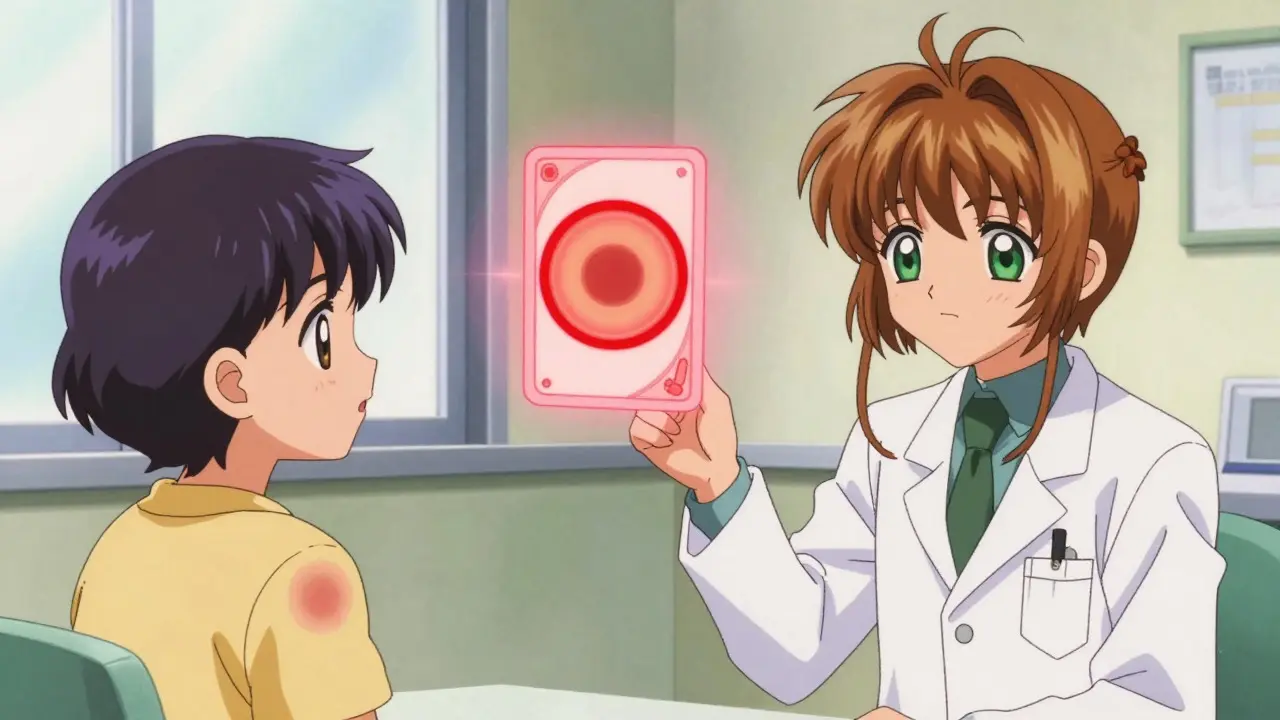
If the bacteria enter your system, the first sign is usually visual. Between one and 28 days after the bite, roughly 70% to 80% of patients develop erythema migrans (EM). This is the classic "bull's-eye" rash. It starts as a red spot that expands over several days, sometimes forming concentric rings. Unlike many other rashes, EM is rarely itchy or painful, which is why people often miss it or mistake it for heat rash or insect bites.
Alongside the rash, you might feel flu-like symptoms. Fatigue is reported in 70% of cases, headache in 61%, and fever in 45%. At this stage, the infection is localized. The good news? This is the easiest phase to treat. Standard protocol involves 10 to 21 days of oral antibiotics. Doxycycline is the go-to for adults, while amoxicillin is preferred for children and pregnant women. Because the bacterial load is low and confined, response rates are excellent. Most patients see significant improvement within the first week of starting medication.
Diagnosis here is primarily clinical. If you have the characteristic EM rash and live in an endemic area, doctors often prescribe antibiotics without waiting for lab results. Why? Because serological tests (blood tests) are notoriously unreliable in the first few weeks. Sensitivity is only 29% to 40% in early localized disease because your body hasn't produced enough antibodies yet to be detected. Waiting for a positive blood test can mean missing the optimal treatment window.
Stage 2: Early Disseminated Disease (Weeks to Months)
If Stage 1 goes untreated, the bacteria spread throughout your body via the bloodstream. This is where things get complicated. You might see multiple EM rashes appear in different parts of your body, indicating the infection is no longer contained to the bite site.
Neurological and cardiac issues can emerge during this phase. Facial palsy (paralysis on one side of the face) occurs in 5% to 10% of untreated cases. Lyme carditis, an inflammation of the heart tissue, affects 4% to 10% of patients. This can cause irregular heartbeats or shortness of breath. If you experience these symptoms alongside a history of tick exposure, seek immediate care.
Treatment for disseminated disease requires a heavier approach. Oral antibiotics may still work for mild cases, but neurological involvement or severe carditis often necessitates 14 to 28 days of intravenous antibiotics, such as ceftriaxone. Hospitalization is common during this phase to monitor heart function and administer IV therapy safely. The goal is to stop the spread before it reaches joints or deep tissues.
Stage 3: Late Disseminated Disease (Months to Years)
Reaching this stage means the infection has persisted for months or even years without adequate treatment. The hallmark symptom is arthritis, specifically affecting large joints like the knees. About 60% of untreated patients develop intermittent bouts of severe joint swelling and pain. It can look and feel like rheumatoid arthritis, leading to frequent misdiagnoses.
Neurological problems also become more chronic. Patients report neuropathy (tingling or numbness in extremities) and cognitive difficulties often described as "Lyme brain fog." Memory lapses, difficulty concentrating, and sleep disturbances are common complaints. At this point, the immune system has been battling the spirochete for a long time, causing collateral damage to tissues.
Treatment timelines extend significantly. Doctors may prescribe longer courses of oral antibiotics or repeat IV regimens. However, the likelihood of complete symptom resolution decreases compared to early-stage treatment. This is why the emphasis on the first 28 days is so critical.
Post-Treatment Symptoms and the "Chronic Lyme" Debate
Even with appropriate treatment, 10% to 20% of patients experience Post-Treatment Lyme Disease Syndrome (PTLDS). These symptoms-fatigue, pain, and joint aches-last for more than six months after finishing antibiotics. It is important to distinguish PTLDS from active infection. Current guidelines from the Infectious Diseases Society of America (IDSA) suggest that persistent symptoms are often due to residual inflammation rather than ongoing bacterial presence.
This distinction fuels a major debate in the medical community. Some specialists advocate for prolonged antibiotic therapy for what they term "chronic Lyme," arguing that 10% to 20% of patients harbor persistent bacteria. Others, including the IDSA, warn that long-term antibiotics carry risks like C. diff infections and liver strain without proven benefit for most patients. As of 2023, 28 U.S. states have enacted laws protecting physicians who choose to treat chronic Lyme with extended antibiotics, reflecting the lack of national consensus.
If you find yourself in this gray area, focus on symptom management. Physical therapy, anti-inflammatory medications, and cognitive behavioral strategies often help more than additional rounds of antibiotics. Keep a detailed symptom diary to track patterns and discuss them openly with your doctor.

Diagnostic Challenges and New Tools
Getting a correct diagnosis remains the biggest hurdle for many patients. A survey by LymeDisease.org found that 63% of patients saw three or more physicians before getting the right answer, with an average diagnostic delay of 1.8 years. Primary care physicians often struggle to identify all three stages correctly, with only 52% scoring perfectly on recent clinical vignette assessments.
Standard diagnosis relies on a two-tiered serological test: an ELISA followed by a Western blot. While effective for late-stage disease (87% sensitivity), it misses nearly half of early cases. To address this, the FDA approved the MiQLick test in March 2023. This urine-based test detects Borrelia DNA directly, boasting 92% sensitivity in early disease. It represents a significant leap forward, potentially reducing the diagnostic gap and allowing for faster intervention.
| Stage | Timeline After Bite | Key Symptoms | Standard Treatment | Prognosis |
|---|---|---|---|---|
| Early Localized | 1-28 days | Erythema migrans rash, fatigue, headache | 10-21 days oral antibiotics (Doxycycline/Amoxicillin) | Excellent; rapid recovery |
| Early Disseminated | Weeks to Months | Multiple rashes, facial palsy, carditis | 14-28 days IV antibiotics (Ceftriaxone) or extended oral | Good; requires close monitoring |
| Late Disseminated | Months to Years | Arthritis, neuropathy, cognitive issues | Prolonged oral or repeated IV antibiotics | Fair; higher risk of residual symptoms |
Prevention Strategies for High-Risk Areas
Prevention is far simpler and cheaper than treatment. If you live in or visit the 14 states where 95% of cases occur, adopt these habits:
- Check twice: Perform a full-body tick check within 2 hours of coming indoors. Check behind ears, in hair, armpits, and groin.
- Shower promptly: Showering within 2 hours of exposure reduces the chance of a tick finding a foothold.
- Dress appropriately: Wear light-colored clothing to spot dark ticks easily. Tuck pants into socks.
- Use repellents: Apply permethrin to clothing and DEET to skin.
Future Outlook: Vaccines and Research
While we wait for better diagnostics, vaccine development is accelerating. The Global Lyme Alliance is funding 17 active clinical trials. One notable candidate, VLA15 by Valneva and Pfizer, showed 70% to 96% efficacy in Phase 2 trials across different Borrelia strains. An mRNA-based vaccine from the National Institute of Allergy and Infectious Diseases (NIAID) was expected to enter human trials in 2024. These developments offer hope for a future where prevention doesn't rely solely on tick checks.
Until then, knowledge is your best defense. Understand the timeline. Recognize the rash. Act within 24 hours. By doing so, you keep Lyme disease a minor inconvenience rather than a lifelong challenge.
How long does it take for a tick to transmit Lyme disease?
Transmission typically requires the tick to be attached for at least 24 hours. Some studies suggest it can begin as early as 15 hours, but removing the tick within 24 hours reduces the risk of infection by 95%.
What is the standard antibiotic treatment for early Lyme disease?
For early localized disease, the standard treatment is 10 to 21 days of oral antibiotics. Doxycycline is commonly used for adults, while amoxicillin is preferred for children and pregnant women.
Can Lyme disease be cured completely?
Yes, when diagnosed and treated early, the vast majority of patients recover completely. However, 10% to 20% may experience Post-Treatment Lyme Disease Syndrome (PTLDS), characterized by fatigue and pain lasting more than six months after treatment.
Are blood tests reliable for diagnosing early Lyme disease?
Blood tests are less reliable in the first few weeks, with sensitivity ranging from 29% to 40% in early localized disease. Diagnosis is often clinical based on symptoms like the erythema migrans rash. Newer urine tests like MiQLick offer higher sensitivity for early detection.
What are the signs of late-stage Lyme disease?
Late-stage symptoms include intermittent severe joint pain and swelling (especially in knees), neuropathy, and cognitive difficulties. These symptoms can appear months to years after the initial infection if left untreated.