
Imagine taking a medication that saves your life, but the margin for error is razor-thin. Too little, and it fails to work; too much, and it becomes toxic. This is the reality for patients on Narrow Therapeutic Index (NTI) drugs, which are pharmaceuticals where the difference between a helpful dose and a harmful one is extremely small. For these specific medications, switching from a brand-name version to a generic alternative-or even swapping between different generic manufacturers-is not as simple as it is for common painkillers or antibiotics. The concern isn't about generics being "bad"; it’s about the math of biology clashing with regulatory standards.
What Exactly Is an NTI Drug?
To understand why generic switching causes anxiety among doctors and pharmacists, you first need to grasp what makes an NTI drug unique. Most medicines have a wide safety net. If you take slightly more than prescribed, nothing bad happens. But with NTI drugs, that buffer zone almost doesn't exist.
The Therapeutic Products Directorate of Health Canada defines an NTI drug by a specific ratio: the lowest concentration causing toxicity is less than or equal to two times the median concentration providing a therapeutic effect. In simpler terms, if the effective dose is 10 milligrams, a toxic dose might start at just 20 milligrams. That is a twofold difference, nothing more.
The U.S. Food and Drug Administration (FDA) puts it this way: these are drugs where small differences in dose or blood concentration can lead to serious therapeutic failures or adverse reactions. Common examples include Warfarin (a blood thinner), Phenytoin (for seizures), Lithium (for bipolar disorder), and Digoxin (for heart conditions). These aren’t niche treatments; they affect millions of people globally. When the window for effectiveness is so narrow, every variable matters-including how the pill is made.
The Bioequivalence Gap: Why 80-125% Isn’t Always Enough
Here is where the controversy begins. To get approved, a generic drug must prove it is "bioequivalent" to the brand-name original. The FDA requires that the generic’s absorption rate and extent fall within a 90% confidence interval of 80% to 125% compared to the reference drug. For most medications, this range is perfectly safe. A 20% variation in absorption won’t change whether your headache goes away or your blood pressure drops.
But for NTI drugs, a 20% swing can be catastrophic. Let’s look at Warfarin. Patients must maintain their International Normalized Ratio (INR) between 2.0 and 3.0 to prevent clots without risking dangerous bleeding. If a patient switches to a generic warfarin that absorbs 20% less efficiently than their previous brand, their INR could drop below 2.0. Suddenly, they are at risk of a stroke or pulmonary embolism. Conversely, if the new generic absorbs 20% more, the INR spikes above 3.0, raising the risk of hemorrhage.
This mathematical mismatch has been documented since the 1980s. Cases of phenytoin toxicity leading to nystagmus (involuntary eye movement) and ataxia (loss of coordination) after switching to a generic version are well-recorded. Similarly, breakthrough seizures in patients stabilized on brand-name carbamazepine who were switched to a generic highlight the real-world stakes. The standard bioequivalence limit was designed for broad-spectrum drugs, not precision instruments like NTI medications.
Conflicting Evidence: Do Generics Actually Fail?
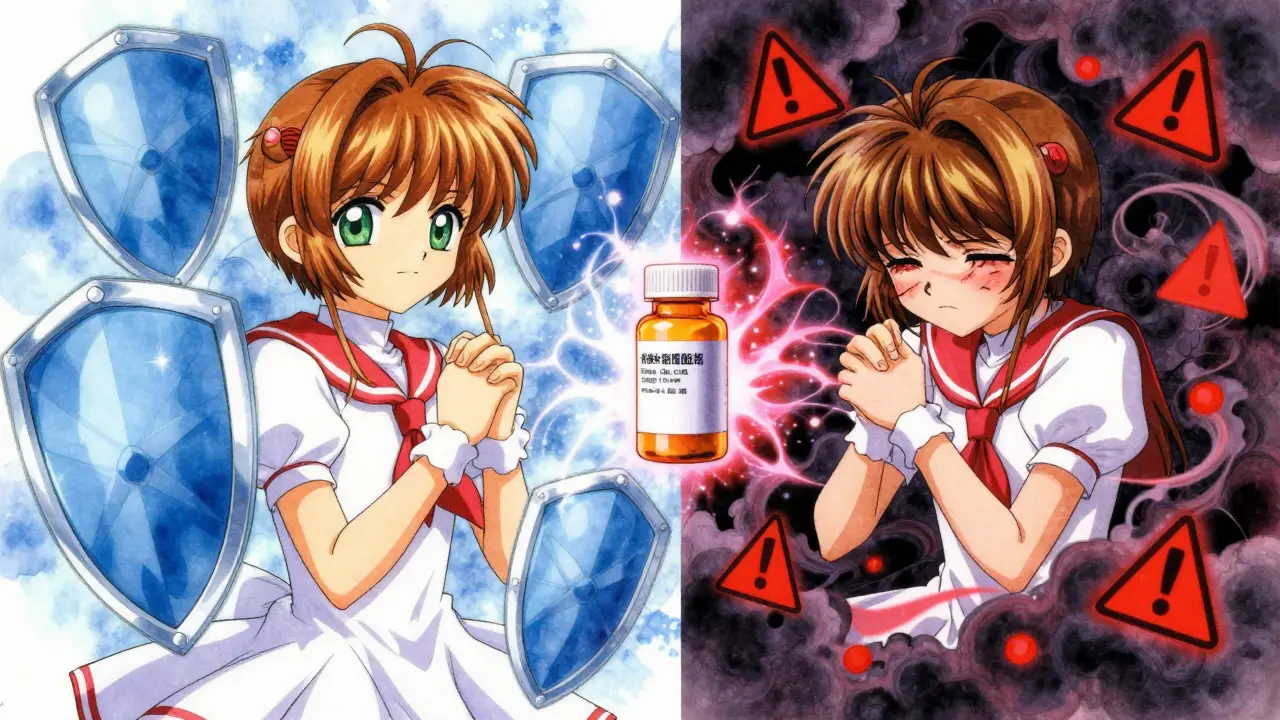
If the math suggests danger, why do regulators still allow easy substitution? The answer lies in conflicting clinical data. Some studies show no significant harm. A notable 2007 study by Milligan et al., conducted within a health maintenance organization, found that substituting a specific manufacturer’s generic warfarin for the brand-name Coumadin did not significantly affect INR control or adverse events. They concluded that HMOs could safely substitute at least one generic formulation without extra monitoring.
However, other research tells a different story. Contradictory studies have documented subtherapeutic INR values after switching from Coumadin to generic warfarin, even when all other variables remained consistent. These findings led researchers to recommend that any patient switching between forms should have their INR monitored much more carefully. The debate isn’t just academic; it affects daily practice. For antiepileptic drugs (AEDs), while bioequivalence studies generally claim interchangeability, conflicting literature has raised doubts among clinicians about true therapeutic equivalence.
The uncertainty is particularly high for opioids. Methadone, used for pain management and addiction treatment, has a narrow therapeutic index. In opioid-naïve patients, the ratio between the effective analgesic dose and the respiratory depressant dose can be as low as 2:1. Chronic use narrows this window further due to tolerance. Switching to a generic with higher bioavailability could trigger fatal respiratory depression, while lower bioavailability leads to inadequate pain relief and potential withdrawal symptoms.
Who Decides: Pharmacists, Doctors, or Regulators?
Because the science is nuanced, the policy landscape is fragmented. The FDA maintains that generic NTI drugs are therapeutically equivalent to the reference drug and expected to have equal effects. Yet, the American Medical Association (AMA) takes a more cautious stance. Under Policy H-125.984, the AMA asserts that the prescribing physician should ultimately decide whether to allow generic substitution for an individual patient. This shifts the burden from the pharmacy counter back to the doctor’s office.
Regulatory bodies vary widely. In North Carolina, General Statute 90-85.27 explicitly defines NTI drugs and restricts automatic substitution, requiring pharmacist notification or physician approval. Other states have similar lists, often covering 15-20% of commonly prescribed medications. Meanwhile, some experts argue more radically, stating that generic substitution should be avoided entirely for NTI drugs and made only under strict medical indication. One perspective suggests that pharmacies must be able to provide the specific brand name or critical dose drug, not just "any" generic available.
A 2019 national survey of pharmacists revealed widespread confidence in generic NTI safety, but also noted skepticism, particularly among those in non-chain settings. This divide highlights a practical problem: pharmacists are trained to follow state laws and insurance mandates, which often prioritize cost savings through generic substitution. But when patient safety hinges on milligram-level precision, automated substitution algorithms can feel risky.
| Entity | Position on Generic Substitution | Key Requirement/Concern |
|---|---|---|
| FDA | Generally allows substitution | Requires tighter quality limits; claims current 80-125% BE is adequate for most |
| AMA | Physician discretion required | Prescriber decides based on individual patient needs |
| North Carolina Board of Pharmacy | Restricted automatic substitution | Defines NTI list; limits pharmacist autonomy in switching |
| Clinical Experts (Various) | Skepticism/Case-by-case | Warns of bioavailability issues causing toxicity or failure |

Practical Steps for Patients on NTI Medications
If you or a loved one takes an NTI drug, you don’t need to become a pharmacologist, but you do need to be proactive. Here is how to navigate the system safely:
- Know Your Drug Class: Ask your doctor if your medication is considered Narrow Therapeutic Index. Common ones include Warfarin, Phenytoin, Lithium, Digoxin, Cyclosporine, and Theophylline.
- Maintain Consistency: Once you find a generic manufacturer that works well for you, try to stick with it. Tell your pharmacy manager that you prefer the same lot number or manufacturer whenever possible. Many pharmacies can set a flag in your profile to prevent automatic switches.
- Monitor Closer After Switches: If a switch does happen-due to supply chain issues or insurance changes-request more frequent blood tests. For warfarin, this means checking INR weekly instead of monthly. For lithium, check serum levels sooner than usual.
- Watch for Symptoms: Learn the signs of toxicity and under-dosing. For phenytoin, watch for dizziness or slurred speech. For digoxin, look out for nausea or visual halos. Report these immediately.
- Carry a Medication List: Share your full medication history with every healthcare provider. Highlight which brands or generics have worked best in the past.
Patient education is critical. As one resource notes, you shouldn’t switch between brand and generic forms without your prescriber’s OK. While most medications are interchangeable, NTI drugs may have small differences in absorption that can have a big impact on your health. Keeping a specific meal plan and avoiding certain foods can also help stabilize levels, especially for warfarin, which interacts heavily with Vitamin K intake.
The Future of NTI Drug Management
The conversation around NTI drugs is evolving. The FDA continues to recommend tighter quality and bioequivalence limits, acknowledging that the standard 80-125% range might be too broad for some cases. There is ongoing debate about whether bioequivalence standards should be narrowed to 90-111% for NTI drugs, a change that would require stricter manufacturing controls but potentially improve patient safety.
Future directions point toward personalized medicine. Instead of one-size-fits-all substitution rules, we may see more emphasis on therapeutic drug monitoring (TDM) and individualized dosing. The American Society for Clinical Pharmacology and Therapeutics has called for empirical evidence of risk penalties to inform better policies. Until then, the tension between cost containment and patient safety remains.
Generic drugs are vital for making healthcare affordable. But for NTI medications, affordability cannot come at the cost of stability. By understanding the risks, communicating clearly with your care team, and advocating for consistency, you can ensure that your treatment remains both effective and safe.
Is it safe to switch from brand-name to generic NTI drugs?
For many patients, yes, but it requires caution. While generics are bioequivalent within an 80-125% range, this variation can be significant for NTI drugs. The AMA recommends that the prescribing physician make the final decision. Close monitoring of blood levels is essential after any switch to detect toxicity or therapeutic failure early.
Which drugs are considered Narrow Therapeutic Index (NTI)?
Common NTI drugs include Warfarin (blood thinner), Phenytoin (seizure control), Lithium (mood stabilizer), Digoxin (heart failure), Cyclosporine (immunosuppressant), and Theophylline (asthma/COPD). These drugs have a small margin between effective and toxic doses.
Can I switch between different generic manufacturers of the same NTI drug?
It is generally discouraged to switch frequently between different generic manufacturers for NTI drugs. Even though all approved generics meet bioequivalence standards, slight variations in inactive ingredients or manufacturing processes can affect absorption. Consistency with one manufacturer is safer.
What should I do if my pharmacy runs out of my specific generic NTI drug?
Contact your prescribing physician before accepting a different brand or generic. Ask if you can wait for your preferred stock to return or if a short-term bridge therapy is needed. If a switch is unavoidable, schedule immediate blood level monitoring to adjust dosage if necessary.
Do all countries regulate NTI drug substitution the same way?
No. Regulations vary significantly. For example, North Carolina restricts automatic substitution for listed NTI drugs, while other jurisdictions may allow pharmacists more autonomy. The FDA in the U.S. considers current standards adequate, but international bodies like Health Canada define NTI strictly based on toxicity ratios. Always check local guidelines.