
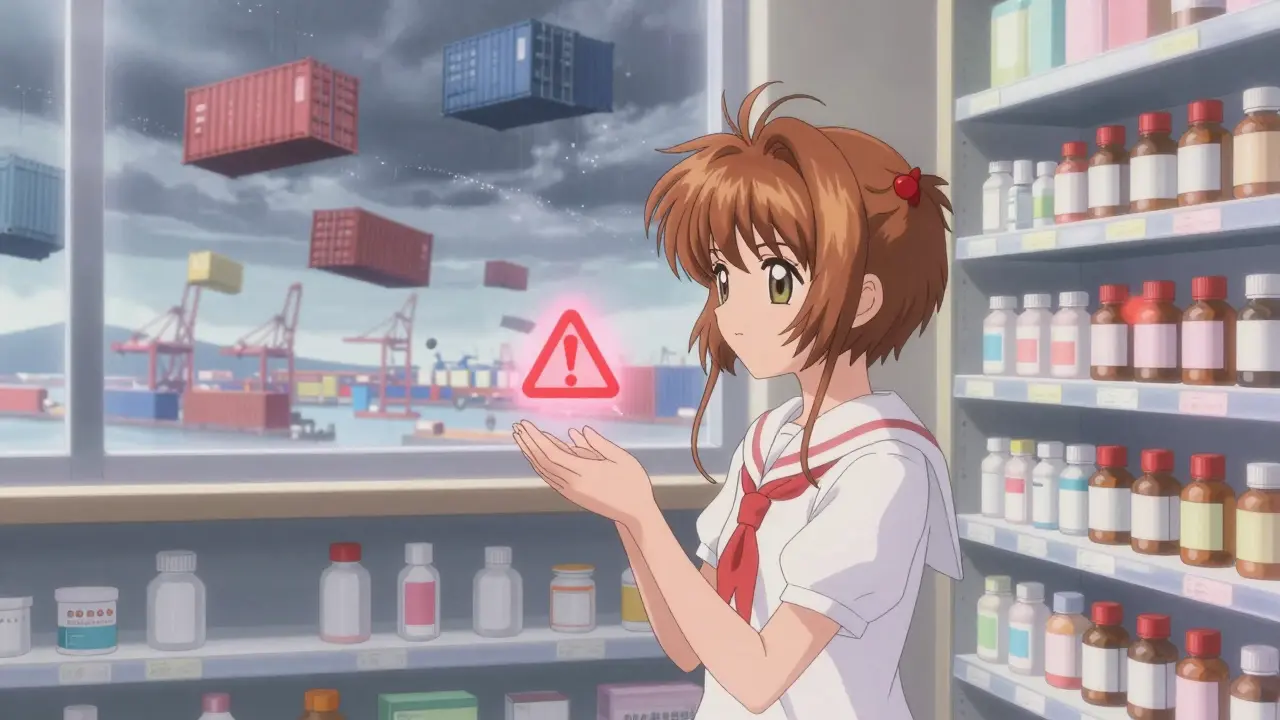
Every time you fill a prescription for antibiotics, insulin, or even a common blood pressure pill, you’re relying on a global network that’s more fragile than most people realize. In 2025, drug shortages aren’t random glitches-they’re the direct result of decades of outsourcing drug production to a handful of foreign countries, mostly in Asia. It’s not about politics or blame. It’s about physics: when 90% of the active ingredients in your medicine come from a single region, and that region gets hit by a port strike, a flood, or a trade war, your pills disappear.
How Did We Get Here?
In the 1990s, pharmaceutical companies started chasing lower costs. Making drugs in the U.S. or Europe meant paying workers $30 an hour. In China and India, the same work cost $3. So factories moved. Raw materials, intermediates, and finished pills followed. By 2025, China supplies 75% of the world’s active pharmaceutical ingredients (APIs), and India handles 40% of generic drug exports. Together, they control over 80% of the global supply chain for essential medicines. This wasn’t a secret. Experts warned for years. But the math was too simple: cheaper drugs = higher profits. Companies didn’t need to stockpile extra inventory. They didn’t need backup suppliers. Just-in-time delivery worked perfectly-until it didn’t.The Breaking Point: 2020 to 2025
The pandemic exposed everything. When lockdowns hit China in early 2020, shipments of APIs stalled. U.S. hospitals ran out of generic antibiotics. Cancer drugs vanished. Nurses had to split doses. By 2024, the FDA recorded 312 drug shortages-up from 138 in 2019. In 2025, the number is still above 250. That’s not a spike. That’s a new normal. Why? Because the system never fixed itself. Companies didn’t build redundancy. They didn’t invest in domestic capacity. Instead, they doubled down on efficiency. They cut inventory buffers. They cut supplier audits. They cut everything that didn’t directly lower the price tag.Who Pays the Price?
You do. Not just in higher prices-though those are rising too-but in delayed care. A 2025 study by the American Society of Health-System Pharmacists found that 62% of U.S. hospitals had to delay surgeries because they couldn’t get the anesthetics. Emergency rooms switched to less effective alternatives. Cancer patients waited weeks for chemotherapy. Elderly patients skipped doses because their usual medication wasn’t available. Small pharmacies are hit hardest. Big chains can negotiate bulk deals with foreign suppliers. Independent pharmacies? They get stuck with empty shelves. In Halifax, a pharmacist told me last month that she’s had to call five different distributors just to find one batch of metformin. That’s not a glitch. That’s the supply chain.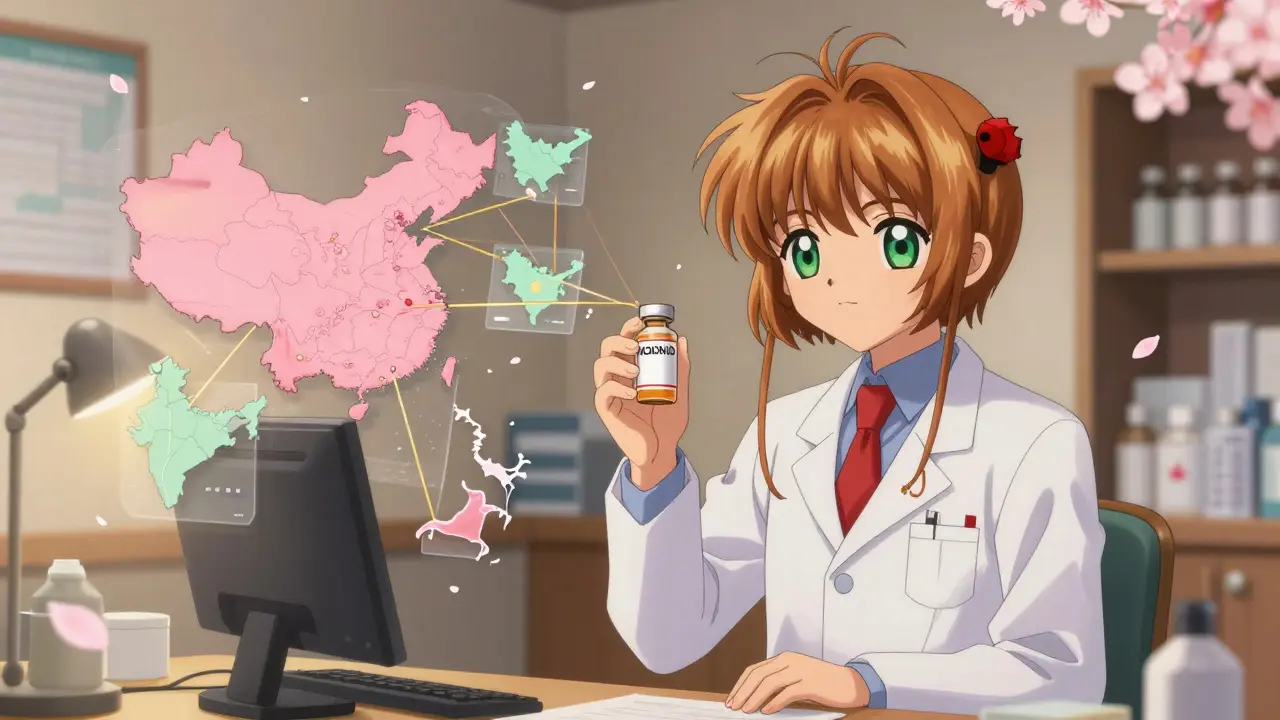
The False Promise of Nearshoring
Everyone talks about bringing drug production back to North America. Mexico and Canada are being pitched as alternatives. And yes, nearshoring helps. A Fortune 500 medical device maker cut its lead times from 90 days to 25 days by moving production to Monterrey. But it cost them $12 million upfront. Labor in Mexico is 30% cheaper than in the U.S., but still 3 times more than in China. And here’s the catch: Mexico doesn’t make APIs. It assembles pills. The raw ingredients still come from China. So you’re not solving the problem-you’re just moving one link in the chain.The Real Solution: Multi-Shoring
The only proven fix is multi-shoring: spreading production across at least three regions. Not just China and Mexico. Also India. Also Eastern Europe. Also the U.S. itself. Companies that did this saw 65% fewer disruption days in 2024. One Canadian generic drugmaker switched from relying solely on India to also sourcing APIs from Germany and Poland. Their inventory turnover improved. Their stockouts dropped from 18 per year to 3. Their customers noticed. Their profits held steady. It’s not cheap. Setting up a second supplier takes 18 to 24 months. You need new audits, new certifications, new quality controls. But it’s cheaper than losing a customer-or a life-because a drug ran out.Technology Is Helping, But Not Enough
AI is being used to predict shortages before they happen. IoT sensors track shipments in real time. Digital twins simulate how a port closure in Shanghai might ripple through a hospital in Toronto. These tools are powerful. Sixty-eight percent of big pharma companies now use them. But technology can’t fix bad decisions. If your supplier list still has only one country, no algorithm will save you. AI can tell you a shipment is delayed. It can’t tell you why you didn’t have a backup.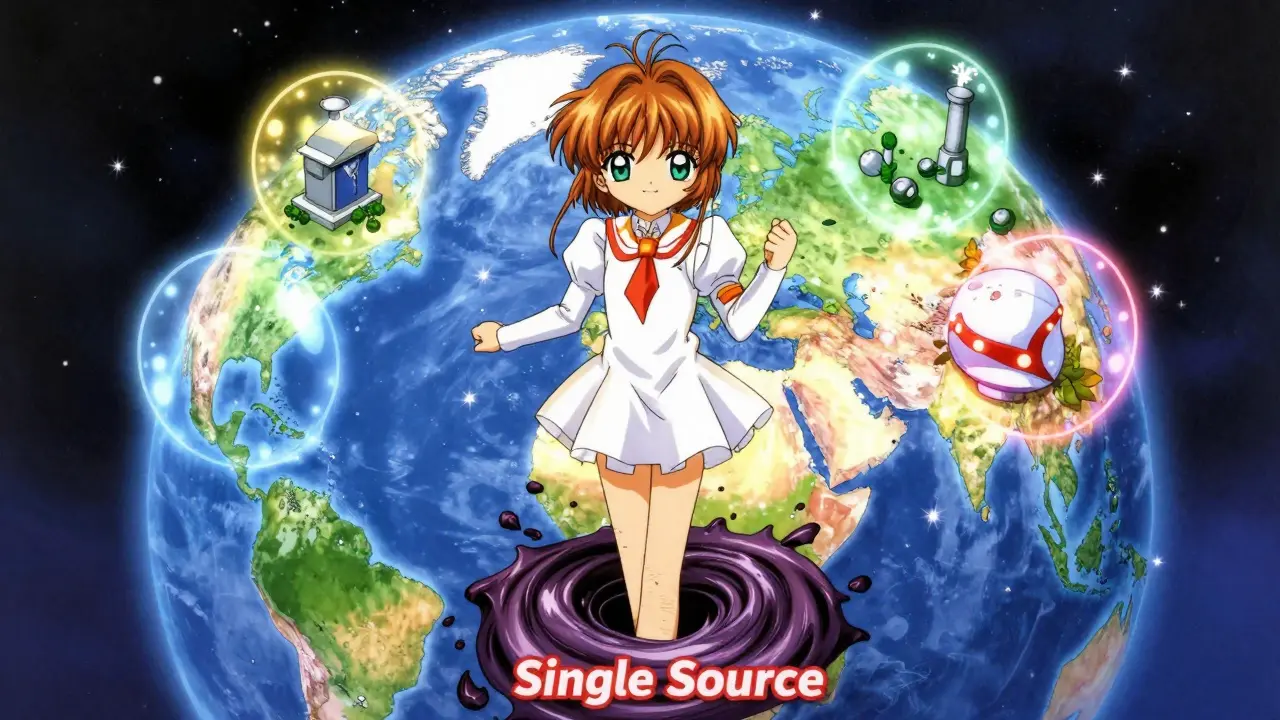
What’s Being Done?
The U.S. government passed the PEPFAR Act in 2024, which gives grants to companies that build API manufacturing in North America. The FDA now requires drugmakers to disclose all foreign suppliers. The U.S.-Mexico-Canada Agreement was updated in early 2025 to include pharmaceutical production standards. But these are baby steps. The U.S. still imports over 90% of its antibiotics from abroad. The EU is no better. And Canada? We rely on the U.S. for 85% of our essential drugs. When the U.S. runs out, we run out.What You Can Do
You can’t fix the global supply chain alone. But you can push for change. - Ask your pharmacist: Where is this drug made? If they don’t know, that’s a red flag. - Support local pharmacies that track sourcing. They’re more likely to switch suppliers when needed. - Contact your elected officials. Demand transparency. Demand investment in domestic production capacity. - Don’t assume “made in the USA” means it’s safe. Many U.S.-made pills still use imported ingredients.The Future Isn’t Black and White
Some experts say we’ll never make drugs in North America at China’s prices. They’re right. But we don’t need to. We need to make enough. Reliable enough. Safe enough. The goal isn’t to shut down China. It’s to stop putting all our medicine in one basket. One flood. One political dispute. One cyberattack. That’s all it takes. By 2027, if we keep going like this, drug shortages could become as common as flu season. But if we act now-diversify suppliers, invest in tech, demand accountability-we can make sure your next prescription isn’t a gamble.Why are drug shortages happening now in 2025?
Drug shortages in 2025 are caused by over-reliance on foreign manufacturing, especially in China and India, which supply over 80% of the world’s active pharmaceutical ingredients. When natural disasters, trade wars, or port closures hit these regions, production halts-and because companies cut backup suppliers to save money, there’s no immediate alternative. Even though global supply chain losses dropped 88% since 2022, pharmaceuticals remain one of the most vulnerable sectors due to complex, single-source production.
Can the U.S. or Canada make its own drugs?
Yes, but not at scale yet. The U.S. and Canada have the technical ability to produce most drugs domestically, but it’s expensive. Labor costs are 4 to 5 times higher than in China. Building a single API plant costs $200 million to $500 million. The U.S. government is offering grants to encourage this, but progress is slow. Only 12 new domestic API facilities have opened since 2020, far below what’s needed to replace imports.
Is nearshoring to Mexico a real solution?
It helps, but it’s not a full fix. Mexico is great for assembling finished pills and packaging, but it doesn’t produce most active ingredients. Those still come from China. So nearshoring reduces shipping time and some costs, but doesn’t break the dependency on foreign raw materials. It’s a middle step-not the end goal.
How long does it take to switch to a new drug supplier?
It takes 18 to 24 months. You can’t just sign a new contract. The FDA requires rigorous testing, audits, and paperwork to prove the new supplier’s product is identical in safety and effectiveness. This is called bioequivalence certification. Rushing it risks patient safety. That’s why most companies wait until a shortage hits-and by then, it’s too late.
What’s the difference between active ingredients and finished drugs?
Active pharmaceutical ingredients (APIs) are the chemicals that make the drug work-like metformin for diabetes or lisinopril for high blood pressure. Finished drugs are the pills, capsules, or injections you take. Most countries outsource the API production to Asia, then ship it elsewhere to be turned into the final product. So even a pill labeled "Made in Canada" might contain 100% Chinese ingredients.
Are generic drugs more at risk than brand-name ones?
Yes. Generic drugmakers operate on razor-thin margins, so they’re the most likely to cut corners on supplier diversity. They often rely on one or two foreign suppliers to keep prices low. Brand-name companies have more resources to build redundancy. That’s why you’re more likely to see shortages in cheap, common drugs-like antibiotics or thyroid medication-than in expensive branded ones.
Can blockchain or AI prevent drug shortages?
They can help track shipments and predict delays, but they can’t replace good planning. AI can alert you that a shipment from Shanghai is late. But if you have no backup supplier, that alert won’t get you the medicine. Blockchain can verify quality and origin, reducing fraud-but it doesn’t solve the problem of having only one source. Technology is a tool, not a fix.
Why don’t governments just stockpile drugs?
They used to. But in the 1990s and 2000s, governments and hospitals adopted just-in-time inventory to save money. Storing extra drugs costs money-cold storage, security, expiration management. So stockpiles shrank. Now, the U.S. Strategic National Stockpile holds only 12% of the essential drugs needed for a major crisis. Rebuilding it would cost billions, and no one has funded it fully.



11 Comments
Erika Putri Aldana
December 21, 2025 AT 13:29So basically we’re all one flood away from no insulin? 😑
Meina Taiwo
December 22, 2025 AT 16:25APIs are the core. If China stops shipping, everything collapses. No magic fix.
Grace Rehman
December 24, 2025 AT 10:10We outsourced our medicine like we outsourced our jobs-because it felt good to save $5 on a pill until the day you couldn’t get your heart meds.
Turns out, capitalism doesn’t care if you live. It just cares if the quarterly report looks pretty.
Adrian Thompson
December 25, 2025 AT 11:36China’s been poisoning our medicine for years and now we’re surprised? 🤡
They control the pills, the chips, the batteries-everything. This is war by proxy and we’re too lazy to fight back.
Build the plants. Ban imports. Now. Or we’re all dead in 2027.
Dan Adkins
December 25, 2025 AT 18:50It is imperative to acknowledge that the structural vulnerabilities inherent in the global pharmaceutical supply chain stem from decades of neoliberal economic policy prioritizing shareholder value over public health imperatives.
Furthermore, the absence of strategic national stockpiling, coupled with the systematic dismantling of domestic manufacturing capacity, constitutes a catastrophic failure of public governance.
The reliance on single-source jurisdictions for active pharmaceutical ingredients is not merely an operational inefficiency-it is a biosecurity risk of existential magnitude.
It is therefore not only prudent but ethically obligatory to mandate multi-shoring, enforce stringent supply chain transparency regulations, and institute federal subsidies for API production within North American territories.
Without these measures, the continued erosion of pharmacological sovereignty will inevitably result in preventable morbidity and mortality on a mass scale.
The time for incrementalism has expired. The time for state intervention is now.
Stacey Smith
December 25, 2025 AT 22:08They make the pills in China so they can control us. That’s not a bug, it’s a feature.
John Hay
December 27, 2025 AT 21:25I get that we need more suppliers, but the FDA approval process is a nightmare. It takes years just to get one new plant certified.
We need to fix that too, not just throw money at it.
Jackie Be
December 28, 2025 AT 13:03My grandma missed her blood pressure med for 3 weeks last year
She almost died
And the company that made it? They made more profit than ever
WHY DO WE LET THIS HAPPEN??
Peggy Adams
December 29, 2025 AT 04:27AI can predict shortages? Cool. But if the government won't fund a single backup plant, what's the point? This whole thing is theater.
Southern NH Pagan Pride
December 29, 2025 AT 07:36They’re not just making pills in China-they’re programming the chemicals to be unstable if we try to make our own. It’s a mind control thing. You think this is about money? No. It’s about control. The deep state owns the medicine chain. They want us weak.
Jerry Peterson
December 30, 2025 AT 05:06I worked at a small pharmacy in Ohio. We’d call 10 suppliers just to get one batch of metformin.
One guy told me, 'We used to have 3 sources. Now we got one. Boss said it saved us $20k a year.'
He didn’t say it saved anyone’s life.
Just saying… we’re not just talking about money anymore.