
You might assume that the moment a drug's patent expires, a cheaper generic version hits the pharmacy shelves the next day. In reality, that's rarely how it works. There is often a frustrating gap between the legal end of a patent and the moment you can actually buy a lower-cost alternative. Why does this happen? It's because the path from a patent expiration to a market launch is a legal and regulatory obstacle course that can take years to navigate.
At the heart of this system is the Hatch-Waxman Act is a 1984 US law that balances the need for pharmaceutical innovation with the need for affordable generic competition. It created the framework that allows generic companies to enter the market without repeating the massive, multi-year clinical trials that the original brand-name company had to perform. This is a huge win for cost, but it also created a set of complex rules that brand-name companies often use to keep their competitors at bay.
The Generic Approval Path: Understanding the ANDA
Generic manufacturers don't just file a request to sell a drug; they submit an Abbreviated New Drug Application, or ANDA. Instead of proving the drug is safe and effective from scratch, they only have to prove bioequivalence. In simple terms, they must show that the generic version delivers the same amount of active ingredient into the bloodstream at the same rate as the original.
While this sounds straightforward, the timing is everything. Most generic firms spend 18 to 24 months just developing the manufacturing process before they even file the ANDA. For complex generics, this development phase can stretch to 36 months. If a company doesn't get the chemistry right, they can't even apply for approval, creating an inherent delay before the legal battle even starts.
The Layered Shield: Patents vs. Exclusivity
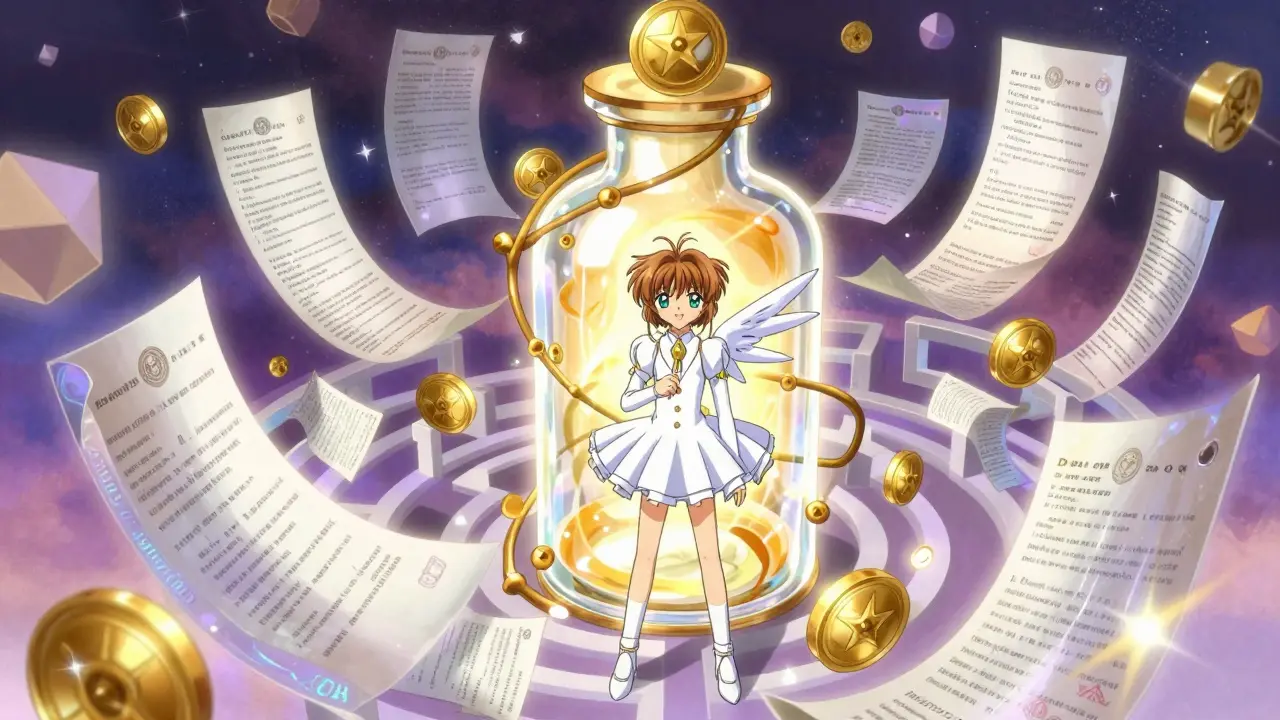
One of the biggest misconceptions is that a single patent is the only thing protecting a brand-name drug. In truth, companies build a "patent thicket." A single drug might have a patent for the active molecule, another for the specific way it's formulated (like a slow-release pill), another for how it's manufactured, and yet another for a specific medical use. According to research from UC Hastings, some brand-name drugs list an average of 14.2 patents in the Orange Book, which is the FDA's official list of approved drugs and their patents.
Beyond patents, there is regulatory exclusivity. These are protections granted by the FDA that operate independently of patents. For example, a New Chemical Entity (NCE) gets 5 years of exclusivity, while an Orphan Drug (meant for rare diseases) gets 7 years. This means even if a patent is challenged and struck down in court, the FDA might still be legally barred from approving a generic version because the exclusivity period hasn't ended.
| Protection Type | Typical Duration | Purpose | Key Example |
|---|---|---|---|
| Standard Patent | 20 Years (from filing) | Protects the invention | Active ingredient molecule |
| NCE Exclusivity | 5 Years | Encourages new chemistry | Novel chemical compounds |
| Orphan Drug Exclusivity | 7 Years | Incentivizes rare disease research | Drugs for very small patient populations |
| Pediatric Exclusivity | 6 Months | Encourages child-safe testing | Added to existing patent term |
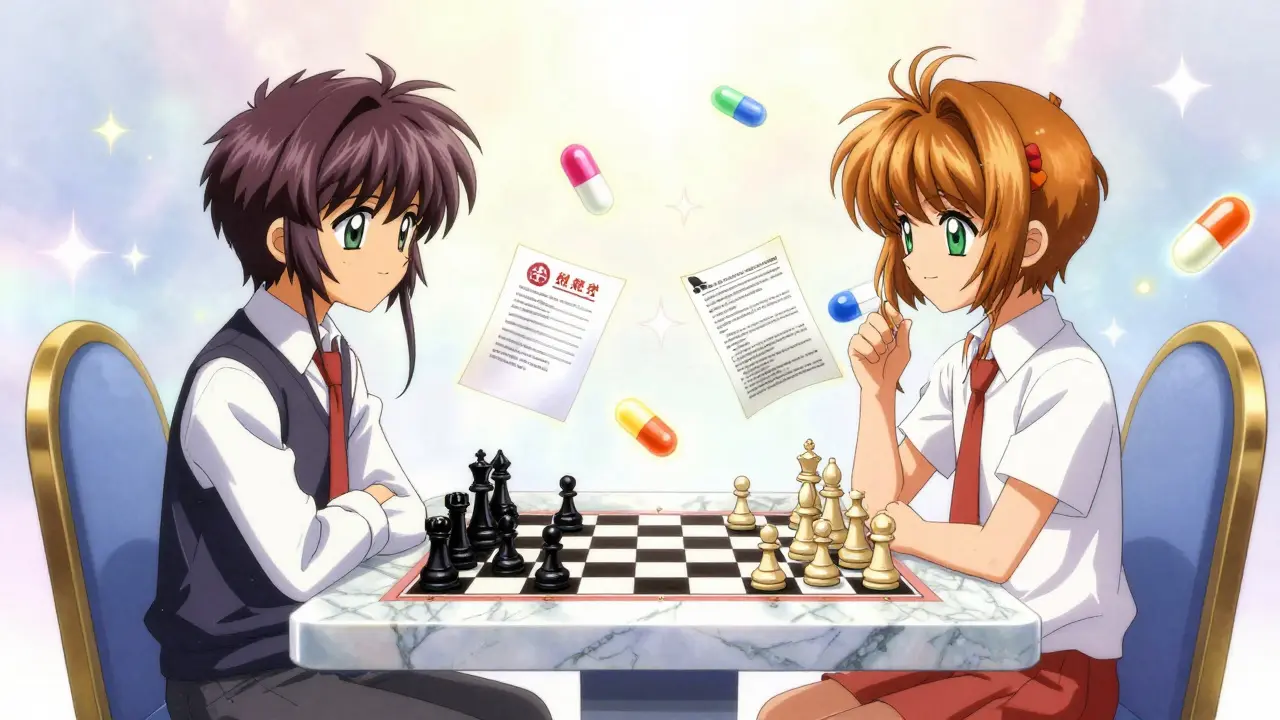
The Legal Chess Match: Paragraph IV Certifications
If a generic company thinks a patent is invalid or that their version doesn't infringe on it, they file a Paragraph IV Certification. This is essentially a legal challenge. If the brand-name company doesn't like this, they can sue the generic firm. This triggers a "30-month stay," where the FDA pauses the generic drug's approval for 30 months while the court decides who is right.
This is where things get messy. Many companies enter into "reverse payment" settlements, where the brand-name company pays the generic company to stay off the market for a few more years. The FTC has noted that these deals cost consumers billions of dollars annually. Even when a generic company wins the legal battle, they might face a race. The first generic company to successfully challenge a patent gets 180 days of market exclusivity-meaning they are the only generic option for six months. This creates a high-stakes scramble to be first, sometimes leading companies to rush production or, conversely, delay launch to ensure everything is perfect for that lucrative window.
Why Some Drugs Take Longer Than Others
Not all medicines are created equal when it comes to generic entry. Small molecule drugs (simple pills) usually see generics within 1.5 years of patent expiration. However, Biologics-complex drugs made from living cells-are a different story. They follow the BPCIA pathway and are much harder to copy. Their "biosimilar" versions often take an average of 4.7 years to hit the market after the original protection ends.
The type of disease also matters. Cardiovascular drugs often see longer delays, sometimes over 3.4 years post-patent, compared to dermatological products, which might only take 1.2 years. This is usually because heart medications are higher-revenue products, giving brand-name companies more financial incentive to fight every single generic challenge in court.
The Economic Impact of the Delay
The stakes for these delays are massive. In the US, generic drugs make up about 92% of all prescriptions but only account for 16% of total spending. When a top-selling drug's generic entry is delayed by just one year, the CBO estimates it can cost Medicare roughly $1.2 billion. This is why there is such intense pressure on the FDA to speed up the ANDA review process, which has historically averaged over 25 months.
Recent efforts like the CREATES Act are trying to stop "product hopping," where a company releases a slightly different version of a drug (like changing from a tablet to a capsule) just as the patent expires to move patients to a new patented version. While these laws help, the median time from patent expiration to actual availability still lingers around 18 months.
Why doesn't a generic drug appear immediately after a patent expires?
Generic entry is delayed by several factors: the time it takes for the FDA to review the Abbreviated New Drug Application (ANDA), the existence of regulatory exclusivities (like NCE or Orphan Drug status) that outlast the patent, and legal battles involving "patent thickets" where companies file multiple patents on formulations and processes to extend protection.
What is a Paragraph IV certification?
It is a statement made by a generic drug manufacturer in their ANDA claiming that the brand-name drug's patent is either invalid or that the generic version does not infringe upon that patent. This often leads to litigation and a temporary 30-month stay on FDA approval.
What is the difference between a generic and a biosimilar?
Generics are copies of simple, chemically synthesized drugs. Biosimilars are "highly similar" versions of biologics, which are complex proteins derived from living organisms. Because biologics are so complex, biosimilars have a more rigorous and longer approval process under the BPCIA.
How long does the FDA typically take to review a generic application?
Historically, the average review time for an ANDA has been around 25 months. While the FDA is working to reduce this-especially for complex generics-regulatory review remains one of the primary bottlenecks between patent expiration and market launch.
What is "patent evergreening"?
Evergreening is a strategy where brand-name companies file for new patents on minor changes to an existing drug-such as a new dosage form, a different coating, or a combination with another drug-to effectively extend their market monopoly beyond the original patent's expiration.


7 Comments
Kali Murray
April 29, 2026 AT 05:39wild how this works 😵💫
Stephen Johnson
May 1, 2026 AT 04:56It is interesting to consider the tension here between the incentive to innovate and the ethical imperative to provide access. If we remove the protections entirely, we might lose the drive for the next breakthrough, yet the current lag in generic entry feels like a failure of the social contract. We are essentially balancing the future health of strangers against the immediate survival of people currently suffering. It is a heavy philosophical burden for a regulatory framework to carry, especially when the profit motive becomes so aggressive that it obscures the actual purpose of medicine.
Abhishek Charan
May 1, 2026 AT 06:34Actually!!! The 'patent thicket' is just a logical extension of intellectual property law!!! If a company improves a delivery method, they DESERVE a new patent!!! Why should they give away their hard-earned R&D just because a generic company wants to swoop in and make a quick buck!!! 🤑💰
Ryan Wilson
May 2, 2026 AT 22:28Shut it, you corporate bootlicker. Calling the intentional delaying of cheap meds 'logical' is a level of delusion that only someone who doesn't pay for their own prescriptions could possibly have. It's not R&D, it's a racket.
Kat G
May 3, 2026 AT 15:26The distinction between generics and biosimilars is quite important. It explains why some treatments stay expensive for much longer than others.
Kevin Taggart
May 4, 2026 AT 16:34stuf like this is why i just use the pharmacy in mexico lol... way cheaper and no 30 month stay nonsense :)
Jonathan Hall
May 6, 2026 AT 06:56While I generally try to see both sides of the pharmaceutical debate because I believe in a globalized standard of care, I find it absolutely abhorrent and fundamentally aggressive that companies utilize the CREATES Act loopholes to perform product hopping, which is essentially a deceptive practice that forces patients onto new patented drugs just as the old ones become affordable, and it is an outrage that we allow such blatant manipulation of the FDA's ANDA process to continue while people are literally dying because they cannot afford a capsule that is chemically identical to a tablet they used for a decade.