
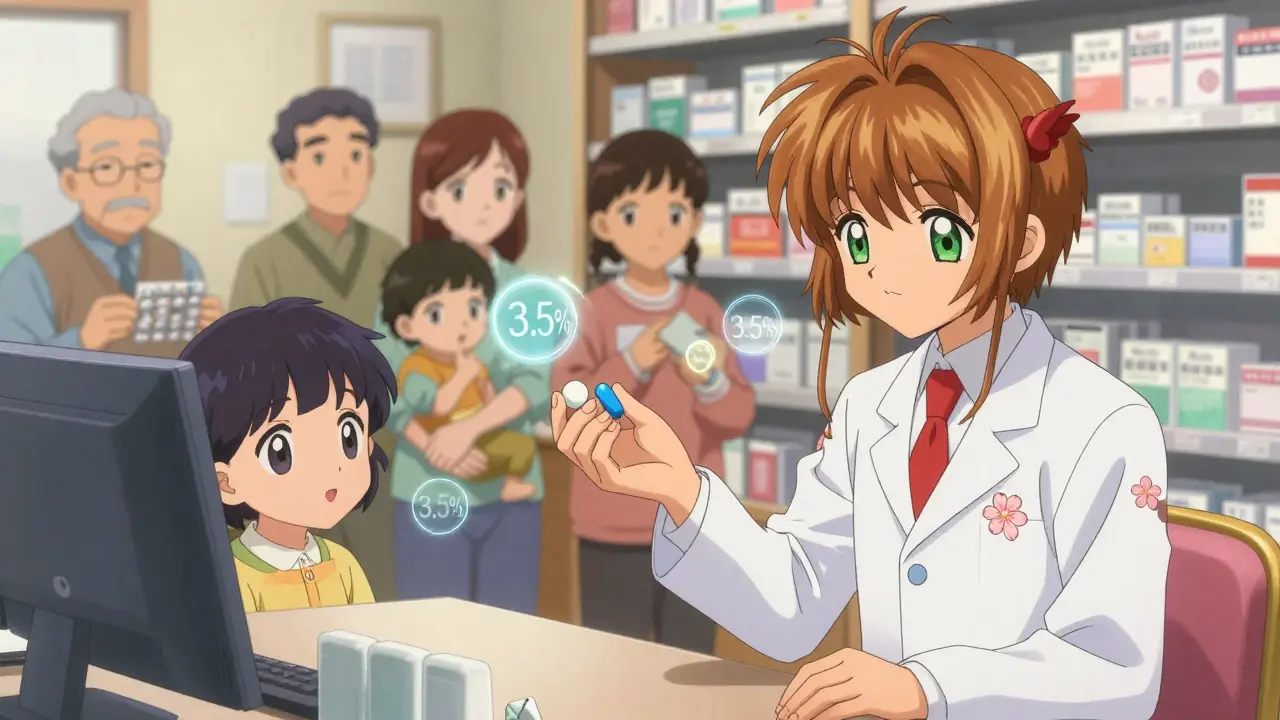
Every day, pharmacists face a quiet but persistent challenge: convincing patients that a small, differently colored pill is just as safe and effective as the brand-name drug their doctor prescribed. Generic substitution isn’t just a cost-saving trick-it’s a routine part of pharmacy practice in Canada, the U.S., Australia, and many other countries. But behind the scenes, pharmacists aren’t just filling prescriptions. They’re managing patient fears, filling education gaps, and navigating legal gray zones-all in a matter of minutes between cashiers and waiting customers.
Why Pharmacists Recommend Generics (And Why Patients Resist)
Pharmacists recommend generic drugs in 96% of cases where substitution is allowed. That’s not because they’re pushing cheaper options-it’s because they know the science. The FDA requires generics to match brand-name drugs in active ingredients, strength, dosage form, and absorption rate within 80-125%. In real terms, that means the average difference in how your body absorbs the drug is just 3.5%. For most medications, that’s like switching from one brand of aspirin to another-no noticeable difference.
Yet, patients still hesitate. One in three patients report negative experiences after switching to generics. Why? Often, it’s not about the drug. It’s about the packaging. A patient who’s taken a white, round pill for years suddenly gets a blue, oval one. They think it’s wrong. They think it’s fake. Some even believe the lower price means lower quality. One Canadian pharmacist in Halifax told a patient, “This is the same medicine, just made by a different company.” The patient replied, “Then why does it cost half as much?” That question keeps coming up.
The Real Burden: Educating Patients on the Spot
Most patients never hear about generic substitution from their doctor. A 2015 U.S. study found that 64% of patients had no idea their pharmacist could switch their prescription. That means pharmacists are stuck with the job of explaining bioequivalence, FDA standards, and cost savings-often while the line builds behind them.
It’s not just about facts. It’s about trust. Patients with chronic conditions like epilepsy, thyroid disease, or heart failure are especially wary. These are drugs with narrow therapeutic indexes-tiny changes in blood levels can cause big problems. Pharmacists know this. They pause. They double-check. They sometimes refuse substitution, even when it’s legally allowed, because they don’t want to risk a seizure or a dangerous drop in thyroid hormone.
And then there’s the time factor. In Australia, pharmacists reported spending up to 15 extra minutes per patient explaining generics to those with dementia, mental illness, or multiple prescriptions. That’s 15 minutes taken from someone else’s turn. And if the patient still says no? The pharmacist has to call the doctor. That’s not just inconvenient-it’s a workflow breaker.
Doctors Don’t Always Help
Doctors know generics save money. In surveys, 87% say it’s economically appropriate. But only 70% believe it’s clinically safe. That gap matters. When a doctor writes “Dispense as Written” on a prescription, pharmacists can’t substitute-even if they want to. But here’s the catch: most doctors don’t write that. They don’t write anything. So pharmacists are left guessing.
Worse, many physicians don’t talk to patients about substitution at all. A study in the Journal of Managed Care & Specialty Pharmacy found that 56% of patients never discussed medication costs with their prescriber. That leaves pharmacists holding the bag. They’re expected to be counselors, educators, and legal interpreters-all while juggling insurance claims and refill requests.
When Substitution Gets Risky
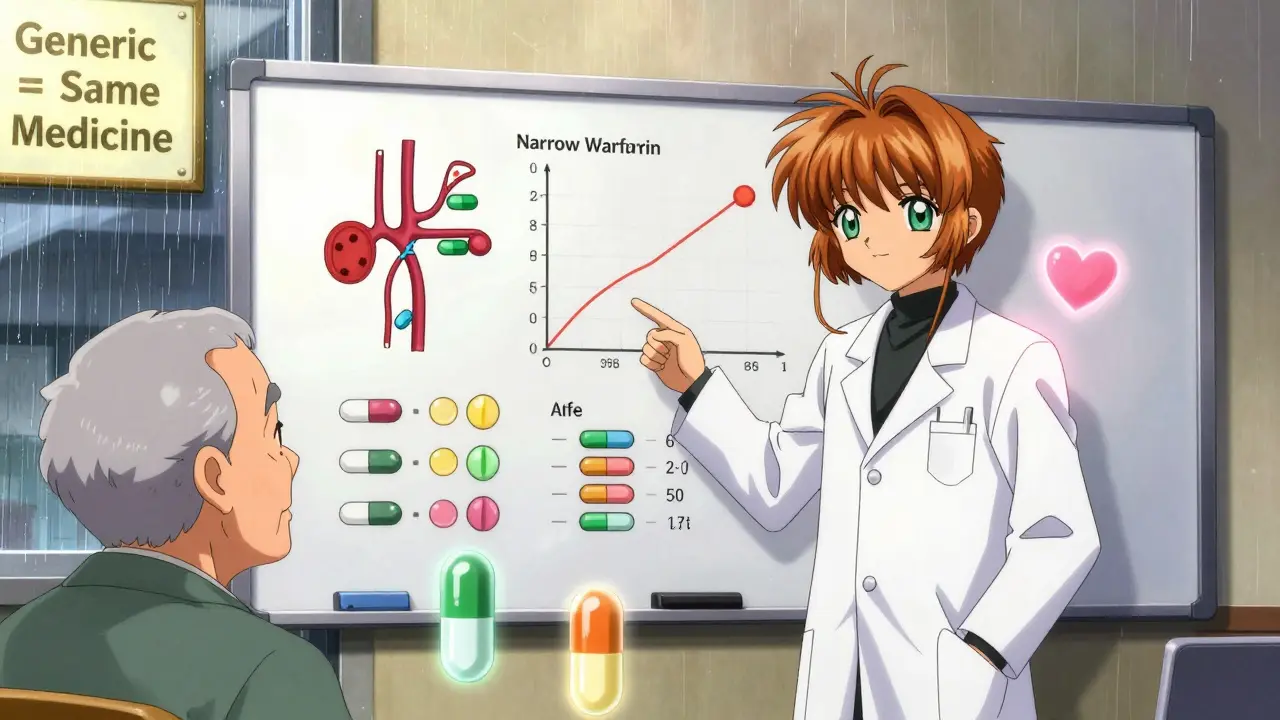
Not all drugs are created equal when it comes to substitution. Pharmacists are trained to spot the red flags:
- Narrow Therapeutic Index (NTI) drugs: Like warfarin, levothyroxine, or phenytoin. A small change in blood level can mean the difference between control and crisis.
- Anti-epileptic drugs: Switching brands can trigger seizures in stable patients. Even if the FDA says they’re equivalent, real-world outcomes don’t always match the lab data.
- Biosimilars: These aren’t traditional generics. They’re complex biologic drugs made from living cells. Small differences in manufacturing can affect immune response. Pharmacists need extra training to handle these.
Many states in the U.S. and provinces in Canada have special rules for these drugs. Some require patient consent. Others ban substitution entirely. Pharmacists have to know the local laws-and keep up with changes. One wrong substitution could lead to a lawsuit, a hospital visit, or worse.
Patient Demographics Matter More Than You Think
Who accepts generics? Who doesn’t? It’s not random.
- Older adults: More likely to stick with what they know. They’ve been taking the same pill for 10 years. Why change?
- Lower education levels: Less likely to understand bioequivalence. They see “generic” and think “second-rate.”
- Polypharmacy users: Taking five or more drugs? Switching one pill can throw off their whole routine. Confusion leads to missed doses.
- Patients with mental health conditions: Often distrustful of the system. They fear the new pill will change how they feel-even if it won’t.
Pharmacists learn to read these signs. They adjust their tone. They use simpler words. They show the FDA’s 3.5% absorption difference on a calculator. They say, “Your blood levels won’t change. This is the same medicine, just cheaper.” But they can’t do that if the patient walks out after saying, “I don’t want it.”
What Works: Real Solutions Pharmacists Use
Some pharmacists have found ways to make this easier:
- Pre-printed handouts: Simple one-pagers explaining generics, with pictures of pills and the FDA logo. Patients take them home.
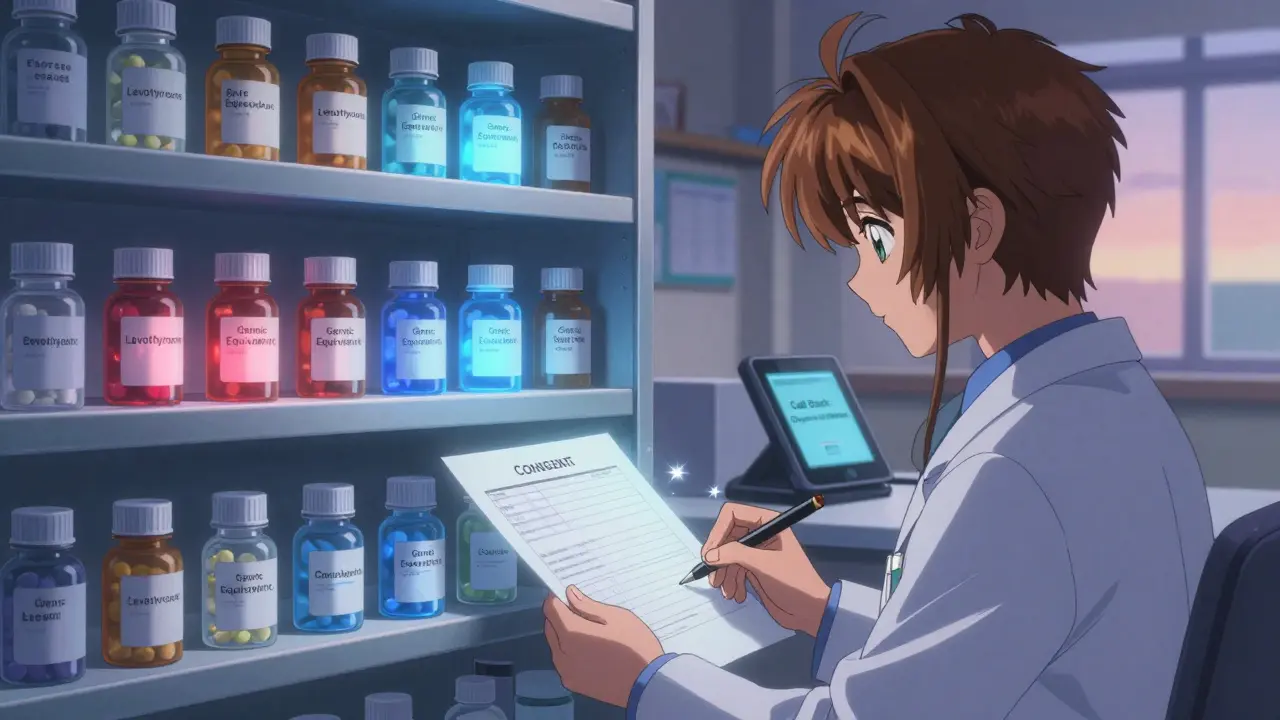
- Consent forms: Even when not required, some pharmacies ask patients to sign a note saying they understand the switch. It protects everyone.
- Doctor partnerships: A few pharmacists now call prescribers before substituting for NTI drugs. It’s extra work-but it builds trust.
- Label clarity: Adding “Generic Equivalent” on the bottle, not just the price tag. Patients see it and feel more secure.
One pharmacy in Halifax started using a three-question script during counseling: “Have you taken this before?” “Do you know it’s the same medicine?” “Would you like me to call your doctor to confirm?” Within six months, patient refusal rates dropped by 40%.
The Bottom Line: Pharmacists Are on the Front Lines
Generic substitution saves patients and the healthcare system billions. But it’s not just a policy-it’s a human interaction. Pharmacists aren’t just dispensing pills. They’re managing fear, correcting myths, and sometimes, preventing harm.
The system works best when doctors, pharmacists, and patients are all on the same page. But right now, the burden falls on the pharmacist. They’re the ones answering the questions no one else will. They’re the ones holding the line between cost savings and patient safety.
Until patients hear about generics from their doctors before they even walk into the pharmacy, pharmacists will keep doing the heavy lifting. And they’ll keep doing it-quietly, carefully, and with more responsibility than most people realize.
Are generic drugs really as effective as brand-name drugs?
Yes, for the vast majority of medications, generic drugs are just as effective. The FDA requires them to have the same active ingredient, strength, dosage form, and absorption rate as the brand-name version. Studies show the average difference in how your body absorbs the drug is only about 3.5%. For conditions like high blood pressure, diabetes, or infections, generics work just as well. The only exceptions are drugs with a narrow therapeutic index-like warfarin or levothyroxine-where even tiny changes can matter.
Why do generic pills look different from brand-name ones?
Generic drugs must have the same active ingredient, but they don’t have to look the same. The shape, color, and markings are often changed to avoid trademark infringement. That’s why you might get a blue pill one month and a white one the next. It doesn’t mean it’s different medicine-it just means a different manufacturer made it. Pharmacists often explain this to patients using side-by-side photos or printed examples to reduce confusion.
Can pharmacists refuse to substitute a brand-name drug for a generic?
Yes, pharmacists can and sometimes do refuse substitution-even if it’s legally allowed. This usually happens with drugs that have a narrow therapeutic index, like anti-seizure medications or blood thinners. Pharmacists may also refuse if the patient has had a bad reaction to a generic before, or if the prescriber wrote “Dispense as Written.” In some provinces, pharmacists must get patient consent before substituting certain drugs. Their job is to prioritize safety, not just cost.
Why do some patients refuse generic drugs even when they’re cheaper?
Many patients believe cheaper means lower quality. Others are confused by changes in pill appearance or packaging. Some have had a bad experience in the past-even if it wasn’t caused by the generic. Patients with chronic illnesses, older adults, and those with low health literacy are more likely to resist. Lack of information from their doctor also plays a big role. When patients don’t understand why the switch is safe, they stick with what they know.
What can I do if I’m worried about switching to a generic drug?
Ask questions. Talk to your pharmacist before the switch. Ask if the generic is approved by the FDA or Health Canada. Ask if your condition requires special caution. You have the right to decline substitution-just say so. If you’re still unsure, ask your doctor to write “Dispense as Written” on the prescription. You can also request a copy of the generic’s FDA approval information. Knowledge helps reduce fear.





10 Comments
Sophia Daniels
December 26, 2025 AT 22:29Let me tell you something, folks-this whole generic drug panic is pure American nonsense. We pay $200 for a pill that costs $2 to make overseas, then act like it’s witchcraft when the pharmacist hands us the same damn thing in a different color. The FDA doesn’t lie. The science doesn’t lie. But oh no, we’d rather believe some Instagram influencer who says ‘brand-name = purity’ than trust a regulatory body that’s kept our food safe for 80 years. Wake up. It’s not magic, it’s chemistry.
Nikki Brown
December 28, 2025 AT 04:50As someone who’s seen patients suffer because they switched generics without proper monitoring, I have to say: this is reckless. The FDA’s 80-125% absorption range isn’t ‘close enough’-it’s a loophole that puts lives at risk. Especially with levothyroxine. I’ve seen TSH levels spike 300% after a switch. And now pharmacists are expected to be miracle workers while the system dumps all the liability on them? No. This isn’t frugality-it’s negligence dressed up as policy.
Peter sullen
December 29, 2025 AT 18:07It is imperative to recognize that the pharmacoeconomic model underpinning generic substitution is not merely fiscally prudent, but also clinically sound-when implemented with appropriate safeguards. The bioequivalence thresholds established by the FDA are statistically validated, and meta-analyses confirm non-inferiority across the vast majority of therapeutic classes. However, the absence of standardized patient education protocols constitutes a critical systemic failure, resulting in suboptimal adherence and heightened anxiety. A multidisciplinary approach, incorporating pre-prescription counseling and electronic health record flags for NTI drugs, is urgently warranted.
Steven Destiny
December 30, 2025 AT 04:12Y’all are overcomplicating this. If your blood pressure med works, it works. If your thyroid med keeps you from feeling like a zombie, it’s doing its job. The color doesn’t matter. The name on the bottle doesn’t matter. The price does. I’ve been on generics for 12 years. I’ve saved $18,000. I haven’t had a single issue. Stop letting fear and marketing control your health. Your pharmacist isn’t trying to scam you-they’re trying to keep you alive without bankrupting you.
Fabio Raphael
December 30, 2025 AT 10:14I work in a clinic where most patients are on Medicare and take 6+ meds. I’ve watched pharmacists spend 20 minutes explaining generics to a 78-year-old with dementia, only for her to walk out saying ‘I want the blue one.’ It breaks my heart. They’re not being stubborn-they’re scared. And nobody ever told them it’s safe. Maybe we need a national campaign-not just for cost savings, but for trust. Pharmacists are heroes. They deserve better than being the last line of defense against misinformation.
Amy Lesleighter (Wales)
January 1, 2026 AT 05:44my grandma switched to generic omeprazole and thought she was getting ripped off. she cried. i showed her the same exact ingredients on the box. she still didn’t believe me. now she takes it but still calls it ‘the cheap one.’ it’s not about the science. it’s about feeling safe. maybe we need to stop talking about absorption rates and start talking about feelings.
Becky Baker
January 1, 2026 AT 08:06Ugh. I hate when they switch my meds. I know it’s the same but it feels like I’m taking something fake. Like they’re giving me knockoffs. I don’t care if it’s cheaper-I want the real one. And don’t even get me started on the weird shapes. My anxiety med used to be a little white oval. Now it’s a big blue thing that looks like a candy. I’m not taking it. Period.
Rajni Jain
January 2, 2026 AT 06:11i come from india where generics are the only option for most people. we don’t have brand-name luxuries. but here in the us, people act like generics are second class. they’re not. same science. same results. i’ve seen people die because they couldn’t afford meds. don’t let fear cost you your health. the pharmacist isn’t lying. they’re trying to save you.
Natasha Sandra
January 3, 2026 AT 15:52Okay but like… why do generics always look like they were designed by a toddler?? 🤦♀️ I get the science, I really do. But why can’t they at least make them look nice?? My antidepressant used to be a cute little white pill with a smiley face on it. Now it’s a dull blue cube. It feels like my mental health got a downgrade too 😭
Erwin Asilom
January 3, 2026 AT 23:19The real issue isn’t the science. It’s the lack of continuity in care. When a patient’s primary care physician doesn’t discuss medication changes, and the pharmacist is expected to fill that void in under three minutes, we’re setting up a failure cascade. We need mandatory pre-substitution documentation, standardized educational materials, and physician-pharmacist communication protocols. It’s not about trust-it’s about systems.