
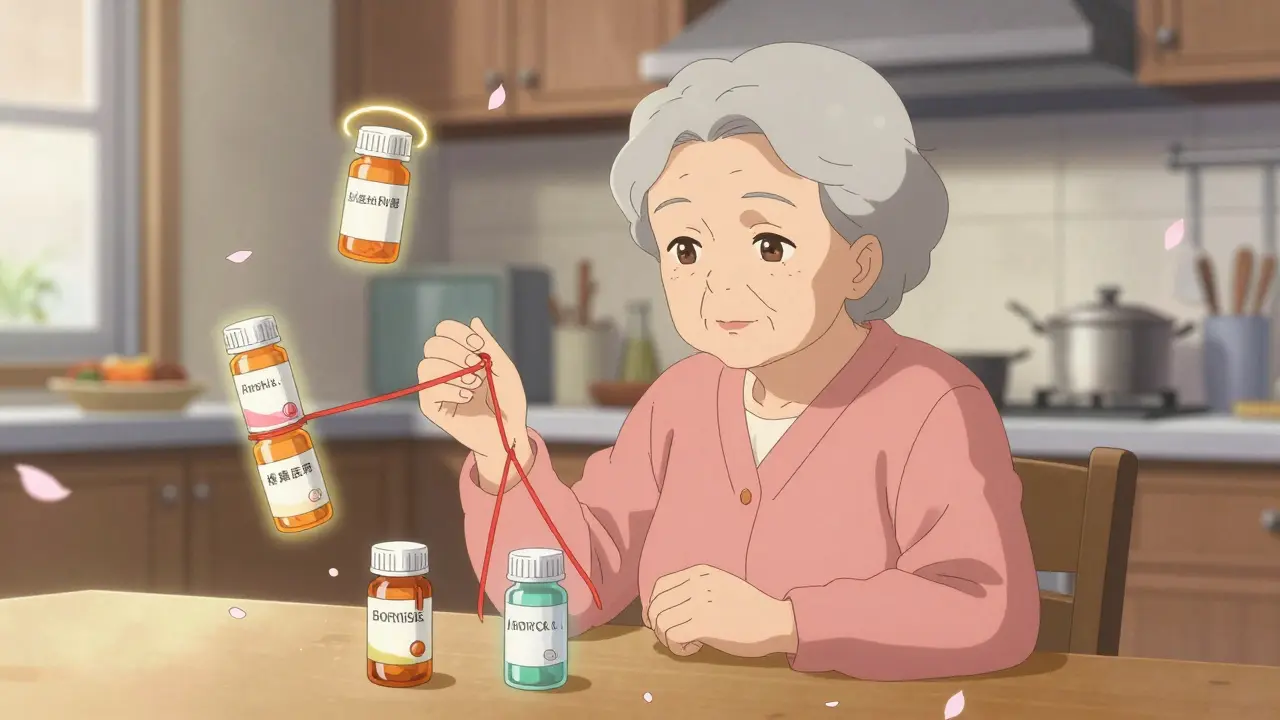
When someone turns 65, it’s common to start taking more medications. Maybe it’s for high blood pressure, arthritis, diabetes, or heart trouble. But what happens when that number grows to five, seven, or even ten pills a day? That’s called polypharmacy-and it’s not just a number. It’s a hidden risk that affects nearly half of all older adults in the U.S., leading to falls, confusion, hospital stays, and even death.
What Exactly Is Polypharmacy?
Polypharmacy isn’t just having a lot of prescriptions. It’s when someone regularly takes five or more medications at the same time. For many seniors, this isn’t a choice-it’s the result of seeing multiple specialists, each treating one condition without seeing the whole picture. A cardiologist prescribes a blood thinner. A rheumatologist adds an NSAID for joint pain. A neurologist prescribes a sleep aid. A primary care doctor adds a proton pump inhibitor for heartburn. No one steps back to ask: Is all of this still necessary?
The problem gets worse with age. As people get older, their bodies change. The liver processes drugs slower-by up to 50% in people over 80. Kidneys clear medications less efficiently, too. That means drugs stick around longer, building up to dangerous levels. Even a normal dose can become toxic. The American Geriatrics Society’s Beers Criteria lists 56 medications that are risky for seniors, including benzodiazepines (like Valium), anticholinergics (like Benadryl), and long-term proton pump inhibitors (like omeprazole). These aren’t just side effects-they’re preventable dangers.
Why Do Seniors End Up With So Many Meds?
It’s not because doctors are careless. It’s because the system is broken.
Most seniors see multiple doctors. One for heart disease, another for diabetes, a third for depression. Each one adds a new medication to treat their specific condition. Few ask, What’s the total picture? And when a patient goes from the hospital to a nursing home-or even just from one doctor’s office to another-medication lists often get lost or ignored. A 2022 study found that half of all post-discharge complications in seniors are due to medication errors during care transitions.
Then there’s the issue of ‘medication creep.’ A patient starts a drug for a short-term problem-like antibiotics after surgery-and never stops it. Or they take an over-the-counter sleep aid for a few nights, and it becomes a nightly habit. Supplements and vitamins pile up too. One man in a UCI Health case study ended up with three times more meds than he needed because no one ever sat down with him and asked, What are we trying to fix here?
The Real Costs: Falls, Confusion, and Hospital Visits
Polypharmacy doesn’t just mean more pills. It means more trips to the ER.
One in three seniors who take five or more medications falls each year-and nearly 35% of all fall-related ER visits in this age group are tied to medication side effects. Benzodiazepines and sleep aids increase fall risk by 50%. NSAIDs like ibuprofen can cause dangerous stomach bleeds, especially in people on blood thinners. Anticholinergic drugs (found in many allergy, cold, and sleep meds) raise dementia risk by 1.5 times over seven years.
Delirium-a sudden, severe confusion-is another common and dangerous result. It’s often mistaken for dementia, but it can be reversed if the offending drug is removed. A 2021 Duke Health review found that up to 30% of hospital delirium cases in seniors are caused by medications.
And then there’s cost. One in four seniors skips doses because they can’t afford their meds. Others mix up pills because their schedule is too complicated-six different times a day, with meals, on empty stomachs, at bedtime. Only 55% of seniors can even name what each of their pills is for.
What Can Be Done? The Power of Deprescribing
The solution isn’t more drugs. It’s fewer.
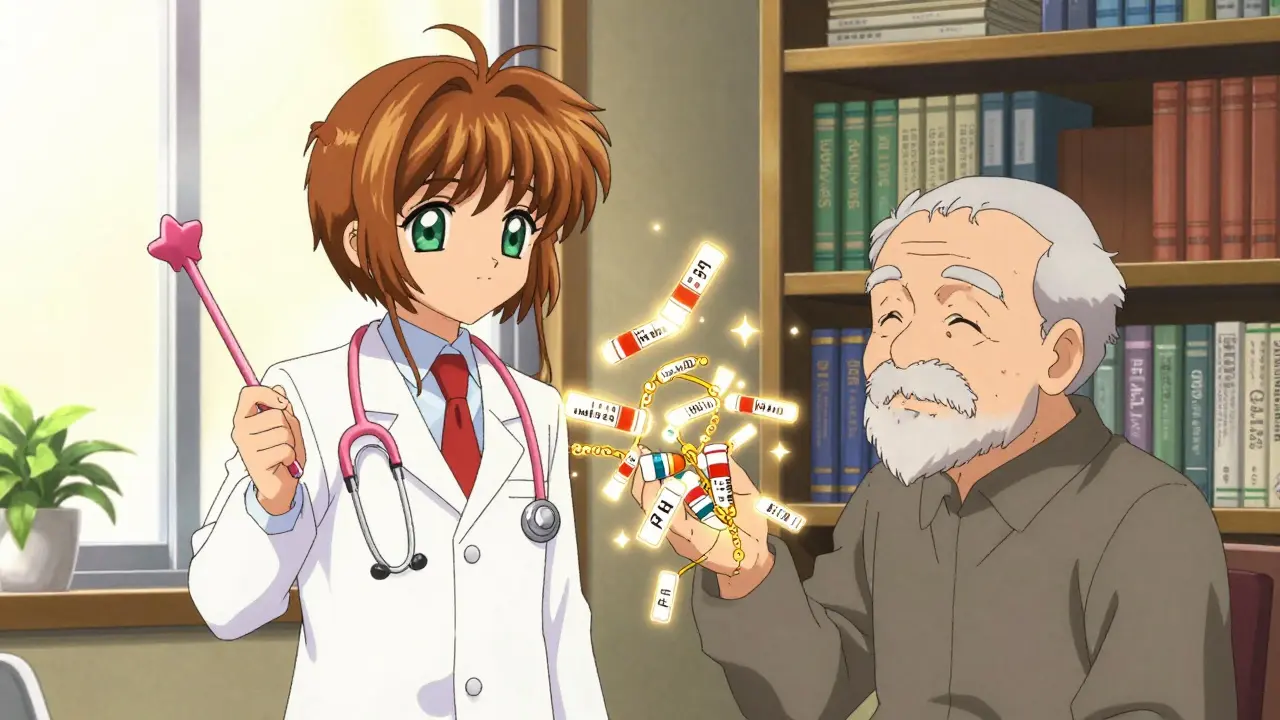
Deprescribing is the process of safely stopping medications that are no longer helping-or are doing more harm than good. It’s not about quitting everything. It’s about asking: Does this still serve a purpose?
Studies show that when deprescribing is done right, it cuts adverse drug events by 22% and hospital admissions by 17%. One program at UCI Health called HAPS reviews every senior’s full medication list-and finds an average of 4.2 unnecessary or harmful drugs per person. After stopping those, patients report better sleep, more energy, and fewer dizziness episodes.
Here’s how it works:
- Do a brown bag review. Bring every pill, capsule, patch, and supplement you take to your doctor’s appointment-including vitamins, herbal remedies, and OTC meds. Don’t trust your memory. Bring the bottles.
- Ask: Why am I taking this? For each medication, ask your doctor: What is it for? How long should I take it? What happens if I stop?
- Start with the highest-risk drugs. Focus first on benzodiazepines, anticholinergics, NSAIDs, and long-term PPIs. These are the biggest culprits.
- Stop one at a time. Never quit multiple drugs at once. Taper slowly under supervision. Some drugs, like antidepressants or blood pressure meds, need to be reduced gradually to avoid withdrawal or rebound effects.
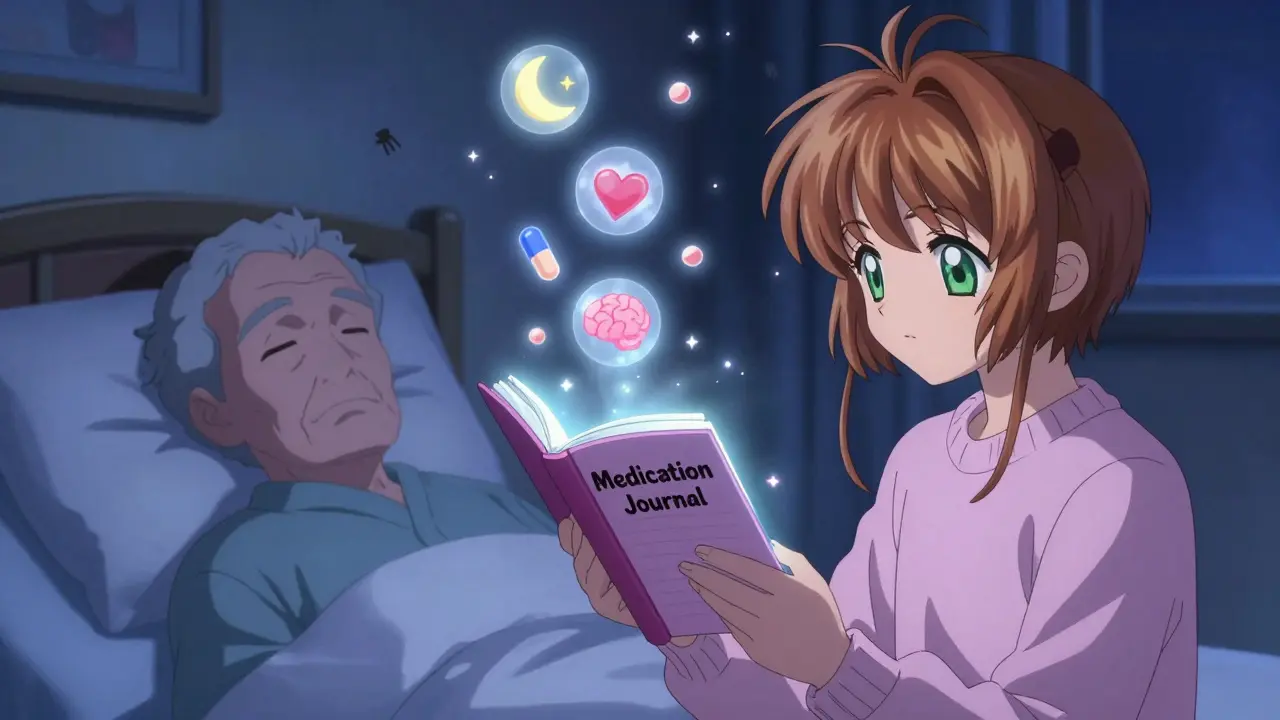
- Track changes. Keep a journal. Note how you feel after stopping a drug-better sleep? Less confusion? More balance? Share that with your team.
Who Should Be Involved?
Managing polypharmacy isn’t a solo job. It needs a team.
Pharmacists are your secret weapon. In a 2020 CMS study, pharmacist-led medication reviews cut hospital readmissions by 24% in Medicare patients. They spot duplicates, interactions, and outdated prescriptions that doctors miss. Many pharmacies now offer free medication therapy management for seniors on Medicare Part D.
Primary care doctors should lead the conversation. But they need help. The American Geriatrics Society recommends that every senior on five or more meds get a full medication review at least once a year-and especially after a hospital stay.
Family members and caregivers play a huge role too. If you help your parent manage their meds, you’re not just being helpful-you’re preventing a medical crisis. Ask questions. Write down the names and purposes. Keep a list updated. Be the person who says, Wait, why is he still taking this?
New Tools Are Making It Easier
Technology is starting to catch up.
The FDA-approved MedWise platform uses genetic and drug interaction data to predict which combinations are risky for a specific person. In a 2022 trial, it reduced adverse events by 41%. Medicare is now funding 15 health systems to roll out standardized deprescribing programs through its Deprescribing for Better Outcomes initiative.
Electronic health records now flag potential drug interactions-but they’re noisy. Studies show 78% of these alerts are false alarms. That’s why human judgment still matters most. A computer can say, This drug might interact, but only a doctor or pharmacist can say, Is this risk worth the benefit?
What’s Next? The Future of Senior Medication Care
The goal is shifting-from treating every disease with a pill, to supporting a good quality of life.
By 2030, one in five Americans will be over 65. The number of seniors on five or more meds will keep rising. But we’re learning faster too.
The 2023 update to the Beers Criteria now specifically recommends stopping antipsychotics in dementia patients-reducing death risk by 19%. It also warns against long-term use of acid blockers, which raise fracture risk by 26%.
Researchers are now studying geropharmacogenomics-how a person’s genes affect how they respond to drugs. Early data suggests this could cut adverse reactions by half in patients who get tested.
The future isn’t about more pills. It’s about the right pills. At the right time. For the right person.
What You Can Do Today
You don’t need to wait for a system change. Start now.
- Get a full medication list from every provider. Write it down. Keep it in your wallet or phone.
- Ask your doctor: Is there a medication I can stop? Don’t be afraid to ask.
- Bring all your meds to your next appointment-even the ones you haven’t taken in months.
- If you’re on more than five drugs, ask if you can see a pharmacist for a medication review.
- Watch for signs of trouble: dizziness, confusion, fatigue, falls, stomach pain. These aren’t just ‘part of aging.’ They might be your meds talking.
Medications are powerful tools. But they’re not harmless. For older adults, every pill carries a risk. The smartest choice isn’t always to take more. Sometimes, it’s to let go of what’s no longer needed.
Is polypharmacy always dangerous?
No, not always. Polypharmacy becomes dangerous when medications are unnecessary, overlapping, or inappropriate for the person’s age and health. Some seniors legitimately need five or more drugs to manage serious conditions like heart failure, diabetes, or kidney disease. The problem isn’t the number-it’s whether each drug is still serving a clear, safe, and necessary purpose. A medication review helps separate necessary use from harmful accumulation.
Can I stop my meds on my own if I feel better?
Never stop a prescription medication without talking to your doctor first. Some drugs, like blood pressure pills, antidepressants, or steroids, can cause serious rebound effects if stopped suddenly. Even if you feel fine, stopping a medication without a plan can lead to hospitalization. Always ask your doctor or pharmacist if a drug can be safely reduced or stopped.
What’s the difference between a drug interaction and a side effect?
A side effect is a known reaction to a single drug-like drowsiness from an antihistamine. A drug interaction happens when two or more drugs affect each other’s action. For example, taking an NSAID like ibuprofen with a blood thinner like warfarin can cause dangerous bleeding. Interactions are often more serious and harder to predict without a full medication review.
Are over-the-counter drugs and supplements safe for seniors?
Not always. Many seniors think OTC meds and supplements are harmless, but that’s a myth. Antihistamines like diphenhydramine (Benadryl) are common in sleep aids and allergy pills-and they’re linked to confusion and dementia risk. St. John’s Wort can interfere with heart and antidepressant meds. Even calcium and vitamin D can interact with kidney or thyroid drugs. Always tell your doctor about everything you take, even if you think it’s "just a vitamin."
How often should a senior get a medication review?
At least once a year, and always after a hospital stay, move to a new care setting (like a nursing home), or if a new doctor prescribes a new medication. Seniors on five or more drugs should have a formal review with a pharmacist or geriatric specialist. Many Medicare Part D plans offer free medication therapy management-ask your pharmacy if you qualify.
Can deprescribing make me feel worse?
Sometimes, temporarily. Stopping a drug can cause withdrawal symptoms-like anxiety after quitting a benzodiazepine, or rebound high blood pressure after stopping a beta-blocker. But these are short-term and manageable with a proper tapering plan. The goal of deprescribing is to improve long-term health and quality of life. Most seniors report feeling clearer-headed, more energetic, and less dizzy after removing unnecessary meds. The discomfort of stopping a harmful drug is usually far less than the risk of keeping it.





15 Comments
Annie Choi
January 15, 2026 AT 19:05Been there. My mom was on 12 meds until we did the brown bag thing. Turned out she was still taking that old anxiety pill from 2015. Stopped it. She sleeps better, walks without the cane, and actually remembers my birthday now. Deprescribing isn’t giving up-it’s reclaiming your life.
Dan Mack
January 17, 2026 AT 00:16Big Pharma doesn’t want you to know this but they’re literally poisoning seniors to keep them coming back. Pills = profits. Doctors are paid per script. The FDA? Bought and paid for. That ‘Beers Criteria’? A distraction. They want you scared so you keep buying. Wake up.
Amy Vickberg
January 18, 2026 AT 13:41This is so important. My dad had a fall last year and we found out half his meds were for things he didn’t even have anymore. We’re working with his pharmacist now. It’s not about cutting meds-it’s about cutting clutter. He’s got more energy than he has in years. Small changes, huge impact.
Nat Young
January 20, 2026 AT 10:23Deprescribing is a myth. You can’t just yank drugs out of someone’s regimen without understanding the underlying pathophysiology. Most seniors are on those meds because their comorbidities are layered like an onion. Removing one triggers compensatory mechanisms. You think you’re helping but you’re just creating new problems. The data is cherry-picked. Read the real studies-not the UCI Health PR fluff.
Arjun Seth
January 21, 2026 AT 20:31People today think medicine is a buffet. You take what you want. No discipline. No respect. My grandfather took one pill for his blood pressure and lived to 92. Now everyone’s on ten pills, vitamins, oils, powders, teas-like their body is a broken machine that needs constant tinkering. Stop the madness. God gave us bodies to heal. Not to chemically prop up.
Ayush Pareek
January 23, 2026 AT 20:00You’re not alone. I help seniors in my community with med reviews. One lady thought her ‘vitamin’ was just a multivitamin-turned out it was a high-dose melatonin with hidden antihistamine. She was confused all day. We swapped it out. Now she’s baking cookies again. Small wins matter. You got this.
Sarah Mailloux
January 24, 2026 AT 17:23My aunt skipped her blood pressure meds because they cost $200 a month. She ended up in the ER. No one talks about the money part. You can’t tell someone to stop a pill if they’re choosing between food and medicine. We need policy change. Not just ‘ask your doctor’-that’s not enough.
Nilesh Khedekar
January 25, 2026 AT 17:58Oh wow, another ‘meds are bad’ article. Next you’ll tell us water is dangerous if you drink too much. People take meds because they’re sick. Not because they’re dumb. If you don’t like pills, go live in a cave. Meanwhile, I’ll take my statin and my blood thinner and live to 85 while you’re out here ‘natural healing’ with turmeric lattes.
Jami Reynolds
January 27, 2026 AT 02:58There is no such thing as ‘unnecessary’ medication. Every drug prescribed is a result of clinical judgment, documented history, and evidence-based guidelines. The notion that a patient can simply ‘stop’ a medication without oversight is dangerous and irresponsible. The author romanticizes deprescribing as if it were a wellness trend, not a medical process requiring rigorous monitoring and documentation.
RUTH DE OLIVEIRA ALVES
January 28, 2026 AT 00:11It is imperative to acknowledge the systemic inadequacies inherent in contemporary geriatric pharmacotherapy. The fragmentation of care, coupled with the absence of centralized pharmacovigilance protocols, engenders a perilous environment wherein polypharmacy becomes not merely a clinical phenomenon, but a structural failure of healthcare delivery. Deprescribing, when executed with multidisciplinary rigor and longitudinal follow-up, represents not an act of reduction, but of restoration.
Niki Van den Bossche
January 28, 2026 AT 01:51Medication is the new opiate of the masses. We’ve turned aging into a pharmaceutical performance art. Seniors aren’t sick-they’re performative patients, medicated into compliance. We’ve replaced wisdom with pills, presence with prescriptions. The real tragedy? No one’s asking if the patient wants to live longer… or just live better. We’re drugging the soul out of old age.
Jan Hess
January 28, 2026 AT 18:08My grandma went from 9 meds to 4 and she started dancing again. Not joking. She was too tired to stand, now she’s doing line dancing at the community center. I told her she didn’t need that sleep pill anymore. She said, ‘I’ve been sleeping like a rock since I stopped it.’ Sometimes the answer isn’t more medicine-it’s less noise.
Iona Jane
January 29, 2026 AT 23:08They’re putting antipsychotics in the water. You think this is about meds? It’s about control. The elderly are being chemically subdued so they don’t complain about nursing homes or Social Security cuts. The Beers Criteria? A cover. Read between the lines. Who funds the FDA? Who owns the pharmacies? Wake up. This isn’t healthcare-it’s quiet incarceration.
Jaspreet Kaur Chana
January 30, 2026 AT 07:30In India, we don’t have all these fancy apps or pharmacists. My aunt takes 11 pills every day because her doctor said so. But we have something better-family. We sit with her. We check the bottles. We remember which one is for blood pressure, which one is for the heart, which one makes her sleepy. We don’t need technology. We need love. And someone who remembers to give her the pill at 8 AM. That’s what really saves lives.
Haley Graves
January 31, 2026 AT 07:24If you’re on five meds and still falling, it’s not the pills-it’s your balance. But no one wants to say that. They’d rather pull a drug than fix the real problem. Physical therapy. Vision checks. Home safety. But nah. Just stop the meds. Easy fix. Meanwhile, your kitchen is still slick, your stairs still have no rail, and your glasses are still cracked. Fix the environment before you fix the pharmacy.