Waking up with a throat that feels like you swallowed broken glass is miserable enough. But when that pain hits suddenly, accompanied by a fever and swollen glands, the worry spikes. Is it just another cold? Or is it strep throat? The answer matters more than you might think. While most sore throats are viral and resolve on their own, strep throat is a bacterial infection caused by Group A Streptococcus (Streptococcus pyogenes). If left untreated, this specific bacteria can lead to serious complications like rheumatic fever or kidney inflammation. Knowing how to spot it, get tested correctly, and stick to the treatment plan is your best defense.
Spotting Strep Throat: Symptoms vs. Viral Illness
The first step in managing strep throat is recognizing that it looks different from a common cold or flu. Most people assume any sore throat needs antibiotics, but that’s a dangerous misconception. In fact, only about 5% to 15% of adult sore throats are actually caused by strep bacteria, according to data from StatPearls. For children aged 3 to 9, the number jumps to 15% to 30%, making them the primary demographic for this infection.
You need to look for a specific cluster of symptoms. Strep throat typically strikes fast. You don’t wake up feeling slightly off; you wake up feeling terrible. The hallmark signs include:
- Sudden onset severe sore throat: This is present in nearly 95% of confirmed cases. It hurts to swallow, even saliva.
- Fever: Usually above 100.4°F (38°C). About 85% of patients run a fever.
- Tonsillar exudate: White patches or pus on the tonsils. You’ll see this in about 70% of cases.
- Swollen lymph nodes: Specifically tender lumps in the front of your neck (anterior cervical lymphadenopathy), found in 60% of patients.
- Petechiae: Tiny red spots on the roof of the mouth. These are rare (15%) but highly specific to strep.
Here is the crucial differentiator: absence of other symptoms. If you have a cough, runny nose, or hoarseness, it is almost certainly viral. Dr. David T. Huang from UC Davis Health notes that the presence of upper respiratory symptoms like cough makes strep unlikely. This distinction helps doctors avoid unnecessary antibiotic prescriptions, which contribute to global antimicrobial resistance.
Diagnosis: Rapid Tests and Cultures
You can’t diagnose strep throat by looking in the mirror alone. Even experienced clinicians need lab confirmation. The diagnostic process usually follows a two-step protocol designed to balance speed with accuracy.
| Test Type | Turnaround Time | Sensitivity | Specificity | Best Used For |
|---|---|---|---|---|
| Rapid Antigen Detection Test (RADT) | 10-30 minutes | 85-95% | >95% | Initial screening for all symptomatic patients |
| Throat Culture | 18-48 hours | 90-95% | >95% | Confirming negative RADT results in children/teens |
| Molecular PCR Test | 24-48 hours | 95-98% | >95% | High-sensitivity confirmation where available |
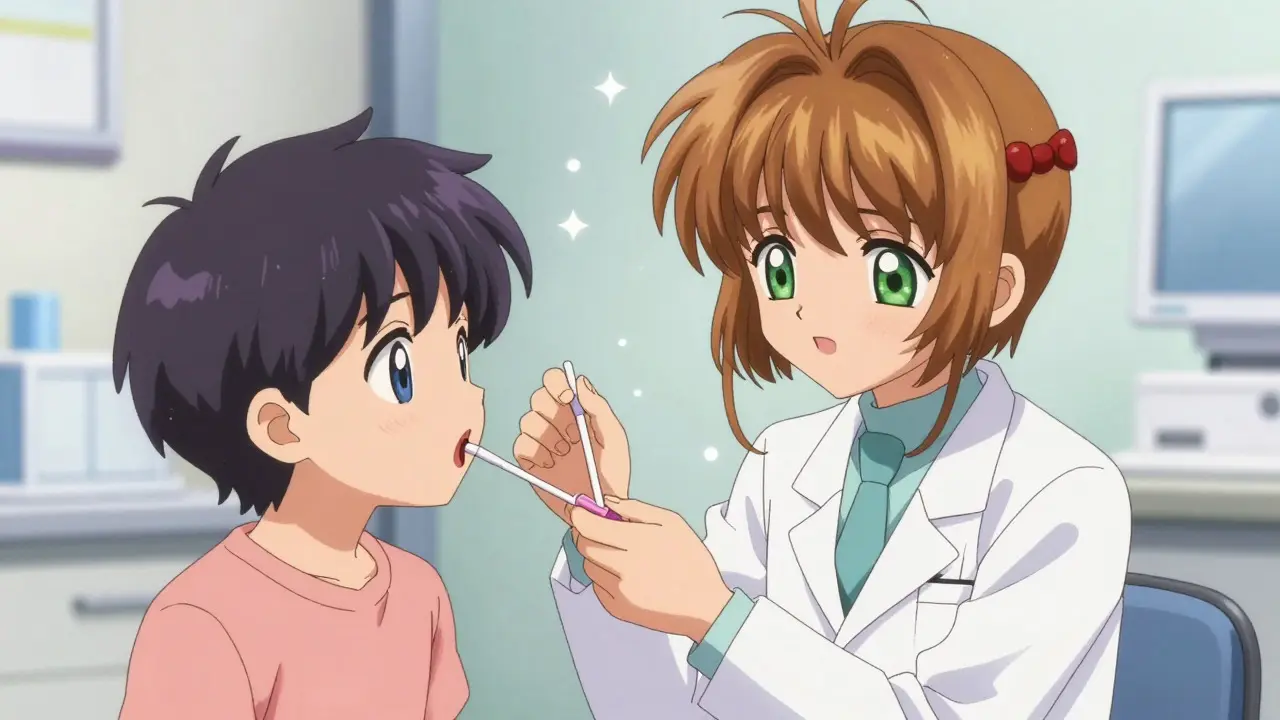
The Rapid Antigen Detection Test (RADT) is the standard first line of defense. It involves swabbing the back of your throat. Results come back in minutes. However, false negatives happen in 5% to 15% of cases. Because missing a case of strep in children carries higher risks of complications, guidelines from the CDC recommend that if a child or adolescent tests negative on the rapid test, they must undergo a throat culture as a backup.
For adults, the rules are slightly looser. If you have a low clinical probability score (based on the Centor criteria) and a negative rapid test, further testing is often skipped. The Centor criteria assign points for age, fever, lack of cough, swollen glands, and tonsil swelling. A score of 3 or higher suggests a 40-60% chance of having strep, warranting immediate testing.
Antibiotic Treatment Protocols
If the test comes back positive, antibiotics are non-negotiable. The goal isn’t just to make you feel better-it’s to kill the bacteria before it spreads to your heart valves or kidneys. The Infectious Diseases Society of America (IDSA) updated its guidelines in 2022 to address emerging resistance patterns, emphasizing strict adherence to proven regimens.
The gold standard treatment remains Penicillin V. It has been used for decades because Group A Streptococcus has not developed significant resistance to it (resistance rate is less than 0.5%). The typical adult dose is 500 mg twice daily for 10 days. For those who prefer fewer pills or have trouble swallowing large tablets, Amoxicillin is an excellent alternative, often dosed once daily at 50 mg/kg (up to 1000 mg).
What if you’re allergic to penicillin? Many people assume they are, but true allergies are rarer than reported. If you have a mild allergy (like a rash), cephalosporins like Cephalexin are often safe and effective. For severe allergies, doctors may prescribe Clindamycin or Azithromycin. However, be aware that resistance to macrolides (like azithromycin) is higher, reaching up to 15% in some regions, making these drugs slightly less reliable for eradication.
A critical point here: antibiotics reduce symptom duration by only about 16 hours on average. They won’t cure you overnight. Their primary job is preventing transmission (you become non-contagious within 24 hours of starting meds) and stopping complications like acute rheumatic fever, which affects about 3% of untreated cases.
Recovery Timeline and Return to Daily Life
So, when can you go back to work or school? The timeline is strict for public health reasons. You remain contagious until you have taken antibiotics for at least 24 hours AND your fever has resolved without the use of fever-reducing medication like acetaminophen or ibuprofen.
- Hours 0-24: Start antibiotics. Stay home. Drink plenty of fluids. Your throat will still hurt, but the bacteria load is dropping rapidly.
- Hours 24-48: If fever-free, you can return to normal activities. Pain should be noticeably reduced.
- Days 3-7: Significant improvement. Continue taking antibiotics even if you feel 100% better. Stopping early is the biggest mistake patients make.
- Days 7-10: Complete the full course. This ensures total eradication of the bacteria.
Data from Nationwide Children’s Hospital shows that complete resolution takes 7 to 10 days with treatment. Without treatment, symptoms linger for the same duration, but you stay contagious much longer and risk spreading it to family members.
If you don’t feel better after 48 hours of antibiotics, call your doctor. This could indicate a secondary complication, such as a peritonsillar abscess (a pocket of pus near the tonsils), which occurs in 1-2% of cases and requires drainage. Other signs of trouble include difficulty breathing, inability to swallow liquids, or a stiff neck.
Prevention and Reducing Risk
Strep throat is highly contagious, spreading through respiratory droplets when an infected person coughs or sneezes. It also spreads via shared objects like utensils, cups, or toothbrushes. Since there is no vaccine currently available (though M-protein vaccines are in Phase II trials), prevention relies on hygiene.
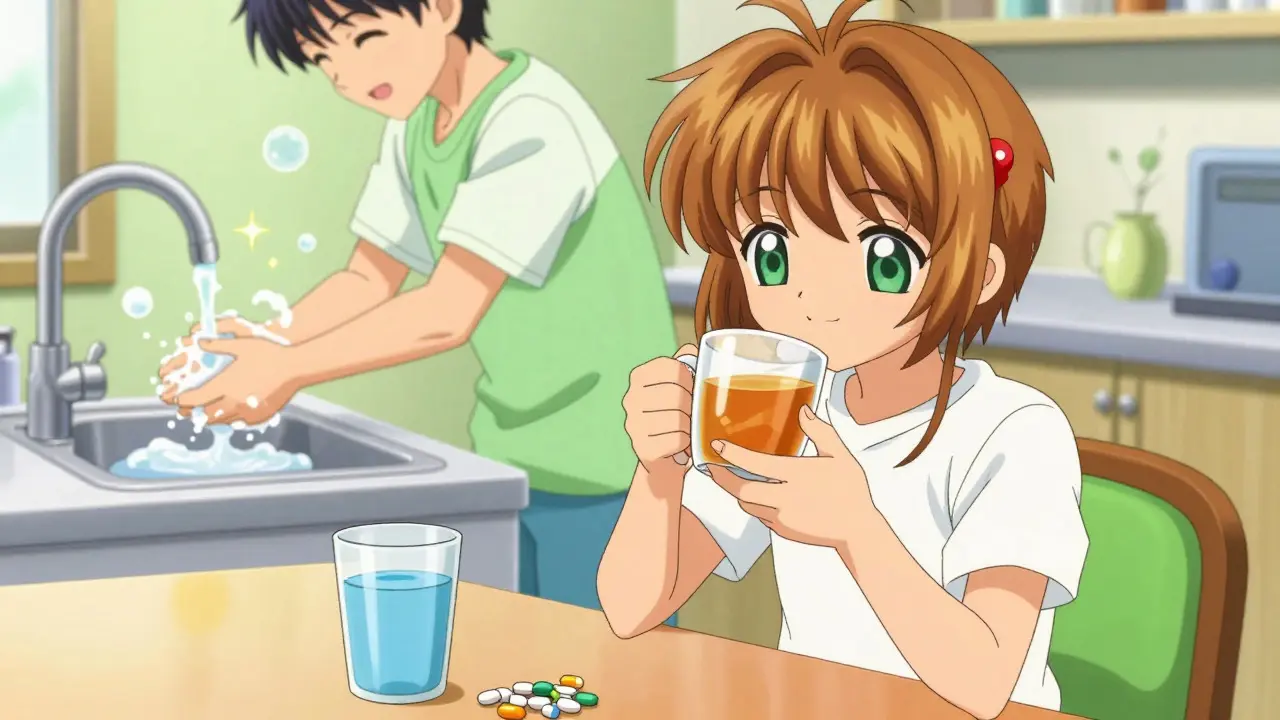
- Hand Hygiene: Wash hands frequently with soap and water for at least 20 seconds. Alcohol-based sanitizers work too but are less effective if hands are visibly dirty.
- Don’t Share: Avoid sharing drinks, food, or personal care items during peak season (November to April), when incidence rates spike by 30%.
- Disinfect Surfaces: Clean high-touch areas like doorknobs and phones regularly.
One common myth is that cold weather causes strep. It doesn’t. The bacteria thrives in close contact environments. Schools, daycares, and military barracks are hotspots. The winter peak is largely due to people spending more time indoors in close proximity, facilitating droplet transmission.
How long is strep throat contagious?
Without treatment, you can remain contagious for several days to weeks. With appropriate antibiotic treatment, you are generally no longer contagious after 24 hours of therapy, provided your fever has also resolved. This is why staying home for the first day of treatment is crucial.
Can you get strep throat twice?
Yes. There are over 200 serotypes of Group A Streptococcus. Having one strain does not protect you from others. Additionally, reinfection can occur if you are exposed to someone else who has strep, or if the initial treatment failed to fully eradicate the bacteria due to non-compliance.
Do I need antibiotics for a sore throat?
Only if it is caused by bacteria. Most sore throats are viral and will resolve on their own within a week. Antibiotics do not work against viruses. Taking them unnecessarily contributes to antibiotic resistance. Always get tested (rapid antigen or culture) before starting antibiotics.
What happens if strep throat is left untreated?
While many cases resolve on their own, untreated strep throat carries a risk of serious complications. These include acute rheumatic fever, which can damage heart valves, post-streptococcal glomerulonephritis (kidney inflammation), and peritonsillar abscesses. Rheumatic fever affects approximately 3% of untreated cases.
Is a rapid strep test accurate?
Rapid tests are highly specific (>95%), meaning a positive result is almost certainly correct. However, sensitivity is lower (85-95%), so false negatives can occur. In children and adolescents, a negative rapid test is usually followed by a throat culture to rule out strep completely. In adults with low clinical suspicion, a negative rapid test is often considered sufficient.