

SSRI-NSAID Combination Risk Calculator
Personalized Risk Assessment
This tool estimates your risk of gastrointestinal bleeding when taking SSRIs and NSAIDs together, based on clinical guidelines.
Every year, millions of people take SSRIs for depression or anxiety, and just as many reach for NSAIDs for back pain, arthritis, or headaches. But what happens when you take both? The answer isn’t just a side effect-it’s a real, measurable spike in the chance of life-threatening bleeding in your stomach or intestines. This isn’t theoretical. It’s happening in clinics, emergency rooms, and homes across the country. And most people don’t even know it’s a risk.
Why This Combination Is Dangerous
SSRIs like sertraline, fluoxetine, and citalopram work by increasing serotonin in the brain. But serotonin isn’t just a mood chemical-it’s also critical for blood clotting. Platelets, the cells that stop bleeding, rely on serotonin to stick together and seal damaged blood vessels. SSRIs block serotonin from being taken back up into platelets, leaving them weak and slow to respond. The result? Even a small cut inside your stomach lining can bleed longer than it should. NSAIDs like ibuprofen, naproxen, and diclofenac work differently but with the same deadly outcome. They shut down COX-1 enzymes, which normally make protective prostaglandins. These prostaglandins keep the stomach lining thick, moist, and well-fed with blood. Without them, the lining thins, cracks, and becomes vulnerable. NSAIDs don’t just irritate the stomach-they actively break down its defenses. Put them together, and you get a one-two punch. The platelets can’t clot properly, and the stomach lining has no protection. The risk isn’t 40% higher or 2x higher. It’s 75% higher than taking either drug alone. That’s not a small increase. That’s the difference between a rare event and something that happens in plain sight in primary care offices.Who’s Most at Risk
Not everyone who takes both drugs will bleed. But some people are walking into a storm with no umbrella. If you’re over 65, your stomach lining is naturally thinner. Your kidneys process drugs slower. Your platelets don’t respond as well. That alone raises your baseline risk. Add an SSRI and an NSAID, and your chance of bleeding jumps dramatically. If you’ve had a stomach ulcer before-even one you didn’t know about-you’re at even higher risk. The lining may look healed on the surface, but it’s still fragile. A single dose of ibuprofen can reopen old wounds. People taking low-dose aspirin for heart protection are also in danger. Aspirin is an NSAID. It does the same thing. So if you’re on aspirin, an SSRI, and another NSAID like naproxen? You’re stacking three bleeding risks on top of each other. And here’s the quiet truth: most doctors don’t ask. A 2021 survey found that fewer than 40% of primary care providers routinely check for this interaction. Patients aren’t warned. They’re handed two prescriptions and told to take them as directed. No red flags. No follow-up. Just silence.Which Drugs Are Safer?
Not all SSRIs are equal in risk-but the differences are small. Most SSRIs affect platelets the same way. Some studies suggest escitalopram might be slightly less likely to cause bleeding than paroxetine or fluvoxamine, but the evidence isn’t strong enough to make it a rule. NSAIDs, on the other hand, vary a lot. Ibuprofen is the least risky of the common non-selective NSAIDs. Naproxen and diclofenac? Much worse. Ketorolac and piroxicam? Avoid entirely if you’re on an SSRI. Celecoxib is the standout. It’s a COX-2 inhibitor, so it doesn’t hurt the stomach lining the same way. Its bleeding risk is nearly the same as taking no NSAID at all. If you need an NSAID and you’re on an SSRI, celecoxib is the safest choice-if your doctor says it’s right for you. And if you don’t need an NSAID at all? Acetaminophen (Tylenol) doesn’t affect platelets or the stomach lining. For many types of pain-headaches, muscle aches, joint stiffness-it’s just as effective. And it doesn’t raise your bleeding risk.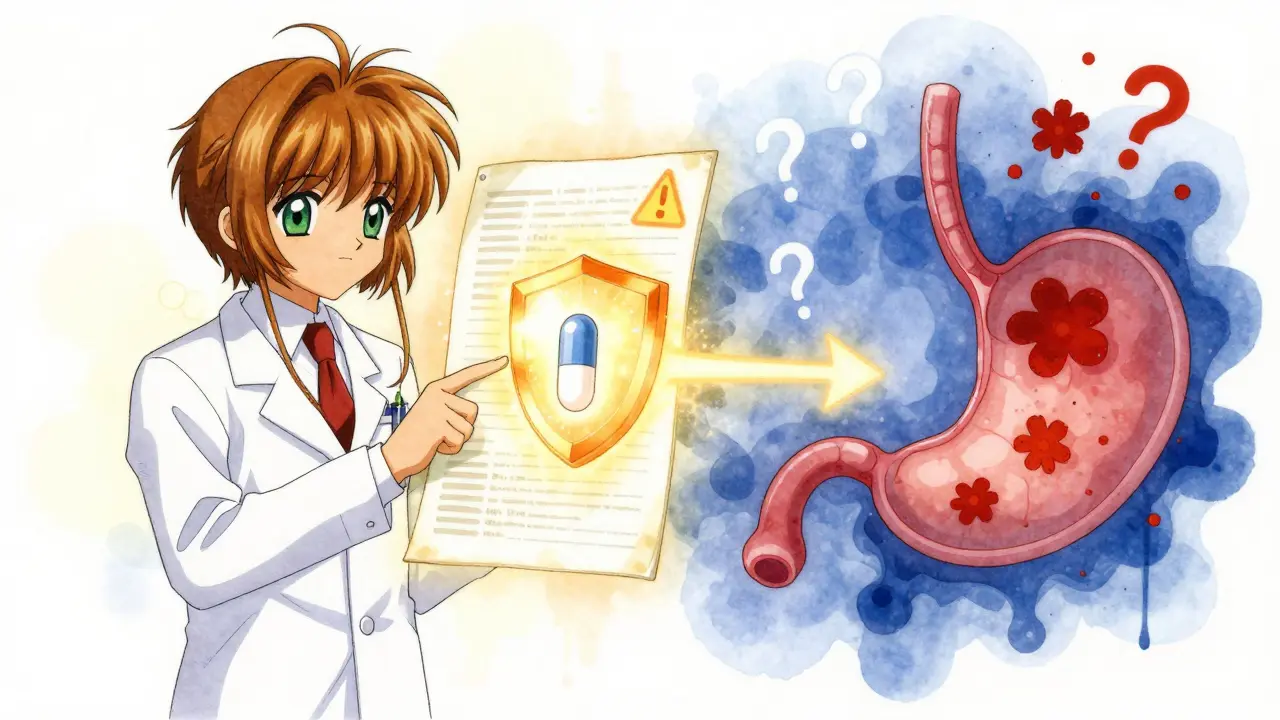
How to Protect Yourself
If you’re taking both an SSRI and an NSAID, here’s what you need to do:- Ask about alternatives. Can your pain be managed with acetaminophen, physical therapy, or heat wraps?
- If you must take both, get a PPI. Proton pump inhibitors like omeprazole, esomeprazole, or pantoprazole rebuild the stomach’s protective lining. Taking omeprazole 20mg daily cuts the bleeding risk from the combination by about 70%. That’s not a bonus-it’s essential.
- Get tested for H. pylori. This bacteria causes most ulcers. If you have it and you’re on SSRIs and NSAIDs, you’re at extreme risk. Eradicating it before starting the combo can prevent disaster.
- Watch for warning signs. Black, tarry stools. Vomiting blood or material that looks like coffee grounds. Sudden dizziness, weakness, or rapid heartbeat. These aren’t normal. They’re emergencies.
What the Experts Are Saying
The American College of Gastroenterology says it plainly: don’t prescribe SSRIs and NSAIDs together without gastroprotection. The FDA added a black-box warning to SSRI labels in 2019. The European Medicines Agency did the same in 2020. These aren’t small print footnotes-they’re major safety alerts. Doctors at Mayo Clinic and Cleveland Clinic now have automated alerts in their electronic systems. When a prescriber tries to write an SSRI and an NSAID together, the system pops up: “High risk of GI bleeding. Consider PPI.” Since 2020, Cleveland Clinic has seen a 42% drop in GI bleeding hospitalizations among patients on this combo. Dr. Amy Foxx-Orenstein, past president of the ACG, put it bluntly: “We’re approaching a tipping point where concomitant SSRI and NSAID prescribing without gastroprotection will be considered negligent care.”
Real Stories, Real Consequences
On Reddit, users describe waking up with black stools. One person waited three days before going to the ER. Another was admitted for a blood transfusion after taking sertraline and naproxen for a week. These aren’t outliers. They’re predictable outcomes. But there are success stories too. One patient with rheumatoid arthritis switched from naproxen to celecoxib, added omeprazole, and stayed on sertraline. No bleeding. No hospital visits. 18 months later, she’s still fine. The difference? She asked questions. Her doctor listened. They changed the plan.What You Can Do Today
If you’re on an SSRI and an NSAID:- Check your medication list. Are you taking more than one NSAID? Are you on aspirin? That’s a red flag.
- Ask your doctor: “Am I at risk for stomach bleeding?”
- If you’re over 65, have a history of ulcers, or take blood thinners, insist on a PPI.
- Ask if acetaminophen could replace your NSAID.
- Ask if you need an H. pylori test.
What’s Coming Next
Researchers are developing pills that combine NSAIDs with built-in stomach protectants. One such drug, a dual-release ibuprofen-omeprazole capsule, is in late-stage trials. It’s not available yet-but it’s coming. AI tools are being trained to predict who’s most likely to bleed based on age, genetics, and medical history. One algorithm from 2023 predicted risk with 86% accuracy using just EHR data. The message is clear: the old way of prescribing these drugs together is no longer safe. The standard of care is changing. And if you’re taking both, you need to be part of that change.Can I take ibuprofen with sertraline?
Yes, but not without protection. Taking ibuprofen with sertraline increases your risk of stomach bleeding by about 75%. If you need to take both, you should also take a proton pump inhibitor like omeprazole daily. Even then, ibuprofen is the least risky NSAID option. Consider acetaminophen instead if possible.
Are all SSRIs equally risky for bleeding?
Most SSRIs carry similar bleeding risk because they all interfere with platelet serotonin. Some studies suggest escitalopram may be slightly less risky than paroxetine or fluvoxamine, but the difference is small and not enough to rely on. Don’t switch SSRIs just to avoid bleeding-focus on reducing NSAID use or adding a PPI instead.
What’s the safest NSAID to take with an SSRI?
Celecoxib (Celebrex) is the safest NSAID for people on SSRIs. It doesn’t block COX-1 like other NSAIDs, so it doesn’t damage the stomach lining. Its bleeding risk is nearly the same as taking no NSAID at all. Ibuprofen is the next best option among non-selective NSAIDs, but still carries higher risk than celecoxib.
Do I need a stomach test before taking both drugs?
If you’re over 60, have had ulcers before, or are on long-term NSAIDs, yes. Testing for H. pylori-a bacteria that causes most ulcers-is recommended before starting an SSRI-NSAID combo. If you have it, treating it reduces your bleeding risk significantly. Many guidelines now suggest this as standard practice.
How long should I take a PPI with SSRIs and NSAIDs?
If you’re taking both drugs long-term, you should take a PPI daily for as long as you’re on the combination. Stopping the PPI even briefly can leave you vulnerable. For short-term NSAID use (like a week for a flare-up), take the PPI for the same duration. Don’t assume you’re safe just because you feel fine-bleeding can happen without warning.
What are the signs of GI bleeding from this interaction?
Watch for black, sticky, tar-like stools. Vomiting blood or material that looks like coffee grounds. Sudden dizziness, weakness, fast heartbeat, or fainting. These are not normal side effects-they’re emergencies. Go to the ER immediately if you notice any of these.






12 Comments
Elaine Douglass
December 17, 2025 AT 22:01I had no idea combining my antidepressant with ibuprofen could be this dangerous
My grandma took both for years and never said a word
I’m gonna check my meds right now
Takeysha Turnquest
December 18, 2025 AT 21:27They told us medicine was healing
Turns out it’s just another layer of the machine
We’re not patients-we’re data points with stomachs
And someone’s profit margin is written in blood
Emily P
December 18, 2025 AT 22:35Is there any data on how often people actually get warned about this combo before being prescribed both? I feel like if I’d known, I’d have asked my doctor sooner
Vicki Belcher
December 19, 2025 AT 20:24OMG I just realized I’ve been taking sertraline + naproxen for months 😱
Going to call my doctor first thing tomorrow
And yes I’m adding omeprazole ASAP 💪❤️
Allison Pannabekcer
December 20, 2025 AT 01:02This is one of those quiet public health issues that flies under the radar because it doesn’t make headlines
But it’s real, it’s preventable, and it’s happening to people we know
Thank you for writing this with such clarity
Not everyone needs to be scared-just informed
And then empowered to ask the right questions
Sarah McQuillan
December 20, 2025 AT 17:24Yeah but in Europe they’re all on pills like this and they live longer
Americans are too scared of everything
Maybe if you stopped taking antidepressants you wouldn’t need to worry about bleeding
Just saying
Aboobakar Muhammedali
December 21, 2025 AT 19:07I take sertraline and ibuprofen for my back pain
I never thought about bleeding
But now I’m worried
Should I stop the ibuprofen or just get the omeprazole?
I don’t want to lose my pain relief
Laura Hamill
December 23, 2025 AT 10:42THIS IS ALL A PHARMA SCAM
They want you on PPIs forever so they can sell more pills
And the FDA? They’re bought and paid for
My cousin took both for 10 years and never bled
They’re just trying to scare you into more prescriptions 💊🩸
Dikshita Mehta
December 24, 2025 AT 04:48For those asking about celecoxib-it’s not available OTC in India, and requires a prescription due to cardiovascular risks in some populations
But if you're young and healthy with no heart issues, it's the safest NSAID option with SSRIs
Also, H. pylori testing is underused globally-especially in South Asia where prevalence is high
Get tested if you're over 50 and on long-term NSAIDs
Sahil jassy
December 26, 2025 AT 03:42Good post
Don’t panic
Just ask your doctor about PPI
You got this 💪
Kathryn Featherstone
December 27, 2025 AT 05:06I’m a nurse and I’ve seen three patients in the last year with GI bleeds from this combo
One was 72, on aspirin, sertraline, and naproxen
She didn’t know any of them could interact
She didn’t even know what a PPI was
It’s not about blame-it’s about awareness
And you just gave it to someone who needed it
Nicole Rutherford
December 27, 2025 AT 16:06Of course you’re bleeding-you’re on antidepressants
That’s not a treatment, it’s a chemical imbalance
And now you’re adding NSAIDs like they’re candy
Stop blaming the drugs and start blaming yourself for being so dependent on pills
Maybe try yoga or meditation for once