
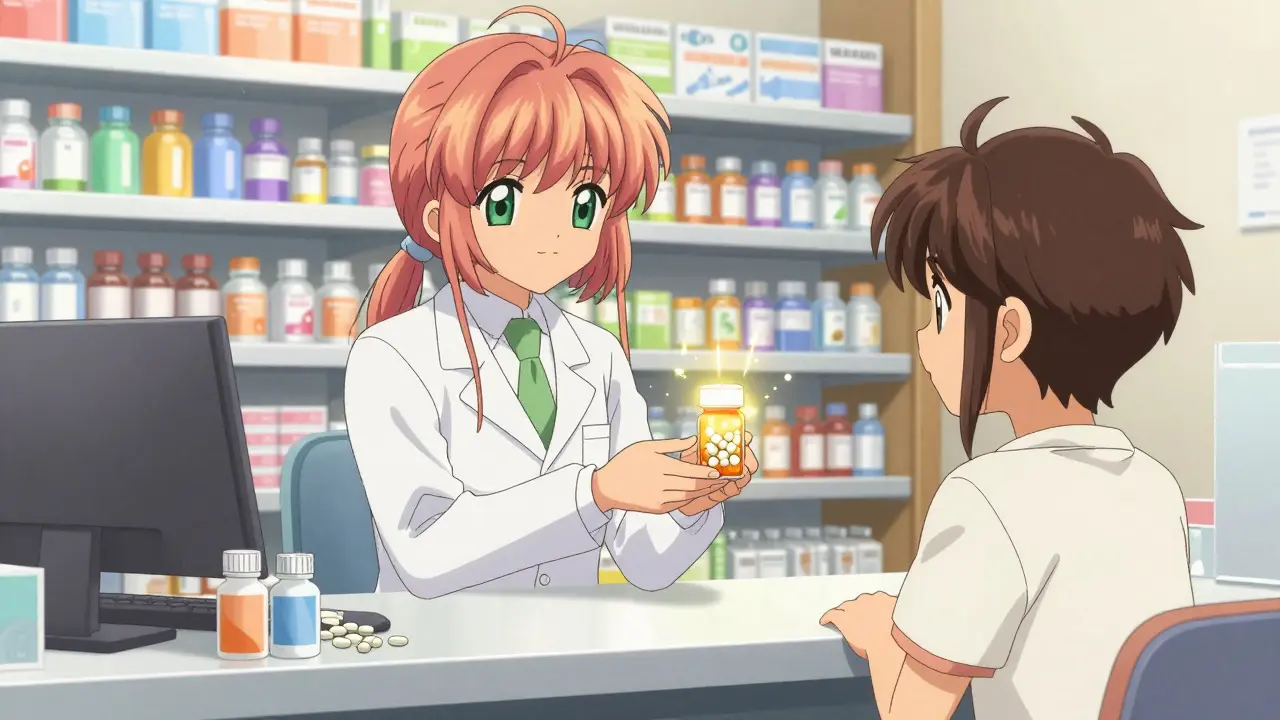
Have you ever handed a patient a prescription and watched them hesitate when the pharmacist handed back a pill that looked completely different from what they expected? You are not alone. For years, healthcare providers have navigated a complex landscape where generic medications are pharmaceutical products containing the same active ingredients as brand-name drugs but sold at significantly lower prices after patent expiration dominate the market. As of 2023, these generics account for approximately 90% of all prescriptions dispensed in the United States, yet they represent only 23% of total pharmaceutical spending, according to U.S. Food and Drug Administration (FDA) data. This massive shift has created a unique set of challenges and successes for providers on the front lines.
The core promise of generics is simple: clinical equivalence at a fraction of the cost. The Hatch-Waxman Act of 1984 established the modern regulatory framework, creating an abbreviated pathway that requires manufacturers to prove bioequivalence rather than conducting full clinical trials. But does this theoretical equivalence hold up in real-world practice? Provider case studies reveal a nuanced picture where most patients thrive on generics, while specific groups require careful monitoring and personalized approaches.
Understanding Bioequivalence Standards
To understand provider confidence, we must first look at the science. The FDA’s Office of Generic Drugs reviews approximately 1,000 abbreviated new drug applications (ANDAs) annually. The median approval time is now just 10 months, down from 36 months in 2012, thanks to initiatives like the Generic Drug User Fee Amendments (GDUFA). These standards require generic drugs to demonstrate 80-125% bioequivalence to brand-name products through pharmacokinetic studies measuring Cmax (maximum concentration) and AUC (area under the curve).
This means the generic must deliver the same amount of active ingredient into a patient's bloodstream within the same timeframe. For most medications, this statistical range translates to identical clinical outcomes. However, providers often face questions about why two generic versions of the same drug might look or feel different. The answer lies in inactive ingredients-fillers, dyes, and binders-which can vary between manufacturers. While these do not affect efficacy for most patients, they can cause issues for those with specific allergies or sensitivities.
Clinical Outcomes Across Therapeutic Areas
When we examine broad categories like cardiovascular health or diabetes management, the data is reassuring. A 2019 study published in JAMA Internal Medicine examined 10 drugs with authorized generics and regular generics marketed between 1999 and 2014. The researchers found no significant differences in clinical outcomes across versions. This included composite cardiovascular endpoints for drugs like amlodipine and quinapril, fracture endpoints for alendronate, and even psychiatric hospitalization rates for sertraline and escitalopram.
Patient adherence also tends to improve with generics. Data from 2001-2003 showed 13% greater medication adherence among patients initiating treatment with generics rather than brand-name drugs, likely due to lower out-of-pocket costs. Dr. Sarah Ibrahim, featured in the FDA’s Q&A podcast in 2022, emphasized that patient counseling about generics "improves usability, compliance, and outcomes, and can save the healthcare professional time in the future." When providers take the time to explain the science, patients are more likely to trust the process.
| Therapeutic Class | Clinical Equivalence | Provider Caution Level | Key Consideration |
|---|---|---|---|
| Statins & ACE Inhibitors | High (AB Rating) | Low | Seamless substitution; significant cost savings |
| Antiepileptic Drugs (AEDs) | Variable | High | Risk of breakthrough seizures; avoid mandatory switching |
| Narrow Therapeutic Index (e.g., Warfarin) | Strict Monitoring Required | Very High | Small dosage changes can lead to serious adverse events |
| Immunosuppressants | Variable | High | Organ transplant recipients may react to formulation changes |
The Narrow Therapeutic Index Challenge
Not all medications fit neatly into the "one-size-fits-all" category. Providers treating patients with narrow therapeutic index (NTI) drugs face a distinct set of challenges. These are medications where small changes in blood concentration can lead to toxicity or treatment failure. Examples include warfarin, certain immunosuppressants, and thyroid medications.
A 2015 systematic review in PMC examining eight studies found that 37.5% focused on epilepsy patients treated with antiepileptic drugs (AEDs), another 37.5% on organ transplant recipients, and the remainder on anticoagulants and atypical neuroleptics. The American College of Neurology specifically recommends against mandatory substitution of AEDs without patient and physician approval. Case reports have documented breakthrough seizures occurring when previously stabilized patients were switched from brand lamotrigine to generic versions. Most regained control only when switched back to the brand product.
For these high-stakes scenarios, many providers opt to specify "dispense as written" on prescriptions. This prevents automatic substitution by the pharmacist and ensures the patient receives the exact formulation they were titrated on. It is a conservative approach, but one that prioritizes safety over cost savings in vulnerable populations.

Regulatory Ratings and the Orange Book
How do you know if a generic is safe to substitute? The answer lies in the FDA’s Orange Book, which lists therapeutic equivalence ratings. Products rated "AB" are considered therapeutically equivalent to the reference listed drug. This means they are interchangeable for most patients. However, ratings can change based on new evidence.
A notable example occurred in 2016 when the FDA investigated complaints about generic versions of Concerta. Two specific generic versions received substantially more "lack of effect" complaints compared to the brand-name product and its authorized generic. After a multi-disciplinary review including adverse event analysis and laboratory testing, the FDA changed the therapeutic equivalence ratings from AB to BX. This downgrade signaled that these specific generics were not therapeutically equivalent and required special consideration. Electronic health record systems now commonly include these indicators to support provider decisions, though integration quality varies across platforms.
Patient Perceptions and Communication Gaps
Even when the science is solid, human psychology plays a major role. A 2024 Greek patient survey published in Frontiers found that women were more likely to follow physician advice regarding generics (68.4%) than men (64.3%). Healthcare providers remain the primary information source for patients. However, a systematic review in PMC documented that a small number of pharmacists believed generic products were of lower quality than branded drugs, expecting them to cause more adverse reactions.
This perception gap can undermine treatment success. Portugal-based research showed greater acceptance of generics among patients with higher education levels or those who had discussed substitution with healthcare professionals. The key takeaway for providers is clear: education is critical. Patient willingness to approve generic switches increases after brief discussions. When physicians include patients in substitution decisions, it builds confidence and reduces anxiety about "cheap" alternatives.

Economic Impact and State Regulations
The economic argument for generics is undeniable. The industry represents $130 billion in the United States as of 2023. Dr. William Shrank, Chief Medical Officer at UnitedHealth Group, published studies showing that states requiring patient consent for generic substitution had 25% lower generic substitution rates. This contributed to unnecessary brand-name utilization and higher costs for insurers and patients alike.
However, state-level regulation remains fragmented. A JAMA Network study of 50 US states and Washington, DC, found that 31 states mandated patient notification independent of drug packaging, while 24 states did not explicitly protect pharmacists from greater liability for substitutions. This creates implementation barriers for providers trying to standardize care. Conversely, eliminating patient consent requirements for three common medications (atorvastatin, clopidogrel, and olanzapine) could have generated over $100 million in savings during the year following loss of market exclusivity, according to a Medicaid dispensing analysis by Shrank et al.
Future Trends and Authorized Generics
As the landscape evolves, authorized generics (AGs)-brand-name products sold without the brand name, often by the innovator company itself-are gaining traction. The Johns Hopkins Center of Excellence in Regulatory Science and Innovation concluded in their 2020 study that overall healthcare utilization and medication use patterns were similar between AG users and regular generic users. This indirectly supports similar efficacy and tolerability profiles.
Looking ahead, the Inflation Reduction Act of 2022 has further incentivized generic utilization through Medicare drug pricing reforms. The Congressional Budget Office estimates this will increase generic substitution rates by 5-7 percentage points by 2025. Meanwhile, the FDA’s Sentinel Initiative is increasingly using real-world evidence to monitor outcomes for commonly substituted medications. Future trends may include expanded use of machine learning to predict patient-specific responses to generic substitutions, as demonstrated in 2024 studies where Random Forest models successfully identified key predictors for generic acceptance.
Are generic medications always clinically equivalent to brand-name drugs?
For most medications, yes. The FDA requires generics to demonstrate bioequivalence, meaning they deliver the same active ingredient into the bloodstream within the same timeframe. However, for narrow therapeutic index drugs like warfarin or certain antiepileptics, providers may exercise caution due to the risk of subtle variations affecting clinical outcomes.
What does an 'AB' rating in the Orange Book mean?
An 'AB' rating indicates that the generic product is therapeutically equivalent to the reference listed brand-name drug. This means it is generally appropriate for substitution without special consideration. Ratings can be downgraded (e.g., to BX) if post-market surveillance reveals significant differences in effectiveness or safety.
Why do some patients experience side effects with generics but not brands?
While the active ingredient is the same, inactive ingredients like fillers, dyes, and binders can differ between manufacturers. Some patients may have allergies or sensitivities to these excipients. Additionally, psychological factors and nocebo effects can play a role if patients distrust generic formulations.
Should I switch my patient on antiepileptic drugs to a generic version?
The American College of Neurology recommends against mandatory substitution of antiepileptic drugs (AEDs) without patient and physician approval. Case reports have shown breakthrough seizures in previously stabilized patients switched to generics. If a switch is necessary, close monitoring and patient consent are essential.
How can providers improve patient acceptance of generic medications?
Education is key. Brief discussions explaining bioequivalence and cost benefits can significantly increase patient willingness to switch. Including patients in the decision-making process builds trust. Pharmacists also play a vital role in informing patients about manufacturer changes and addressing concerns about packaging or appearance differences.