
Imagine waiting for a life-saving medication that has already been approved by the FDA, only to find out it won't be on shelves for another two years. This isn't a hypothetical scenario; it is the daily reality for millions of patients in the United States. The gap between regulatory approval and actual market availability is often filled with legal battles rather than manufacturing delays. Patent litigation is a complex legal mechanism used by brand-name pharmaceutical companies to delay the entry of cheaper generic competitors into the market. While these lawsuits are framed as protecting intellectual property, they frequently serve to extend monopolies, keeping drug prices artificially high long after innovation should have given way to competition.
The Framework Behind the Delays
To understand why generic drugs face such steep hurdles, we need to look at the rules of the game. The foundation of this system is the Drug Price Competition and Patent Term Restoration Act, commonly known as the Hatch-Waxman Act, which was passed in 1984. The goal was noble: balance the need for innovation (by rewarding big pharma) with the need for affordable access (by speeding up generic approvals). However, the law created a loophole that has been exploited for decades.
The key mechanism here is the Paragraph IV certification. When a generic manufacturer wants to sell a version of a brand-name drug before the original patent expires, they must file an Abbreviated New Drug Application (ANDA) with the FDA. In this application, they certify under "Paragraph IV" that the brand's patents are either invalid, unenforceable, or will not be infringed. This certification triggers a specific timeline:
- 45-Day Window: Once the ANDA is submitted, the brand-name company has 45 days to decide whether to sue.
- 30-Month Stay: If the brand sues, the FDA is legally barred from approving the generic drug for 30 months. This is an automatic pause button on competition.
This 30-month stay is where the first major delay occurs. It gives the brand-name company a guaranteed period of continued exclusivity while the legal battle plays out. Even if the generic company eventually wins, those 30 months are lost time during which the brand maintains its monopoly.
Beyond the Compound Patent: The Thicket Strategy
If the 30-month stay were the only barrier, the problem would be manageable. But brand-name companies rarely rely on just one patent. They build what experts call a patent thicket. Instead of relying solely on the original compound patent (which covers the chemical structure of the drug), they file dozens of secondary patents covering everything from the pill's coating, the dosage schedule, to the method of administration.
A 2023 study revealed that 72% of patents examined were filed *after* the FDA had already approved the drug. These secondary patents create multiple layers of defense. When a generic company challenges one patent, the brand can immediately cite another. This leads to serial litigation, where courts are clogged with successive cases regarding the same drug. The result? A median delay of 3.2 years between the expiration of the initial 30-month stay and the actual launch of the generic drug.

The Cost of Legal Warfare
Patent litigation is expensive, but for brand-name pharmaceutical giants, it is a cost of doing business. Defending a single patent case through trial typically costs $3-5 million, and a full appeal can exceed $10 million. For a drug generating billions in annual revenue, this is a small price to pay to delay competition even by a few months.
Generic manufacturers face a different risk profile. To enter the market early, some choose to "launch at risk." This means they start selling the generic drug while the lawsuit is still ongoing. It is a calculated gamble. If they win the lawsuit, they capture the market early. If they lose, they face massive damages for infringement. Because of this financial peril, many smaller generic companies simply wait for the litigation to resolve, further delaying patient access.
Pay-for-Delay: Settling Out of Court
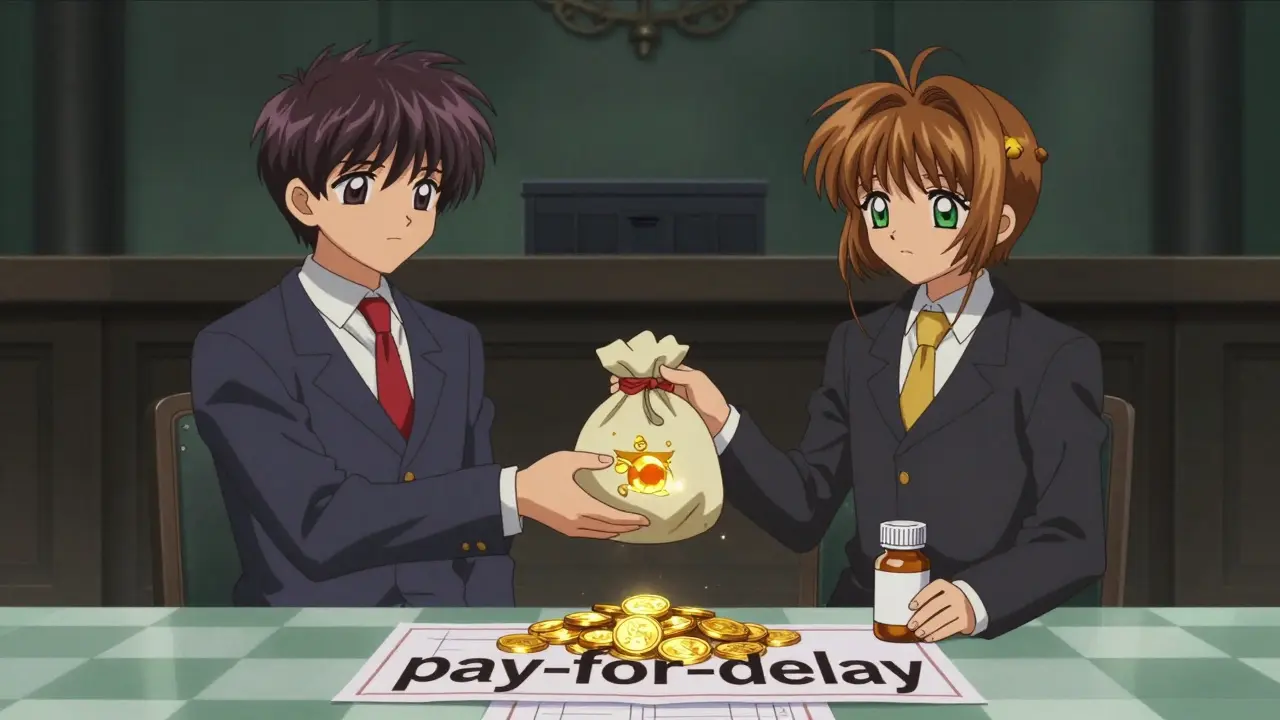
Sometimes, the two sides don't fight all the way to a verdict. Instead, they settle. In many cases, these settlements involve a pay-for-delay agreement. Under this arrangement, the brand-name company pays the generic manufacturer-either directly or indirectly-to agree to stay off the market for a specified period.
The Federal Trade Commission (FTC) has scrutinized these deals heavily. Their 2010 report highlighted that while only 24% of patent cases settled this way, these agreements cost consumers billions by preventing lower-priced generics from entering the market. Essentially, the brand shares some of its monopoly profits with the generic company to keep competition away. This practice keeps prices high for everyone, including insurance companies and government programs like Medicare.
Impact on Patients and Providers
The abstract legal maneuvers described above have very concrete human costs. Healthcare providers report patients rationing insulin or skipping doses because the affordable generic version was delayed by patent challenges despite being FDA-approved. One primary care physician noted cases where patients waited 18 months for a generic alternative due to litigation.
The financial burden extends beyond individual wallets. Employer health plans have documented significant cost impacts. For example, delayed generic entry for popular drugs like Humira cost large employers an additional $1.2 billion in a single year. Pharmacy Benefit Managers (PBMs) now factor in expected litigation delays of 24-36 months when forecasting formulary changes, meaning savings are built into their models as distant possibilities rather than immediate realities.
| Feature | Brand-Name Drugs | Generic Drugs |
|---|---|---|
| Market Share | ~10% of prescriptions | ~90% of prescriptions |
| Revenue Share | ~78% of total pharma revenue | ~22% of total pharma revenue |
| Pricing Power | High (protected by patents) | Low (driven by competition) |
| Litigation Role | Plaintiff (defends patents) | Defendant (challenges patents) |
| Launch Risk | Regulatory approval only | Regulatory + Patent litigation risk |
Regulatory Pushback and Future Outlook
Recognizing the systemic abuse, regulators are starting to push back. The FTC, under Chair Lina Khan, has intensified its challenge against anticompetitive patent practices. In 2023 alone, the FTC challenged over 100 patents held by major brands like AbbVie and AstraZeneca. Additionally, the CREATES Act of 2023 aims to prevent brands from restricting drug samples needed for generic testing, removing one common stalling tactic.
Proposed legislation, such as the Protecting Consumer Access to Generic Drugs Act, seeks to limit the number of patents listed in the FDA's Orange Book and restrict serial litigation. However, change is slow. Analysts predict that without significant legislative reform, the current system will continue to delay generic entry by an average of 3.2 years per drug, costing consumers $15-20 billion annually. As biosimilars (generic versions of biologic drugs) become more common, the complexity-and potential for delay-is likely to increase, as biosimilar litigation takes 25% longer than traditional small-molecule generic disputes.
What is the Hatch-Waxman Act?
The Hatch-Waxman Act, officially the Drug Price Competition and Patent Term Restoration Act of 1984, is a U.S. federal law that established the framework for generic drug approval. It allows generic manufacturers to seek approval without repeating costly clinical trials, provided they prove bioequivalence to the brand-name drug. It also created the Paragraph IV certification process, enabling generics to challenge existing patents.
Why does the FDA approve a generic drug but not allow it to be sold?
The FDA may grant tentative approval to a generic drug, confirming it meets safety and efficacy standards. However, if the brand-name company files a patent infringement lawsuit within 45 days of the generic's application, the FDA is legally required to hold final approval for 30 months. This prevents the generic from being marketed until the litigation resolves or the stay expires.
What is a pay-for-delay settlement?
A pay-for-delay settlement occurs when a brand-name drug company pays a generic manufacturer to delay entering the market. Instead of fighting in court, the generic company agrees to stay off the market for a set period in exchange for a financial payment. The FTC considers these agreements potentially anticompetitive because they maintain high drug prices.
How do patent thickets delay generic entry?
Patent thickets involve filing multiple secondary patents for a single drug, covering aspects like dosage forms, manufacturing methods, or delivery mechanisms. When a generic company challenges one patent, the brand can cite others, forcing the generic to navigate a maze of legal barriers. This serial litigation significantly extends the time before a generic can legally launch.
What is the impact of patent litigation on drug prices?
Patent litigation delays the entry of lower-cost generic alternatives, allowing brand-name companies to maintain monopoly pricing for years longer than necessary. This results in higher costs for patients, insurers, and government healthcare programs. Studies estimate that these delays cost consumers $15-20 billion annually in the U.S.