Your emergency kit is only as good as the medicine inside it. If you’ve ever checked a bottle of pills and wondered if they’re still safe after a power outage or a long drive, you’re not alone. Improper storage is the silent killer of medication efficacy. According to FDA data, temperature excursions are responsible for 78% of emergency medication failures we investigate. That means most spoiled meds aren’t bad because they’re old; they’re bad because they were hot, wet, or in the sun. Getting this right ensures your epinephrine auto-injector actually works when you need it most.
The Core Problem: Why Your Meds Are Failing
Many people assume that if a pill hasn't passed its expiration date, it’s fine. But expiration dates assume ideal storage conditions: cool, dry, and dark. When those conditions break down, potency drops fast. A 2018 study in the Journal of Emergency Medicine found that improperly stored epinephrine auto-injectors lost 37% of their effectiveness within just 72 hours during simulated disaster conditions. For chronic conditions like diabetes, this isn't just an inconvenience-it's a risk. Merck’s stability testing showed insulin loses 15% potency when exposed to temperatures above 46°F (2°C) for 12 consecutive hours. If you live in a region with frequent heat waves or unreliable power, your current storage method might be quietly degrading your supply.
Temperature and Humidity: The Two Enemies
To maximize shelf life, you have to fight two things: heat and moisture. The FDA mandates that most non-refrigerated medications stay between 59-77°F (15-25°C). Refrigerated items, like certain insulins or biologics, need to sit between 36-46°F (2-8°C). But it’s not just about the number on the thermometer. Humidity matters just as much. The International Council for Harmonisation (ICH) guidelines state that relative humidity should stay below 60%. A 2019 University of Florida study proved this point: acetaminophen tablets stored at 75% humidity for 30 days showed a 28% reduced dissolution rate. In plain English, the pills didn’t dissolve properly in your stomach, meaning you got less drug than intended. This is why bathroom cabinets are terrible spots for meds. The American College of Emergency Physicians notes that medications stored in bathrooms show 40% faster degradation rates than those in kitchen cabinets due to constant steam and fluctuating temperatures.
Light Exposure and Container Integrity
Sunlight is another major factor. You don’t need a lab to know that UV rays break down chemicals, but the scale is surprising. A 2020 study in the Journal of Pharmaceutical Sciences confirmed that amoxicillin capsules exposed to direct sunlight for 48 hours lost 42% of their active ingredients. Keep your kit away from windows. Equally important is keeping medications in their original containers. It sounds obvious, but transferring pills into weekly organizers or zip-lock bags strips them of critical protection. Original manufacturer containers outperform transferred storage by 33% in maintaining medication integrity over 12 months, according to FDA container testing data. Plus, intact labels contain the National Drug Code (NDC) numbers, which help pharmacists verify identity if you need refills or replacements during a crisis. Never remove the desiccant packets from original boxes; they are there to absorb excess moisture and keep the environment stable.
Storage Methods Compared: What Actually Works
Not all storage solutions are created equal. Here’s how common methods stack up against each other based on recent testing and expert data:
| Method | Efficacy Retention | Duration Beyond Expiration | Best For |
|---|---|---|---|
| Vacuum-Sealed Original Containers | 95% | 24 months | Solid oral medications (pills, caps) |
| Non-Vacuum Sealed Original Containers | 68% | 6-12 months | Short-term kits (under 6 months) |
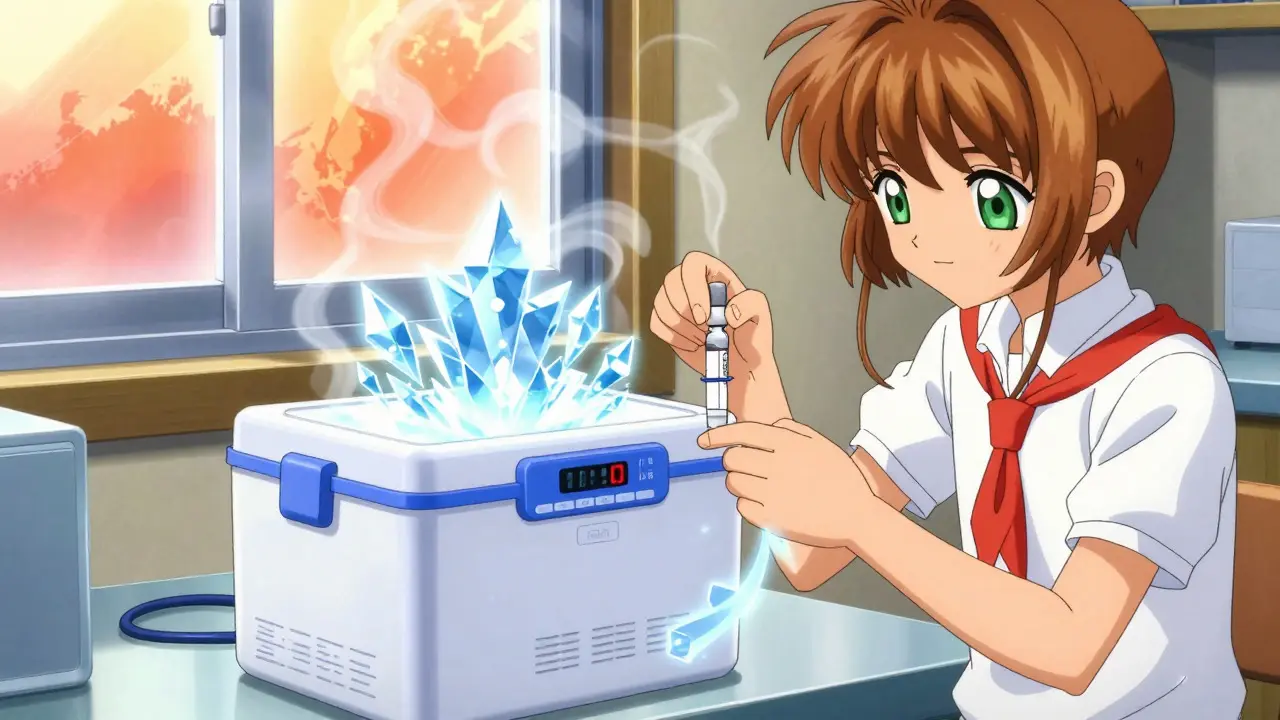
| Battery-Powered Medical Cooler | 92% | 72+ hours (power dependent) | Insulin, biologics, refrigerated meds |
| Toilet Tank Method (Emergency Only) | ~80% | 8-12 hours | Immediate bridge during power loss |
| Transferred to Zip-Lock Bags | 67% | Variable/Low | Avoid if possible |
Notice the gap between vacuum-sealed and standard storage. Johns Hopkins University testing in 2022 showed that vacuum sealing extends shelf life significantly for solid medications. Dr. Michael Rhodes of Intermountain Healthcare suggests that vacuum sealing can extend usability by 1-2 years beyond expiration dates for solids, provided the seal remains intact. However, this doesn’t work well for liquids. Liquid medications generally maintain potency for only 30-60 days beyond expiration under ideal conditions. If you carry liquid antibiotics or suspensions, check the dates more frequently.
Building Your Kit: Step-by-Step Protocol
You don’t need to overhaul your entire home, but you do need a system. The CDC recommends spending 2-3 hours initially to assemble and label an emergency medication kit. Here is how to do it right:
- Inventory and Sort: Gather all prescription and over-the-counter meds. Check expiration dates. Discard anything expired unless you are confident in vacuum sealing solids for long-term storage.
- Keep Original Packaging: Do not transfer pills. Keep bottles and boxes together. Ensure labels are legible.
- Group by Type: Separate refrigerated items from room-temperature items. Use a small, insulated cooler for the cold chain items.
- Add Monitoring Tools: Include a digital thermometer with ±0.5°F accuracy. ANSI/AAMI ST79:2017 standards specify this precision for medical storage. A simple hygrometer for humidity is also smart.
- Label Everything: Write the date you packed the kit on the outside. List all medications, dosages, and expiration dates on a waterproof card inside.
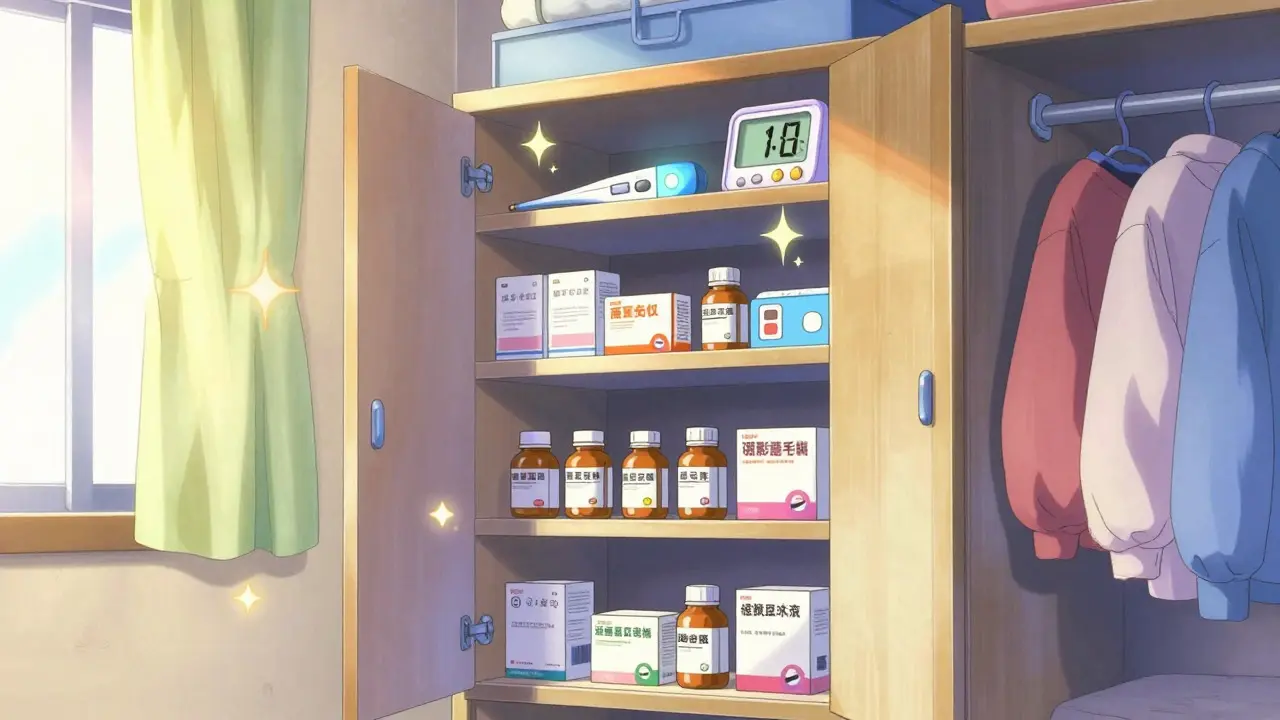
- Choose the Location: Pick a spot that stays cool and dry year-round. Avoid attics (heat), basements (moisture), and garages (temperature swings). A closet in a hallway or a dedicated cabinet in a climate-controlled room is ideal.
Maintenance: The Monthly 15-Minute Check
A kit you never check is a kit that will fail you. Set a recurring reminder for the first Sunday of every month. Spend 15 minutes doing the following:
- Check Temperatures: If you use a battery-powered cooler, ensure the batteries are fresh. Test the thermometer to make sure it reads accurately.
- Inspect Seals: Look for any broken seals on vacuum packs or cracked bottles.
- Rotate Stock: Follow the "first-expired, first-out" rule. Put the oldest items in front. A Veterans Administration pilot program showed this simple organization reduces waste by 65%.
- Replace Epinephrine: Even under perfect conditions, epinephrine auto-injectors lose about 15% potency annually. Replace them every 12-18 months, regardless of the printed expiration date.
Special Considerations for Different Meds
Not all drugs react the same way to stress. Here are specific tips for high-risk categories:
Insulin and Biologics: These are the most fragile. Traditional insulin needs refrigeration until opened, then can stay at room temperature for 28 days. However, newer formulations like Tresiba® (approved in January 2023) can maintain potency for 56 days at 86°F. If you rely on older insulin types, invest in a portable cooler rated for 72+ hours. During a power outage, the "toilet tank method"-placing the cooler in a closed toilet tank-can keep temperatures 15-20°F cooler than ambient air for 8-12 hours. It’s a hack, but it works better than leaving the fridge door open.
Epinephrine Auto-Injectors: Keep these in a protective case to prevent accidental discharge. Heat is the enemy here. If your car gets hot in summer, don’t leave the kit in the glove box. Bring it inside.
Liquid Antibiotics: These often expire quickly once mixed. For long-term storage, keep them in their unopened vials if possible, or plan to replace them every 6 months. Vacuum sealing helps, but don’t count on them lasting years.
Common Mistakes to Avoid
Even well-meaning preppers make errors that compromise their supplies. Watch out for these:
- Storing in the Bathroom: High humidity and heat from showers accelerate degradation. Move your meds to a bedroom or living room closet.
- Ignoring Light: Clear plastic bottles allow UV light in. Keep kits in opaque bags or closed cabinets.
- Overpacking Liquids: Too many liquid meds increase the risk of spills and require more cooling capacity. Stick to essentials.
- Forgetting the Desiccant: Throwing away the little silica gel packets removes your primary defense against moisture. Keep them in.
- Assuming "Expired" Means "Useless": While potency drops, many solid meds remain effective for years past expiration if stored correctly. Don’t panic-throw everything away, but do prioritize using the freshest stock first.
FAQ
Can I store my emergency medication kit in the garage?
Generally, no. Garages experience extreme temperature fluctuations, especially in winter and summer. Unless you have a climate-controlled section, the heat and cold will degrade medications faster. A closet in a main living area is safer.
How long does vacuum sealing actually extend medication life?
For solid oral medications like tablets and capsules, research suggests vacuum sealing can extend usable life by 1-2 years beyond the printed expiration date, assuming the original container was intact before sealing. It is less effective for liquids.
What should I do if the power goes out and my insulin is in the fridge?
Move the insulin to a battery-powered cooler immediately if you have one. If not, place the fridge contents in a cooler with ice packs. As a last resort, the toilet tank method can provide temporary cooling for 8-12 hours. Try to avoid opening the fridge door repeatedly.
Do I need to replace epinephrine auto-injectors even if they aren't expired?
Yes. Studies show epinephrine loses about 15% of its potency per year even in ideal storage. Experts recommend replacing them every 12-18 months to ensure full effectiveness during an allergic reaction.
Is it okay to transfer pills into a weekly organizer for my emergency kit?
It’s better to keep them in original containers. Transferred storage loses 33% of its protective integrity compared to original packaging. Original bottles protect against moisture, light, and crushing. If you must transfer, use airtight, opaque containers and include a desiccant packet.