
When your child refuses to take medicine, it’s not defiance-it’s biology. The bitter, chemical taste of antibiotics like Amoxicillin or Augmentin triggers a natural aversion in kids. No amount of coaxing, bribes, or mixing with juice works consistently. That’s where pediatric medication flavoring steps in-not as a gimmick, but as a proven, low-cost tool that turns medication time from a daily battle into something manageable, even predictable.
Why Taste Matters More Than You Think
More than 78% of parents report their child has difficulty taking prescribed liquid medications. Half of those struggles are directly tied to taste. Kids don’t understand why they need the medicine. All they know is that it makes their mouth burn, tastes like metal, or lingers for minutes after swallowing. That’s why, without flavoring, non-compliance rates can hit 76%. With it, they drop to 20%.
It’s not just about making kids happier. Poor adherence means infections don’t clear, fevers return, and kids end up back in the clinic-or worse, the ER. A study in pediatric cancer trials showed a grape-flavored solution had a lingering burning sensation that made kids refuse it entirely. That’s not a flavor issue; it’s a treatment failure.
The FDA calls palatability a “key factor in successful therapeutic intervention.” That’s not marketing speak. It’s clinical reality. If a child spits out half the dose, the drug concentration in their bloodstream drops. The infection isn’t fully treated. Antibiotic resistance grows. The whole system breaks down.
How Flavoring Services Actually Work
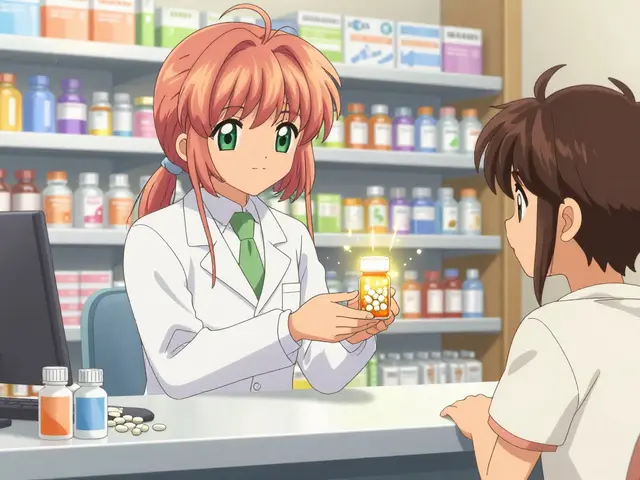
Flavoring services aren’t magic. They’re pharmacy compounding-simple, safe, and standardized. A pharmacist takes the prescribed liquid medication, checks its compatibility with flavoring agents, and adds a small amount of a food-grade, sugar-free, dye-free flavoring. No equipment needed beyond what every community pharmacy already has.
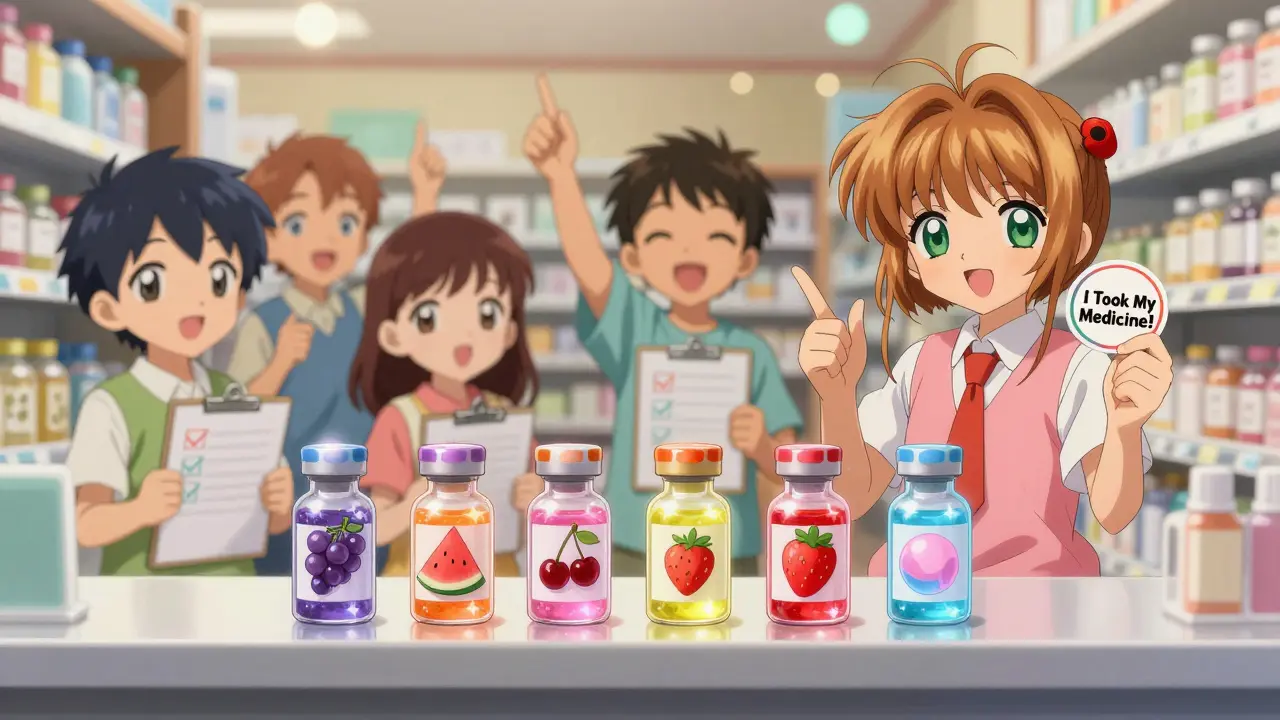
The top five medications routinely flavored are: Amoxicillin, Augmentin, Azithromycin, Cefdinir, and Clindamycin. These are the antibiotics most often prescribed to kids. And the flavors? Grape, bubblegum, strawberry, watermelon, and cherry. Not because they’re trendy, but because research shows kids consistently choose them. At Intermountain Healthcare, pharmacists offer these five as standard options. Parents and kids pick one during pickup. That’s it.
The flavoring doesn’t change the dose. It doesn’t alter the active ingredient. It doesn’t affect absorption. Studies confirm the medication’s potency stays intact. The only thing that changes? The child’s willingness to swallow it.
What Happens When You Don’t Use Flavoring
Parents try everything. Mix it with apple sauce. Hide it in chocolate syrup. Use a syringe and squirt it in the back of the mouth. Some even dilute it in a whole bottle of juice, not realizing that can dilute the dose too much.
Here’s the problem: mixing meds with food or drinks can interfere with absorption. Some antibiotics need an empty stomach. Others react chemically with dairy. A study found that mixing amoxicillin with milk reduced its effectiveness by up to 30%. And even when it works, it’s a stressful ritual. One mom described it as “a 20-minute war every morning.”
Flavoring removes that war. No more hiding pills in peanut butter. No more crying. No more guilt. Just a quick, calm exchange: “Which flavor do you want today?”
Real Results, Real Stories
At Germantown Pharmacy in Mississippi, kids are allowed to pick their own flavor. The pharmacist keeps a small display of sample vials-each with a different color and scent. Children point. They smile. They say, “I want bubblegum.”
One parent wrote: “My son used to scream every time we opened the medicine bottle. Now he asks for it. He says, ‘Is it bubblegum today?’”
Compliance rates jump from 53% to over 90% when flavoring is offered. That’s not a small gain. That’s the difference between a child recovering on schedule and ending up hospitalized. It’s also the difference between a pharmacy being just another stop on the way to the clinic-and becoming the place parents trust.
Intermountain Healthcare rolled out the service in 2023. Their goal? “Ensure patients are adherent and receive the best outcomes from their medication therapy.” The cost? $1.50 per prescription. That’s less than a coffee. For many families, it’s the first time they’ve seen a healthcare provider actually solve a problem they live with daily.
Limitations and When It’s Not Enough
Flavoring isn’t a cure-all. Some medications are too thick, too acidic, or chemically unstable to mix with flavoring agents. Pharmacists must screen each prescription. Not every liquid can be flavored.
Also, some kids develop strong flavor preferences. If a child loves grape-flavored amoxicillin and then gets a different antibiotic that’s only available in cherry, they might refuse it-even if it’s the right drug. That’s why pharmacists now track flavor history across prescriptions.
And while flavoring helps with liquids, it doesn’t replace better formulations. In a trial in Africa, children given prepacked chewable tablets for malaria had 91% adherence. Those on liquid form? Only 42%. That’s not a taste issue-it’s a delivery issue. Flavoring improves what’s already there. It doesn’t fix fundamentally poor formulations.
Still, for the 80% of pediatric prescriptions that are liquids, flavoring is the most practical, immediate fix available.
Why Pharmacists Are the Unsung Heroes
Doctors write the script. Nurses give the shots. But pharmacists are the ones who actually fix the problem.
They’re the ones who know which flavors mask bitterness best for which drugs. They’re the ones who check for chemical incompatibilities. They’re the ones who explain to a tired parent, “We can make this taste like strawberry. It won’t change how it works.”
And they’re the ones who build trust. A pharmacy that offers flavoring isn’t just filling prescriptions. They’re reducing stress, saving time, and helping families stick to treatment plans. That’s why parents who use the service say they’d recommend that pharmacy to friends-even if it’s farther away.
The Bigger Picture
Medication adherence isn’t just about pills. It’s about dignity. It’s about reducing fear. It’s about giving kids a sense of control-even in small ways.
When a child chooses their flavor, they’re not just picking a taste. They’re participating in their own care. That’s powerful. And it’s why flavoring services are no longer seen as a nice-to-have. They’re becoming a standard of care.
Health systems like Intermountain are integrating it into routine workflows. Insurance companies are starting to notice: better adherence means fewer ER visits, fewer hospitalizations, lower costs. The math adds up.
Flavoring services are simple. They’re affordable. And they work. For parents, for pharmacists, and most of all-for kids who just need to take their medicine without crying.
Can any liquid medication be flavored?
No, not all. Some medications are too thick, too acidic, or chemically unstable to mix with flavoring agents. Pharmacists check each prescription for compatibility. For example, some antifungal liquids or chemotherapy suspensions may not be suitable. Always ask your pharmacist to confirm if flavoring is safe for your child’s specific medication.
Does flavoring change the dose or effectiveness of the medicine?
No. Modern flavoring systems like FLAVORx use dye-free, sugar-free additives that don’t interfere with the active ingredients. Studies confirm the medication’s potency, absorption, and dosing accuracy remain unchanged after flavoring. The only thing altered is the taste.
How much does flavoring cost?
At most community pharmacies offering the service, it costs around $1.50 per prescription. Some pharmacies include it for free as part of their pediatric care package. It’s one of the lowest-cost interventions with the highest impact on adherence.
What are the most popular flavors for kids?
The top five flavors chosen by children are grape, bubblegum, strawberry, watermelon, and cherry. These are based on extensive feedback from pediatric patients and are designed to mask bitterness without being overly sweet or artificial-tasting.
Is flavoring available at all pharmacies?
No, not yet. While widely available in the U.S. through chains and independent pharmacies using systems like FLAVORx, it’s not universal. Many parents don’t know it exists until they’ve struggled for weeks. Always ask your pharmacist if they offer pediatric medication flavoring. If they don’t, you can request they look into it-many will start offering it once they know there’s demand.
Can flavoring help with chronic medications, like for asthma or epilepsy?
Yes. While most studies focus on antibiotics, flavoring is equally effective for long-term medications. Kids on daily asthma syrups, seizure meds, or ADHD liquids benefit just as much. Poor taste is a major reason for non-adherence in chronic conditions. Flavoring helps make daily doses routine, not a daily fight.




13 Comments
Cara Hritz
December 21, 2025 AT 23:43flavoring meds is so dumb why cant kids just take it like normal ppl do i mean its not like its poison its just medicine lol
Herman Rousseau
December 22, 2025 AT 06:30This is honestly one of the most underrated healthcare innovations I’ve ever seen. 💯 Kids aren’t being difficult-they’re being biological. And pharmacists? Absolute heroes. My niece takes her antibiotics like candy now-bubblegum flavor, no tears, no drama. Thank you, pharmacy teams.
Ajay Brahmandam
December 24, 2025 AT 01:55Been doing this for years in rural India-flavoring antibiotics with a drop of mango syrup. Works better than grape. Kids love it. No fancy tech, just common sense. Pharmacies here don’t offer it officially, but we make it work. Simple fixes beat complex systems every time.
Kiranjit Kaur
December 24, 2025 AT 19:30This made me cry 😭 My daughter used to vomit every time we gave her amoxicillin. We tried everything-honey, juice, hiding it in pudding. Then we found a pharmacy that flavored it strawberry. She started asking for it. Like, ‘Mommy, is it strawberry today?’ I didn’t think medicine could ever feel like a gift.
Johnnie R. Bailey
December 25, 2025 AT 01:13Let’s not romanticize this too much. Flavoring is a band-aid on a broken system. Why aren’t we investing in better drug formulations? Chewables. Patches. Dissolvable films? We’ve got the tech. We’re just lazy. Flavoring helps today-but what about tomorrow? We need systemic change, not just sweetened liquids.
Nader Bsyouni
December 26, 2025 AT 08:47So now we’re bribing kids with candy to take medicine? Next they’ll be getting lollipops for vaccines. This is corporate wellness theater. Big Pharma doesn’t care about kids-they care about profit margins. Flavoring costs $1.50? Tell me who’s making the real money here.
Tarun Sharma
December 26, 2025 AT 14:06The clinical data supporting flavoring is robust. Compliance rates improving from 53% to over 90% is not anecdotal-it is statistically significant. This is evidence-based practice, not gimmickry.
Jim Brown
December 27, 2025 AT 14:26There is a profound metaphysical shift occurring here: the child, once a passive recipient of medical authority, becomes an active agent in their own healing through the simple act of flavor selection. This is not merely pharmacological-it is phenomenological. The dignity of choice, even in the minuscule, reorients the entire therapeutic relationship. We are witnessing the quiet revolution of pediatric autonomy.
Aliyu Sani
December 29, 2025 AT 08:44in nigeria we just mix with ogi or pap. works better than grape. no one cares about FDA standards here. if kid swallows it, its good. also why do u need sugar free? kids dont care about sugar. they care about not crying.
jenny guachamboza
December 30, 2025 AT 06:04Wait… this is all a scam by FLAVORx to sell more syrup? 🤔 I heard they’re owned by Big Pharma and they’re hiding the fact that flavoring makes kids addicted to sweet tastes and causes obesity later. Also, why are all the flavors so artificial? Are they secretly putting ADHD drugs in the bubblegum?? 🧪🍬
Jamison Kissh
December 31, 2025 AT 17:08It’s fascinating how something so small-a flavor-can dismantle years of medical paternalism. We’ve spent decades telling parents to force-feed medicine. But what if the problem wasn’t the child’s resistance… but our refusal to adapt? This isn’t about taste. It’s about listening. And that’s the real breakthrough.
Gabriella da Silva Mendes
January 2, 2026 AT 01:39Oh great, now we’re turning medicine into a theme park ride. First they give kids lollipops at the hospital, now we’re making antibiotics taste like candy? What’s next? Coloring the pills like Skittles so they think it’s a game? This is why America is collapsing. No discipline. No structure. Just sugar-coated chaos. 🇺🇸❌
Vikrant Sura
January 3, 2026 AT 21:0478% of parents struggle? So what? Most parents are lazy. Just make them hold the kid down. Problem solved. Also, why are we spending $1.50 per dose? Just give them the bitter stuff. Build character.