
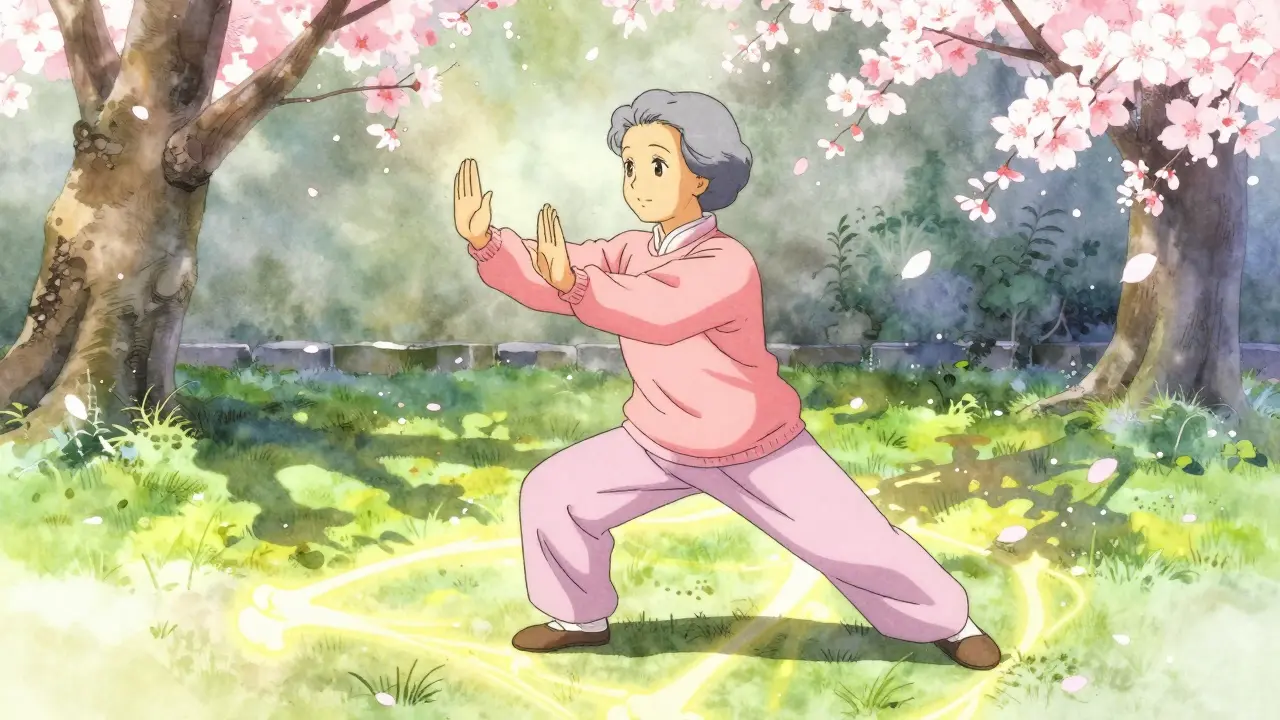
One in three women over 50 will break a bone because of weak bones. One in five men will too. And it’s not just about falling - sometimes, a sneeze or stepping off a curb is enough. Osteoporosis doesn’t come with warning signs until it’s too late. By then, the damage is done. But here’s the truth: bone density loss isn’t inevitable. You can slow it. You can stop it. And you can prevent fractures - even if you’re already past 50.
Why Your Bones Are Weakening (And Why It’s Not Just Age)
Your bones aren’t static. They’re alive, constantly breaking down and rebuilding. Up until your late 20s, you’re building more than you lose. That’s your peak bone mass. After that, the scale tips. For women, things get worse fast after menopause. Estrogen drops, and bone loss jumps from 0.5% per year to 2-3%. Men lose bone too, but slower. By 65, your fracture risk is over four times higher than when you were 50. It’s not just about getting older. Genetics play a big role. If your mom or dad broke a hip, your risk goes up by 60-80%. Being White or Asian also increases your chance compared to Black or Hispanic women. But here’s the good part: most of what causes bone loss is within your control.The Big 5 Modifiable Risk Factors You Can Change Today
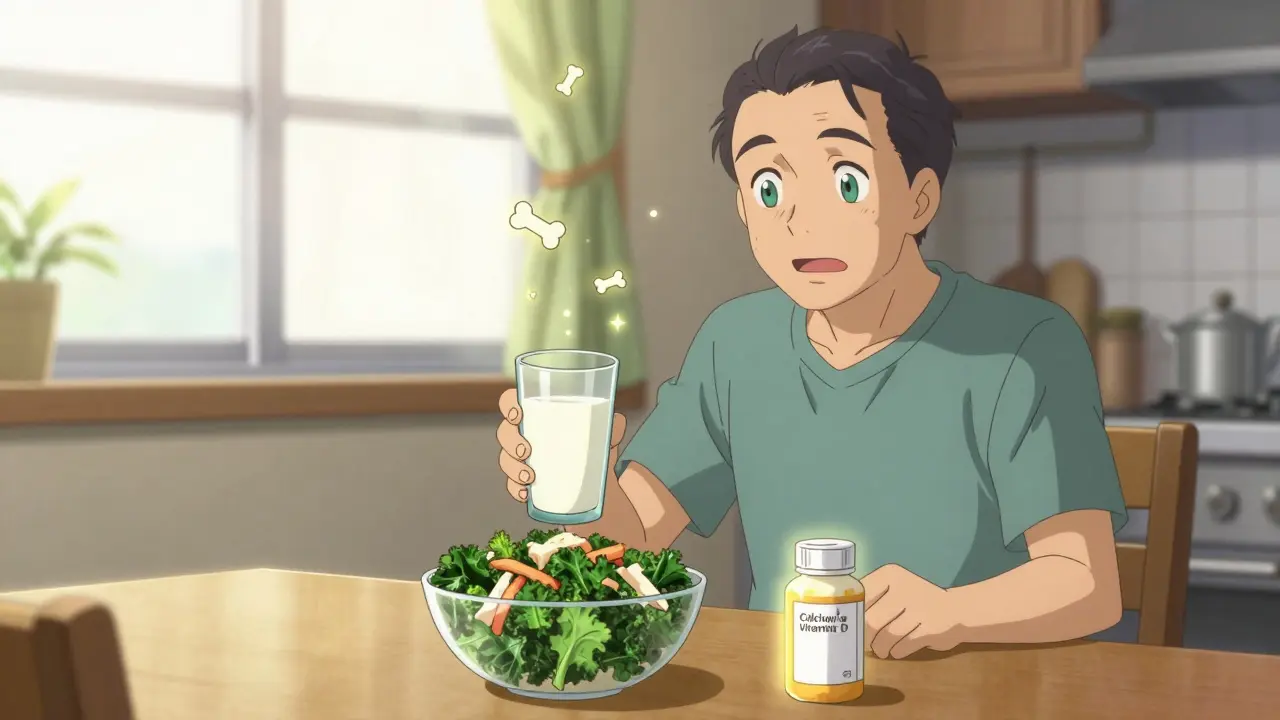
You can’t change your age or gender. But you can change these five things - and each one makes a real difference.- Not getting enough calcium: Most adults need 1,000 mg a day. Seniors need 1,200 mg. If you’re below that, your fracture risk goes up by 30-40%. Dairy isn’t the only source - kale, broccoli, canned salmon with bones, and fortified plant milks work too.
- Vitamin D deficiency: Over 40% of U.S. adults are low. Without enough vitamin D, your body can’t absorb calcium. Your blood level should be above 30 ng/mL. If you’re under 20, you’re at 33% higher risk for fractures.
- Smoking: One pack a day increases fracture risk by 55%. It messes with estrogen and blocks calcium absorption. Quitting doesn’t reverse damage overnight, but it stops the bleeding.
- Drinking too much alcohol: More than two drinks a day raises hip fracture risk by 41%. Alcohol kills bone-building cells and throws off your balance.
- Being sedentary: If you don’t put stress on your bones, they forget how to stay strong. People who sit all day have 25-30% higher fracture risk. Moving your body is the best medicine.
Exercise That Builds Bone (Not Just Cardio)
Walking helps. But it’s not enough. To build bone, you need impact and resistance. Your bones respond to force. The more you challenge them, the stronger they get.- Weight-bearing exercise: Brisk walking, jogging, dancing, stair climbing. Do this 5 days a week for 30-45 minutes. Even slow walking for 10 minutes after meals helps.
- Resistance training: Lift weights, use resistance bands, or do bodyweight moves like squats, lunges, and push-ups. Do this twice a week. Start light. Focus on form. You don’t need to go heavy to see results.
- Balance training: Falls cause 90% of fractures. Tai Chi, standing on one foot, heel-to-toe walks - these reduce falls by 45% in people over 65.
Calcium and Vitamin D: How to Get Them Right
You can’t just pop a pill and call it done. Timing and form matter.- Take calcium in doses of 500-600 mg at a time. Your body can’t absorb more than that at once. Split your daily dose - one with breakfast, one with dinner.
- Take calcium with food. It absorbs better that way.
- Vitamin D: 800-1,000 IU a day is standard. If your blood level is below 20 ng/mL, you might need 2,000 IU until you’re back in range. Get tested if you’re unsure.
- Don’t rely on milk alone. One cup has about 300 mg. You’d need four cups to hit your daily goal. Add leafy greens, sardines, or fortified foods.
What Your Doctor Should Be Checking - And What They Might Miss
Most doctors wait until you break a bone to act. That’s too late. The right screening can catch problems before they turn into fractures.- DXA scan: This is the gold standard. It measures bone density in your hip and spine. Recommended for women over 65, men over 70, and anyone over 50 with risk factors. Radiation? Less than a day of natural sunlight.
- FRAX tool: This isn’t a test. It’s a calculator. It uses your age, weight, smoking status, alcohol use, and family history to estimate your 10-year fracture risk. It’s more accurate than bone density alone.
- Fracture history: If you’ve had one fragility fracture (from a fall from standing height or less), your risk of another jumps by 86% to 200%. That’s the biggest red flag.
Medications: When They Help - And When They Don’t
If you’re at high risk, your doctor might suggest medication. But they’re not for everyone.- Bisphosphonates (like alendronate or risedronate): These slow bone loss. They’re first-line for most people. But 58% of users quit within a year because of stomach upset or jaw pain.
- Romosozumab (Evenity): Newer, approved in 2023. It builds new bone while slowing breakdown. Works fast - 73% fewer spine fractures in a year. But it’s expensive and only used for 12 months.
- Other options: Denosumab (injections every 6 months), teriparatide (daily shots), and hormone therapy for younger postmenopausal women.
Preventing Falls: The Simple Home Fixes That Save Lives
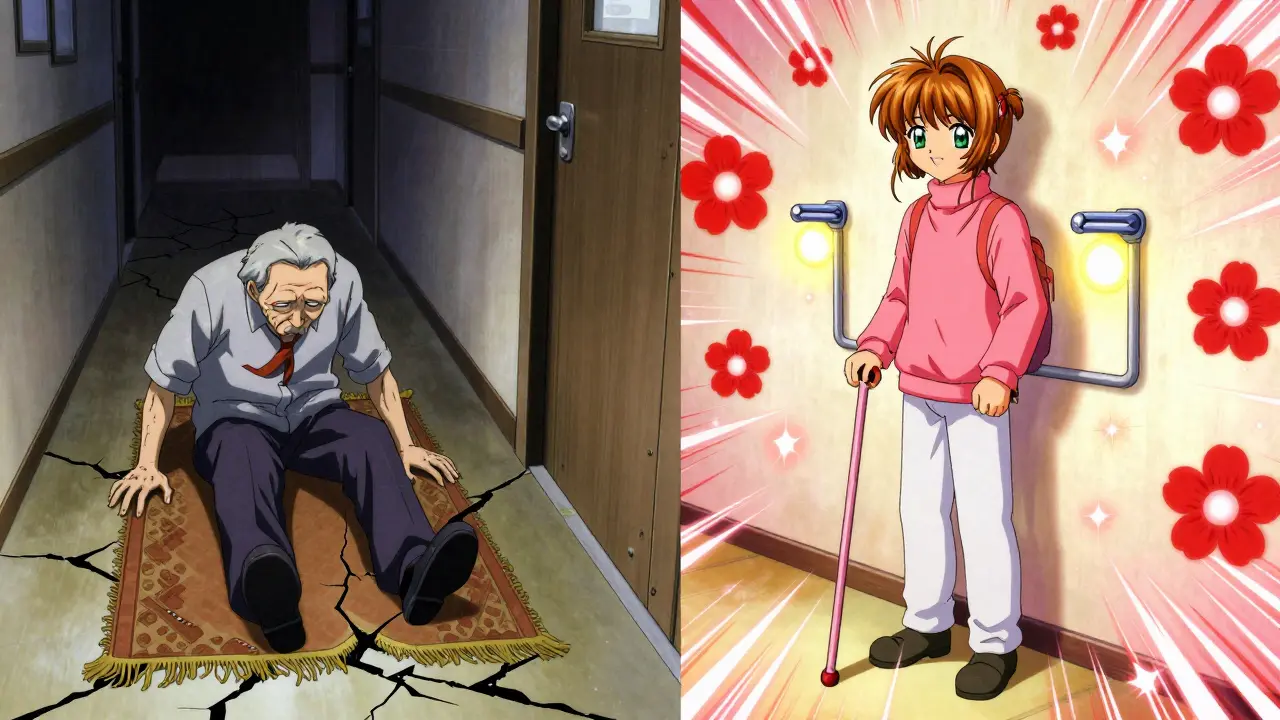
Most fractures happen at home. You don’t need a fancy device. Just fix these five things:- Remove loose rugs or tape them down.
- Install grab bars in the bathroom - near the toilet and in the shower.
- Use non-slip mats in the tub and on the bathroom floor.
- Improve lighting - especially on stairs and hallways.
- Keep frequently used items on middle shelves so you don’t have to reach or climb.
It’s Not Too Late - Even If You’ve Already Broken a Bone
Some people think, “I already broke my hip. What’s the point?” That’s the worst mindset you can have. After a fracture, your risk of another skyrockets. But studies show that people who start calcium, vitamin D, exercise, and fall prevention after a fracture cut their risk of a second one by nearly half. Bone healing takes time. But rebuilding strength? That starts the day you decide to act. You don’t need to be perfect. Just consistent. Walk every day. Take your vitamins. Fix your home. Talk to your doctor. These aren’t chores - they’re insurance.What the Experts Agree On (And What They Don’t)
Dr. Ethel Siris says: “A single fracture is the strongest predictor of the next one.” That’s why catching it early matters. Professor Cyrus Cooper adds: “Your bone health by age 30 sets your future risk.” That’s why kids need calcium and movement too. Dr. Nelson Watts warns: “Relying only on bone scans misses half the people who will fracture.” That’s why your full history matters. The science is clear: osteoporosis isn’t just a women’s issue. It’s not just an old person’s problem. It’s a lifelong process - and the time to act is now, no matter your age.Start Here: Your 30-Day Action Plan
You don’t need a PhD to protect your bones. Just these steps:- Week 1: Get your calcium intake on track. Track your meals. Add one extra serving of calcium-rich food daily.
- Week 2: Start walking 20 minutes a day, 5 days a week. No need to run. Just move.
- Week 3: Do two 15-minute resistance sessions. Use bands or dumbbells. Squats, wall push-ups, seated rows.
- Week 4: Check your home for fall hazards. Remove one tripping risk. Install one grab bar or nightlight.
Can you reverse osteoporosis naturally?
You can’t fully reverse osteoporosis, but you can stop it from getting worse - and even rebuild some bone density. The right mix of calcium, vitamin D, weight-bearing exercise, and resistance training can improve bone strength by 1-3% over 12 months. That’s enough to lower fracture risk significantly. Medications like romosozumab can do more, but lifestyle changes are the foundation for everyone.
Do I need a bone density test if I’m under 65?
Yes, if you have risk factors. That includes early menopause (before 45), a parent who broke a hip, long-term steroid use, rheumatoid arthritis, or a previous fracture. The USPSTF recommends testing for women over 65 and men over 70 - but if you’re high-risk, start at 50. Don’t wait for a fracture to get checked.
Is walking enough to prevent bone loss?
Walking helps, but it’s not enough on its own. It’s a weight-bearing activity, which is good. But to build bone, you need impact and resistance. Add squats, lunges, or light weights twice a week. Studies show people who combine walking with resistance training gain measurable bone density. Just walking may slow loss, but adding strength builds new bone.
Can vitamin D alone prevent fractures?
No. Vitamin D helps your body absorb calcium, but it doesn’t build bone by itself. You need both. Studies show taking vitamin D without calcium doesn’t reduce fracture risk. The combination does. And you need enough of both - 1,000-1,200 mg of calcium and 800-1,000 IU of vitamin D daily. Alone, neither is enough.
What foods are best for bone health?
Focus on calcium and vitamin D sources: dairy (milk, yogurt, cheese), canned salmon or sardines with bones, leafy greens like kale and bok choy, fortified plant milks and juices, tofu made with calcium sulfate, and almonds. For vitamin D, fatty fish like salmon, egg yolks, and fortified foods help. Sunlight is natural, but many people still need supplements - especially in winter or if you have dark skin.
Does coffee cause bone loss?
Moderate coffee (1-2 cups a day) doesn’t hurt bone health if you’re getting enough calcium. But if you drink 3+ cups daily and don’t eat enough calcium-rich foods, it might contribute to bone loss. Caffeine can slightly reduce calcium absorption. The fix? Add a splash of milk or eat a calcium-rich snack with your coffee. It’s not the coffee - it’s what you’re not eating.
Can osteoporosis affect younger people?
Yes. While most cases are in older adults, younger people can develop it too - especially if they have eating disorders, long-term steroid use, thyroid problems, or certain genetic conditions. Women who stop menstruating for long periods (like athletes or those with anorexia) lose bone fast. The key is early detection. If you’re under 50 and have risk factors, talk to your doctor about testing.



8 Comments
Elen Pihlap
January 7, 2026 AT 06:31I started taking calcium after my mom broke her hip and I swear my legs don't ache like they used to. I don't even care if it's science or not, I feel better. Also I drink milk with every meal now like my grandma told me to. She lived to 92 and never broke a bone.
Also why is everyone so obsessed with pills? Just eat food. Broccoli. Yogurt. Sardines. Done.
Sai Ganesh
January 8, 2026 AT 02:21In India, we don’t have calcium supplements like you do. We use sesame seeds, ragi, curd, and spinach. My grandfather walked 8 km daily till he was 80. No gym. No scans. Just movement and food. The science is global, but the solutions are local.
Also, walking is enough if you do it right. Slow, steady, daily. Not 10,000 steps. Just 30 minutes. Consistency beats intensity every time.
steve rumsford
January 8, 2026 AT 10:46Okay but like… I’m 52 and I just started doing squats with my dumbbells and my knees are actually clicking less? I thought I was just getting old and creaky. Turns out my bones were just asleep. Also I stopped drinking soda and started drinking milk with breakfast. I feel like a new person. No joke.
Also I did the FRAX thing on the website. My risk went from ‘kinda scary’ to ‘I got this’ after I quit smoking. That’s wild. I didn’t think quitting would help this much.
Andrew N
January 9, 2026 AT 11:01Most people don’t realize that bone density scans are misleading. The DXA scan measures mineral density, not bone quality. Collagen integrity, microarchitecture, mineralization heterogeneity - none of that is measured. That’s why so many people with ‘normal’ scans still fracture.
Also, vitamin D supplementation without magnesium is useless. Magnesium activates vitamin D. Most supplements don’t even include it. You’re just peeing out expensive urine.
And resistance training? You need to load at least 70% of your 1RM to stimulate osteoblasts. Light bands won’t cut it. Sorry, but that’s the data.
Poppy Newman
January 10, 2026 AT 02:58OMG I JUST DID THE 30-DAY PLAN AND MY BALANCE IS SO MUCH BETTER 😭 I was doing tai chi for 2 weeks and now I can stand on one foot without holding the counter!! Also I put grab bars in my shower and my cat is mad because she can’t jump on the toilet anymore 😂
And I finally got my vitamin D tested - it was 18. Now I’m on 2000 IU. My doctor was like ‘you’re lucky you didn’t break something.’
Also, I ate canned salmon with bones for dinner. I thought it would taste fishy. It was delicious. Who knew? 🐟✨
Anthony Capunong
January 10, 2026 AT 03:56Why are we letting big pharma tell us what to do? In America, we used to fix things ourselves. My dad worked construction till he was 70. No scans. No pills. Just hard work and milk. Now we got people scared to walk because they think their bones are gonna shatter.
Stop buying into this fear. Move. Eat real food. Stop drinking soda. That’s it. No need for 10 different tests or $500 supplements.
Also, if you’re not American, you don’t understand how broken our healthcare system is. They wait till you break before they care.
Ayodeji Williams
January 10, 2026 AT 18:08bro you think osteoporosis is a problem? try living in Lagos with no clean water and no calcium food and your bones still gotta carry you to work every day. i walk 10km with 20kg of yams on my head. my bones dont ask for scans. they just work.
also why is everyone so obsessed with dairy? we use groundnuts and ogbono soup. my grandma was 95 and never had a fracture. she never even heard of vitamin d.
you guys are overcomplicating life. move. eat. sleep. stop buying ads.
ps: i drink 3 coffees a day. no milk. still standing. 😎
Kamlesh Chauhan
January 12, 2026 AT 08:53So you’re telling me I need to do squats and eat sardines and install grab bars and get a scan and take pills and track my calcium and drink milk and quit smoking and stop drinking alcohol and do tai chi and check my FRAX score and now I’m supposed to be perfect?
bro I’m 58. I just want to sit down. I don’t need a whole damn program. I already broke my wrist. So what? I’m still alive. I’m still here. I’m not gonna turn into a gym rat just because some guy wrote a long post.
maybe my bones are weak. maybe they’re not. who cares. I’m gonna have my beer and my chair and my TV. and if I fall? well. that’s life.
you all are exhausting.