
Every year, medication errors harm over 1.5 million Americans. But most of these mistakes are preventable. This is where medication errors prevention becomes critical. According to the World Health Organization (WHO), medication errors are "preventable events that may cause or lead to inappropriate medication use or patient harm while under the control of healthcare professionals, patients, or consumers." This definition comes from WHO's 2017 Global Patient Safety Challenge: Medication Without Harm. The problem became widely known after the Institute of Medicine's 1999 report "To Err is Human," which found medication errors contribute to about 7,000 U.S. deaths annually. Today, these errors cost the global healthcare system $42 billion each year.
What Are Medication Errors?
Medication errors can happen at any stage-prescribing, dispensing, administering, or monitoring. For example, a doctor might write the wrong dose, a pharmacist could mix up drugs, or a nurse might give a medication at the wrong time. At home, patients might take the wrong pill or double-dose because of confusion. These mistakes often stem from human error, poor communication, or system failures.
How Hospitals Prevent Medication Errors
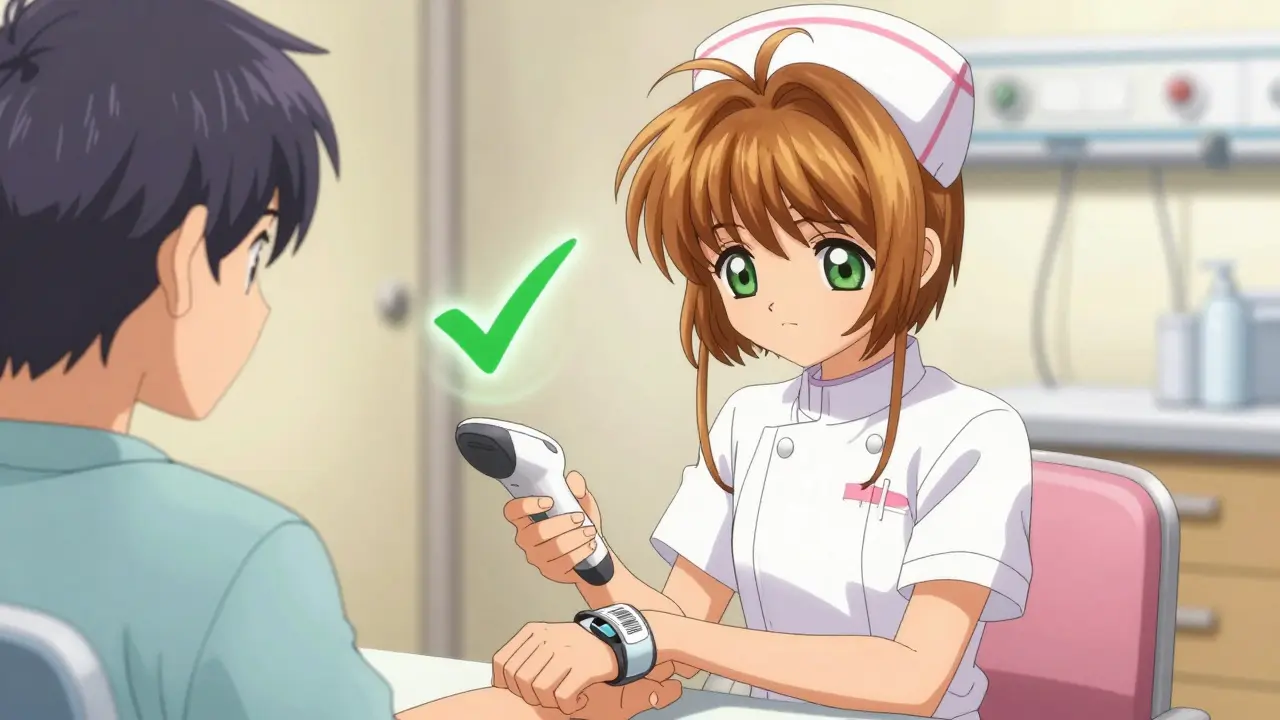
Hospitals use technology and processes to catch errors before they reach patients. One key tool is Barcode Medication Administration (BCMA). This system scans a patient's wristband and medication barcode before giving a dose. A 2025 JMIR study showed BCMA reduced dispensing errors by 43.95%, with specific drops like 56.85% for wrong drug errors and 66.67% for missed doses. However, some nurses report BCMA adds 15-20 minutes per medication round, leading to workarounds like skipping scans.
Computerized Physician Order Entry (CPOE) systems also help. These digital order systems include clinical decision support that flags potential issues like drug interactions. WHO reports CPOE reduces hospital medication errors by at least 50%, but too many alerts can cause "alert fatigue," where staff ignore warnings. A 2024 American College of Medical Informatics study found 42% of clinicians bypass medication alerts due to excessive noise.
Medication reconciliation is another critical step. This process compares a patient's current medications with new prescriptions during hospital transfers. The Institute for Safe Medication Practices (ISMP) says pharmacists conducting this reconciliation during transitions cuts adverse events significantly. However, discharge reconciliation is often incomplete-many hospitals don't properly document all medications a patient takes home.
Preventing Mistakes at Home
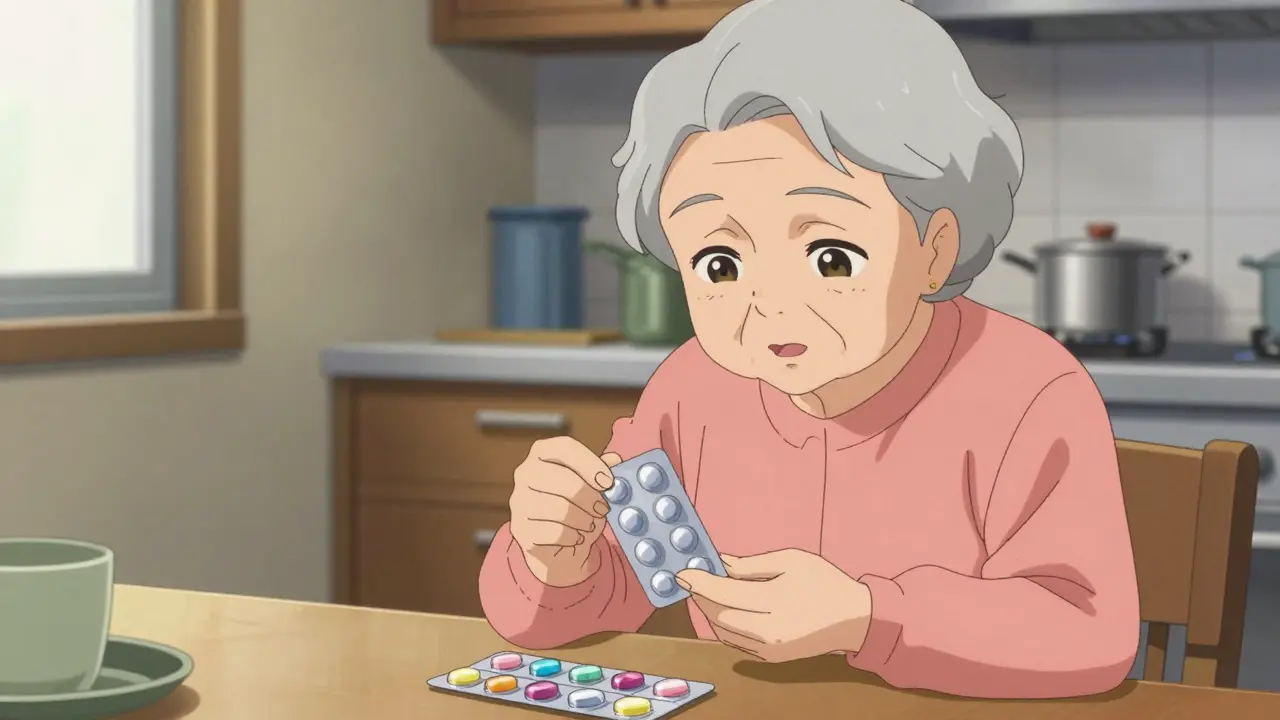
At home, medication errors are common, especially for older adults. A 2024 Journal of Patient Safety study found 89% of home errors involve patients aged 75+ taking five or more medications. Common issues include wrong timing (41%) and incorrect dosages (33%).
Simple tools can help. Using blister packs (pre-packaged single-dose units) reduces errors by 28%, according to NIH data. Similarly, medication organizers with labeled compartments for each dose time cut confusion. But even with organizers, 72% of seniors still have at least one dosing error monthly, as reported on SingleCare.com in 2025. The biggest problem? Confusion between multiple pill containers (63% of users).
Working with a pharmacist is key. A 2023 Annals of Internal Medicine study showed weekly medication reviews with a pharmacist reduce home errors by 37% in elderly patients. Pharmacists can simplify schedules, clarify instructions, and check for interactions. They also help spot counterfeit drugs-a growing threat. Dr. Marcus Schabacker, ECRI's president, warns that 95% of online pharmacies selling prescription drugs are illegal, often pretending to be Canadian pharmacies.
High-Risk Medications and Situations
Some medications are more dangerous when errors occur. The Food and Drug Administration MAUDE database shows high-alert medications like insulin, anticoagulants, and opioids account for 62% of severe medication errors. These drugs have narrow safety margins-small mistakes can cause big harm. For example, too much insulin can lead to dangerous low blood sugar, while incorrect blood thinner doses might cause bleeding or clots.
Polypharmacy (taking five or more medications) increases error risk by 30%, per NIH StatPearls data. Older adults often take multiple drugs for chronic conditions, making it harder to keep track. Dr. Soumya Swaminathan, WHO's Assistant Director-General, states that "polypharmacy, high-risk situations, and transitions of care" are the top areas needing attention. Hospitals and pharmacies should prioritize these patients for extra checks.
What You Can Do as a Patient
You're not powerless against medication errors. Here's how to stay safe:
- Keep a master list of all medications, including prescriptions, OTC drugs, and supplements. Update it regularly and share it with every doctor.
- Ask questions before taking any new medication. "What is this for?" "What side effects should I watch for?" "How do I take it correctly?"
- Use single-dose packaging like blister packs for daily doses. These prevent double-dosing and make it easier to see missed doses.
- Check labels every time you take a pill. Don't assume it's the same as last time-manufacturers can change packaging.
- Get pharmacist help for medication reviews. Many pharmacies offer free consultations to check for interactions or simplify regimens.
For older adults, having a caregiver involved helps. A 2024 study found that patients with someone checking their meds had 25% fewer errors. Caregivers can also spot signs of confusion or side effects early.
Frequently Asked Questions
What's the most common medication error at home?
The most common home medication error is taking the wrong dose or timing. A 2024 Journal of Patient Safety study found 41% of errors in elderly patients involve incorrect timing, and 33% involve wrong dosages. Confusion between multiple pill containers is also a top issue, reported by 63% of users on SingleCare.com.
How does BCMA reduce errors in hospitals?
Barcode Medication Administration (BCMA) scans a patient's wristband and medication barcode before administering a dose. A 2025 JMIR study showed BCMA reduced overall dispensing errors by 43.95%. Specifically, it cut wrong drug errors by 56.85% and dose omission errors by 66.67%. However, some staff report BCMA adds 15-20 minutes per medication round, leading to workarounds like skipping scans.
Why are high-alert medications more dangerous?
High-alert medications like insulin, blood thinners, and opioids have narrow safety margins. Small dosing mistakes can cause serious harm. For example, too much insulin can trigger dangerous low blood sugar, while incorrect blood thinner doses may cause bleeding or clots. The FDA MAUDE database shows these drugs account for 62% of severe medication errors.
Can technology alone prevent medication errors?
No. Technology like BCMA and CPOE helps, but ECRI's 2025 report states 68% of BCMA failures result from inadequate training and poor workflow integration. Technology alone can't fix unsafe practices without system-wide changes. Dr. Schabacker emphasizes that "technology alone cannot overcome deeply ingrained unsafe practices without comprehensive system redesign."
How can I avoid counterfeit drugs online?
Only buy from pharmacies verified by the National Association of Boards of Pharmacy (NABP). Look for the VIPPS seal (Verified Internet Pharmacy Practice Sites). Avoid sites offering "too good to be true" deals or claiming to be Canadian pharmacies without proper certification. The FDA warns that 95% of online pharmacies selling prescription drugs operate illegally, often using fake Canadian logos or URLs.





10 Comments
Elliot Alejo
February 5, 2026 AT 10:06Medication errors are preventable through systematic changes.
BCMA and CPOE systems show significant reductions in errors, but workflow integration remains a challenge.
Proper training and reducing alert fatigue are essential for success.
Danielle Vila
February 6, 2026 AT 12:02Big Pharma is behind all this. They want us to rely on technology so they can control our health data and sell more drugs. The 'errors' are just a scam to push more tech. Remember, 95% of online pharmacies are illegal-because they're exposing the real problem! 🤯
Thorben Westerhuys
February 7, 2026 AT 06:28OH MY GOODNESS! I can't believe how many people are being harmed by medication errors! It's absolutely terrifying! Nurses skipping scans, doctors ignoring alerts-this is a disaster! We need to fix this immediately!
Laissa Peixoto
February 7, 2026 AT 08:50Medication errors are a complex issue that stems from systemic failures rather than individual mistakes.
The human element in healthcare is often overlooked, but it's crucial to recognize that errors occur within a system that has multiple layers of vulnerability.
From prescribing to administration, each step presents opportunities for error, exacerbated by time pressures and communication gaps.
While technology like BCMA and CPOE offers solutions, their effectiveness is limited by how well they integrate into existing workflows.
For example, BCMA reduces errors but adds time, leading to workarounds.
Similarly, CPOE alert fatigue shows that more alerts don't necessarily mean better safety-they can desensitize staff.
Medication reconciliation during transitions is vital, yet often poorly executed due to lack of standardized processes.
High-alert medications like insulin and anticoagulants require extra vigilance, but even with protocols, errors persist.
The root cause lies in a healthcare system that prioritizes efficiency over safety, creating environments where mistakes are inevitable.
To truly prevent errors, we need a cultural shift that values safety over speed, invests in training, and redesigns workflows with human factors in mind.
This isn't just about technology; it's about reimagining how healthcare is delivered at every level.
Without systemic change, we'll keep seeing preventable harm.
It's time to move beyond band-aid solutions and address the underlying issues that make errors possible.
Healthcare professionals must be empowered to speak up about safety concerns without fear of retribution, fostering a culture of transparency and continuous improvement.
one hamzah
February 8, 2026 AT 14:15Blister packs reduce errors by 28%.
Matthew Morales
February 9, 2026 AT 13:02I always check my meds with the pharmacist. Sometimes I mix up the bottles, so a pill organizer helps. Also, be careful with online pharmacies-they can be fake.
Jenna Elliott
February 9, 2026 AT 13:07Technology alone can't fix medication errors.
Pamela Power
February 10, 2026 AT 04:08Your simplistic view ignores the complexity of healthcare systems. Blaming patients is irresponsible. Proper training and system redesign are needed-not just 'taking responsibility'.
Sam Salameh
February 11, 2026 AT 15:35Actually, I think we should focus on American-made solutions. Other countries' systems aren't as effective. Let's support domestic healthcare tech.
Katharine Meiler
February 13, 2026 AT 10:52BCMA implementation requires balancing technology with workflow. The JMIR study shows a 43.95% error reduction, but nurses report 15-20 minute delays. This highlights the need for redesigning processes to integrate BCMA without increasing workload. Similarly, CPOE alert fatigue at 42% bypass rate shows the need for smarter alerts. Medication reconciliation during transitions is critical but often incomplete. A collaborative approach between pharmacists, nurses, and IT staff is essential to address these systemic issues.