

Picture this: you’re staring at your screen, a dull pressure tightening around your forehead like a vice. You grab an ibuprofen, hoping it’ll fade. Now imagine another day when that same spot explodes with throbbing pain, nausea hits, and the light from your phone feels like a physical assault. Which one is just stress? Which one needs a specialist? Getting this wrong isn’t just annoying-it’s dangerous. Misdiagnosis happens in up to 50% of cases, meaning millions of people are treating migraines as tension headaches or suffering through cluster attacks without knowing help exists.
You don’t have to guess. The International Classification of Headache Disorders (ICHD-3) gives us clear rules for telling these apart. By understanding the specific patterns of tension-type headaches, migraines, and cluster headaches, you can stop guessing and start getting the right treatment. Let’s break down exactly how they differ, why they happen, and what you should do next.
The Silent Majority: Understanding Tension-Type Headaches
If you’ve ever felt like someone put a tight band around your head, you’ve likely experienced a tension-type headache (TTH). These are the most common headache disorder globally, affecting about 42% of people. They were first described by Dr. Harold Wolff in 1948, but despite their name, they aren’t always caused by muscle tension alone. Recent research points to abnormalities in how your brain processes pain signals centrally.
Here is what makes a tension headache unique:
- Pain Quality: It feels like pressure or squeezing, not throbbing. Think of a "hatband" sensation across your forehead or temples.
- Location: Usually bilateral (both sides of the head).
- Intensity: Mild to moderate. It hurts, but it rarely stops you from working or walking.
- Duration: Episodes last anywhere from 30 minutes to 7 days. If you get them 15+ days a month for three months, it’s classified as chronic.
- Associated Symptoms: Mostly none. You might be sensitive to light or sound slightly, but severe nausea or vomiting is rare.
A key diagnostic clue? Routine physical activity doesn’t make it worse. You can walk up stairs or go for a jog, and the pain stays steady. This distinguishes it sharply from migraines, where movement often aggravates the pain significantly.
The Neurological Storm: Decoding Migraines
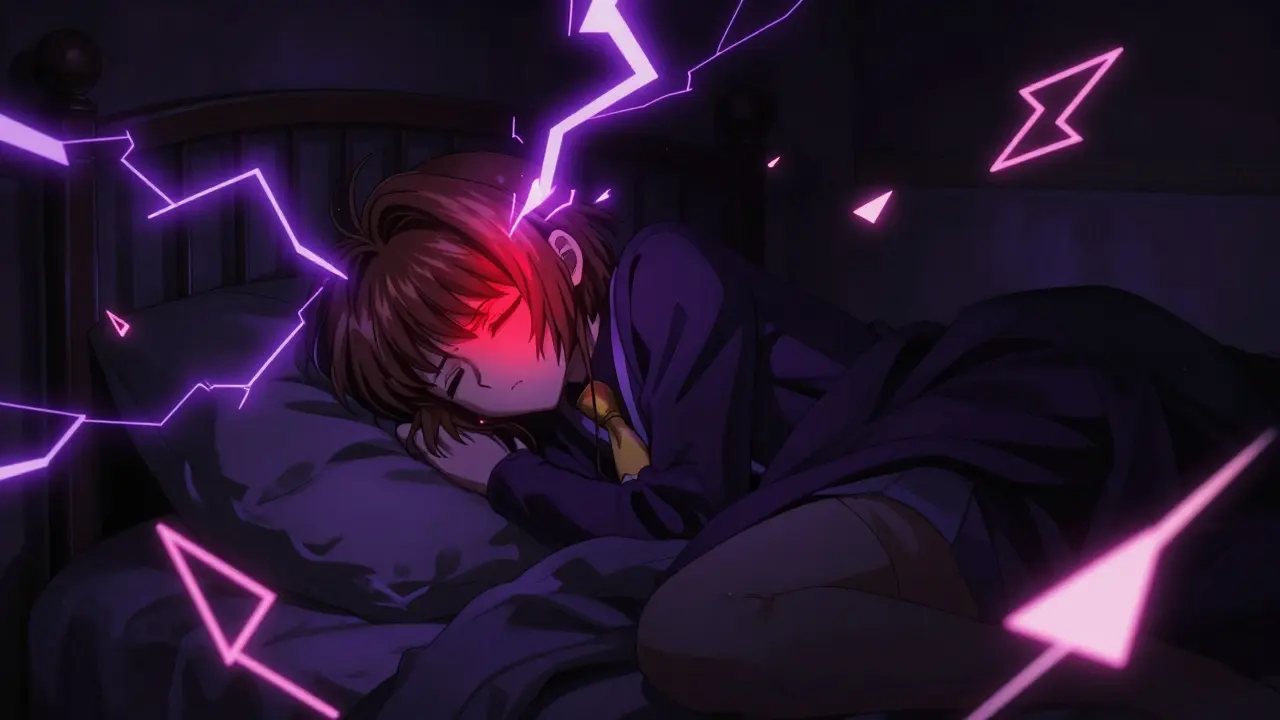
Migraines are not just "bad headaches." They are a complex neurological disorder. Affecting nearly 20% of women and 10% of men, migraines involve cortical spreading depression-a wave of electrical activity that moves across the brain-and activation of the trigeminovascular system. This biological reality explains why over-the-counter painkillers often fail.
How do you know if it’s a migraine?
- Pain Quality: Pulsating or throbbing. It beats in time with your heart.
- Location: Often unilateral (one side), though 40% of patients report bilateral pain.
- Intensity: Moderate to severe. Many sufferers need to lie down in a dark, quiet room.
- Duration: Untreated attacks last 4 to 72 hours.
- Associated Symptoms: Nausea occurs in 90% of cases. Sensitivity to light (photophobia) affects 80%, and sensitivity to sound (phonophobia) is also common.
About 25-30% of migraineurs experience aura. This involves visual disturbances like flashing lights, zigzag lines, or blind spots that appear 5 to 60 minutes before the pain starts. Aura is a hallmark sign that differentiates migraine from other headache types. If you see these visuals, note the timing-it helps doctors confirm the diagnosis.
The Alarm Clock Pain: Identifying Cluster Headaches
Cluster headaches are the rarest of the big three, affecting only about 1 in 1,000 adults. First described by Dr. Wilfred Harris in 1926, they belong to a family called trigeminal autonomic cephalalgias (TACs). Unlike the slow build of a tension headache or the all-day drag of a migraine, cluster headaches hit fast, hard, and with terrifying precision.
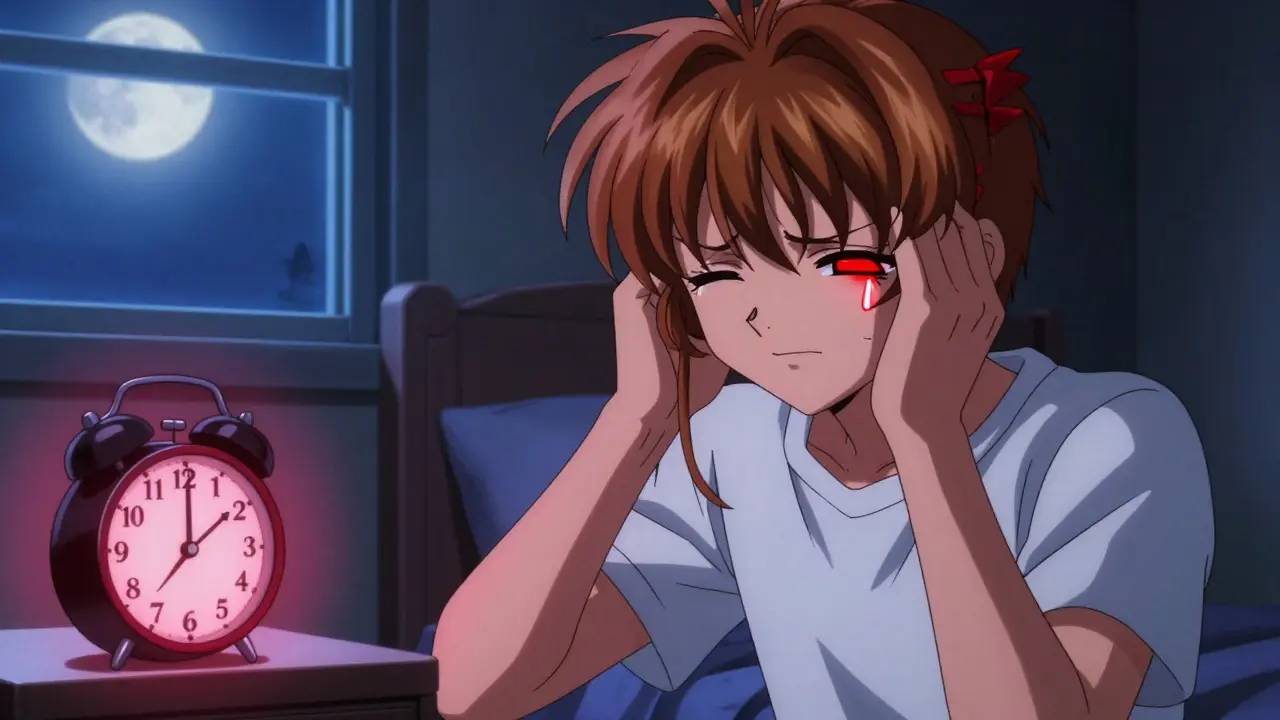
They are known as "alarm clock headaches" because they often wake you from sleep at the exact same time each night. Here is the profile:
- Pain Quality: Excruciating, sharp, boring, or stabbing. Patients rate it 8-10 on the pain scale, often comparing it to childbirth or eye trauma.
- Location: Strictly unilateral, focused around one eye or temple.
- Duration: Short but intense. Attacks last 15 to 180 minutes, averaging 45-90 minutes.
- Frequency: During a "cluster period" (lasting 6-12 weeks), you may have 1 to 8 attacks per day.
- Autonomic Symptoms: This is the clincher. On the same side as the pain, you will likely experience tearing eyes, redness, nasal congestion, runny nose, or drooping eyelid (ptosis).
Unlike migraine sufferers who want to lie still, people with cluster headaches feel restless. They pace, rock back and forth, or even press against walls to distract from the pain. This behavioral difference is a major diagnostic clue.
Key Differences: A Side-by-Side Comparison
Diagnosing yourself based on vague feelings is risky. Using specific criteria reduces error. Below is a comparison table highlighting the critical differences between these three conditions.
| Feature | Tension-Type | Migraine | Cluster |
|---|---|---|---|
| Pain Location | Bilateral (Both sides) | Unilateral (One side) or Bilateral | Strictly Unilateral (Around one eye) |
| Pain Quality | Pressure, Squeezing, Band-like | Throbbing, Pulsating | Sharp, Stabbing, Boring |
| Duration | 30 mins - 7 days | 4 - 72 hours | 15 - 180 minutes |
| Nausea/Vomiting | Rare | Common (90%) | Rare |
| Light/Sound Sensitivity | Mild or None | Severe | Variable |
| Eye/Nose Symptoms | No | Sometimes (Redness/Tearing) | Yes (Prominent: Tearing, Congestion, Drooping Eyelid) |
| Patient Behavior | Continues normal activities | Lies down, seeks darkness/silence | Paces, restless, agitated |
The Danger of Misdiagnosis
Why does precise labeling matter so much? Because the treatments are completely different. Taking a migraine medication for a tension headache is overkill and carries unnecessary side effects. Conversely, taking an aspirin for a cluster headache is useless; the attack will simply burn itself out while you suffer.
A 2021 study from Mayo Clinic found that misdiagnosis rates are high. One common pitfall is confusing migraines with autonomic features for cluster headaches. As headache specialist Dr. Shivang Joshi notes, migraine patients can have tearing eyes or redness. If a doctor sees these symptoms and ignores the longer duration and nausea, they might falsely diagnose cluster headache. Remember: "Cluster migraine" is not a real medical diagnosis. Clustering of migraine attacks is a pattern, not a different disease.
Another issue is under-treatment. Migraines cost the US economy $36 billion annually due to lost productivity. Yet, many patients self-medicate with NSAIDs until they develop medication-overuse headaches. Newer treatments like CGRP inhibitors (e.g., Qulipta) offer preventive options that target the root cause, but you need a correct diagnosis to access them.
Treatment Paths: What Works for Each Type
Once identified, the path to relief becomes clearer. Here is how experts approach each type:
Tension-Type Headaches
These respond well to simple analgesics. Ibuprofen, acetaminophen, or aspirin work for about 70% of cases. Stress management, better sleep hygiene, and physical therapy for neck posture issues are crucial for prevention. If they become chronic (15+ days/month), antidepressants like amitriptyline are sometimes used off-label to modulate pain signaling.
Migraines
Acute treatment requires specific drugs. Triptans (like sumatriptan) block pain pathways in the brain. For those who suffer frequently, preventive medications including beta-blockers, anticonvulsants, or newer CGRP monoclonal antibodies can reduce frequency by 50% or more. Lifestyle triggers-such as skipped meals, alcohol, or hormonal changes-should be tracked and managed.
Cluster Headaches
Standard painkillers do not work fast enough. The gold standard for acute attacks is high-flow oxygen therapy (100% oxygen via mask), which aborts attacks in 70-80% of cases within 15 minutes. Subcutaneous sumatriptan injections are also highly effective. For prevention during cluster periods, verapamil is the primary drug choice. Lithium or nerve blocks may be considered for refractory cases.
Your Next Steps: Tracking and Diagnosis
You cannot diagnose yourself definitively, but you can provide your doctor with the data they need. The American Headache Society recommends keeping a headache diary for at least four weeks. Record:
- Date and Time: When did it start? Did it wake you up?
- Duration: How long did it last?
- Location: Draw where it hurt on a diagram.
- Intensity: Rate it 0-10.
- Symptoms: Note nausea, light sensitivity, eye tearing, or restlessness.
- Triggers: Food, stress, weather, sleep changes?
Bring this log to a neurologist or headache specialist. General practitioners often have limited training in headache medicine (averaging only 4 hours in medical school), so specialized care ensures you get the right tools. If you experience sudden, severe "thunderclap" pain, weakness, confusion, or fever, seek emergency care immediately, as these signal secondary causes like bleeding or infection.
Understanding the difference between a squeeze, a throb, and a stab empowers you to advocate for your health. Don’t settle for "just a headache." Know the type, seek the right expert, and find the relief you deserve.
Can you have both migraine and cluster headaches?
Yes, it is possible to have both conditions, though it is rare. However, doctors must carefully distinguish between the two because their treatments differ significantly. Having autonomic symptoms (like eye tearing) during a migraine does not mean you have cluster headaches. A specialist should evaluate overlapping symptoms to ensure accurate diagnosis.
What is the fastest way to stop a cluster headache?
The fastest proven method is breathing 100% oxygen through a non-rebreather mask at high flow (12-15 liters per minute). This works for about 70-80% of patients within 15 minutes. Subcutaneous sumatriptan injections are another rapid-acting option. Over-the-counter pain relievers are generally ineffective for acute cluster attacks due to their slow onset.
Why do migraines cause nausea?
Nausea in migraines is linked to the activation of the trigeminal nerve system and changes in gut motility. The same neural pathways that process pain also affect the stomach. This is why anti-nausea medications are often prescribed alongside migraine-specific drugs to help absorption and comfort.
Are tension headaches dangerous?
Tension-type headaches are not dangerous in themselves; they do not indicate brain damage or tumors. However, chronic tension headaches (occurring 15+ days a month) can significantly impact quality of life and mental health. If your headache pattern changes suddenly or becomes severe, consult a doctor to rule out other causes.
What triggers cluster headaches?
During a cluster period, strong smells (like perfume or chemicals), alcohol, and nitrates can trigger attacks. Seasonal changes and circadian rhythm disruptions are also common factors. Unlike migraines, food triggers are less consistent, but avoiding alcohol entirely during a cluster bout is strongly recommended as it can provoke immediate attacks.




10 Comments
Brandon Brodsky
June 13, 2026 AT 06:25Oh great, another medical blog post telling me I have a rare neurological condition because my head hurts after staring at Excel sheets for six hours. Thanks for the diagnosis, Dr. Internet.
Ganesh Honikol
June 13, 2026 AT 09:47I must say that this article provides an exceptionally thorough breakdown of the distinctions between these three prevalent headache disorders :)
It is truly fascinating to observe how the International Classification of Headache Disorders offers such precise diagnostic criteria which can significantly alleviate the uncertainty many patients face when attempting to self-diagnose their symptoms
The inclusion of specific details regarding cortical spreading depression in migraines and the trigeminovascular system activation really helps to demystify the biological mechanisms at play here
Furthermore, the comparison table serves as an invaluable quick-reference guide for individuals who may be struggling to articulate their symptoms to healthcare providers
I believe that sharing this information more widely could empower countless people to seek the appropriate medical attention they deserve rather than suffering in silence or misusing over-the-counter medications
Thank you for compiling such a comprehensive and well-researched resource that highlights the importance of accurate diagnosis and specialized treatment pathways for each type of headache disorder :)
AnneKatherine Stiekes
June 14, 2026 AT 10:35i always thought tension headaches were just from stress but reading about the central pain processing part made me realize its way more complex than i gave it credit for
Emily Barnhill
June 15, 2026 AT 09:30Listen up because this is critical information that people ignore at their own peril
If you are pacing around your living room screaming into a pillow while your eye waters uncontrollably stop taking ibuprofen and go to the ER for oxygen therapy immediately
Cluster headaches are not a joke and pretending they are will only result in unnecessary suffering and potential long-term complications
We need to stop normalizing severe pain and start demanding better healthcare access for those with trigeminal autonomic cephalalgias
Your silence is complicity in your own pain management failure so speak up and get the specialist care you need right now
Christina S.
June 16, 2026 AT 01:33This is super helpful especially the part about keeping a diary for four weeks
I’ve been trying to figure out if my headaches are migraines or just bad tension ones and the symptom checklist is exactly what I needed to show my doctor next time
Thanks for breaking it down so clearly without making it sound too scary
Hailey Dunston
June 17, 2026 AT 10:04How quaint that you think a layperson can accurately diagnose themselves based on a Reddit-style listicle :)
Real medicine requires nuanced clinical evaluation by properly trained professionals not amateur hour speculation based on internet articles
However I suppose for those who cannot afford actual healthcare this serves as a comforting placebo
Do try not to confuse correlation with causation when interpreting these symptoms as the human brain is far more complex than your simplified bullet points suggest :)
Glenn Davis
June 18, 2026 AT 22:25Weakness causes headaches
Stay strong
Cici arya Arya
June 20, 2026 AT 13:25So basically if you’re poor you just suffer until you drop because specialists cost money and insurance doesn’t cover CGRP inhibitors anyway
This article is nice but it ignores the reality that most people don’t have the luxury of tracking triggers or seeing neurologists
It’s frustrating to read all this fancy terminology when the real issue is systemic neglect of chronic pain patients
Why do we keep pretending that education solves a problem that is fundamentally economic?
rebecca torres
June 21, 2026 AT 01:22everyone says cluster headaches are the worst but no one talks about how exhausting the recovery phase is like you feel completely drained for days after even though the attack was short
Erin Livengood
June 22, 2026 AT 03:32The metaphor of the 'neurological storm' for migraines is particularly evocative isn't it?
It paints a vivid picture of the internal chaos that occurs beneath the surface of calm exteriors
One might consider the tension headache as a dull gray fog rolling in slowly whereas the migraine is a sudden thunderclap of electric violet light
And the cluster headache? That is the red-hot poker driven directly into the temple of existence
Language shapes our understanding of pain and using such descriptive imagery helps validate the experiences of those who suffer in silence
We must continue to refine our vocabulary to better capture the spectrum of human discomfort