Medication Dry Eye Relief Planner
Personalized Care Plan Generator
Select the medications you are currently taking that may be affecting your eyes.
Ever finish a glass of water and still feel like your eyes are parched? You aren’t imagining it. If you’re taking prescription meds for allergies, blood pressure, or mood, that gritty, burning sensation might not be stress-it could be a side effect. About one in four people with dry eye disease blame their medication. For seniors on multiple drugs, that number jumps to 40%. The good news? You don’t always have to stop the medicine. With the right lubrication strategy and a few lifestyle tweaks, you can get your comfort back without risking your health.
We’ll walk through which drugs are the usual suspects, how they mess with your tear film, and exactly what to do about it-from picking the right drops to adjusting your home environment. No fluff, just actionable steps backed by ophthalmology research.
Why Your Meds Are Drying Out Your Eyes
To fix the problem, you first need to know the culprit. Medication-induced dry eye is a condition where pharmaceutical treatments disrupt natural tear production or composition, leading to irritation and blurred vision. It’s not just about “not enough water.” It’s about chemistry. Drugs interfere with your eyes in four main ways:
- Anticholinergic effects: These block the nervous system signals that tell your lacrimal glands to make tears. Think of it as cutting the power line to a faucet.
- Glandular changes: Some meds impair the meibomian glands (tiny oil-producing glands in your eyelids responsible for the lipid layer of tears). Without this oil layer, your tears evaporate instantly.
- Systemic dehydration: Diuretics pull fluid from your entire body, including your eyes.
- Tear film instability: Certain ingredients, especially preservatives in eye drops, act as irritants that destabilize the tear film.
The most common offenders include antihistamines (like diphenhydramine/Benadryl), antidepressants (such as sertraline/Zoloft or amitriptyline), blood pressure meds (like metoprolol or hydrochlorothiazide), and acne treatments like isotretinoin (Accutane). Even glaucoma drops can cause issues-up to 47% of patients report burning due to the preservative benzalkonium chloride (BAK).
Lubrication Strategies That Actually Work
Not all eye drops are created equal. In fact, using the wrong ones can make things worse. Here is how to build a lubrication routine that supports your ocular surface.
Go Preservative-Free
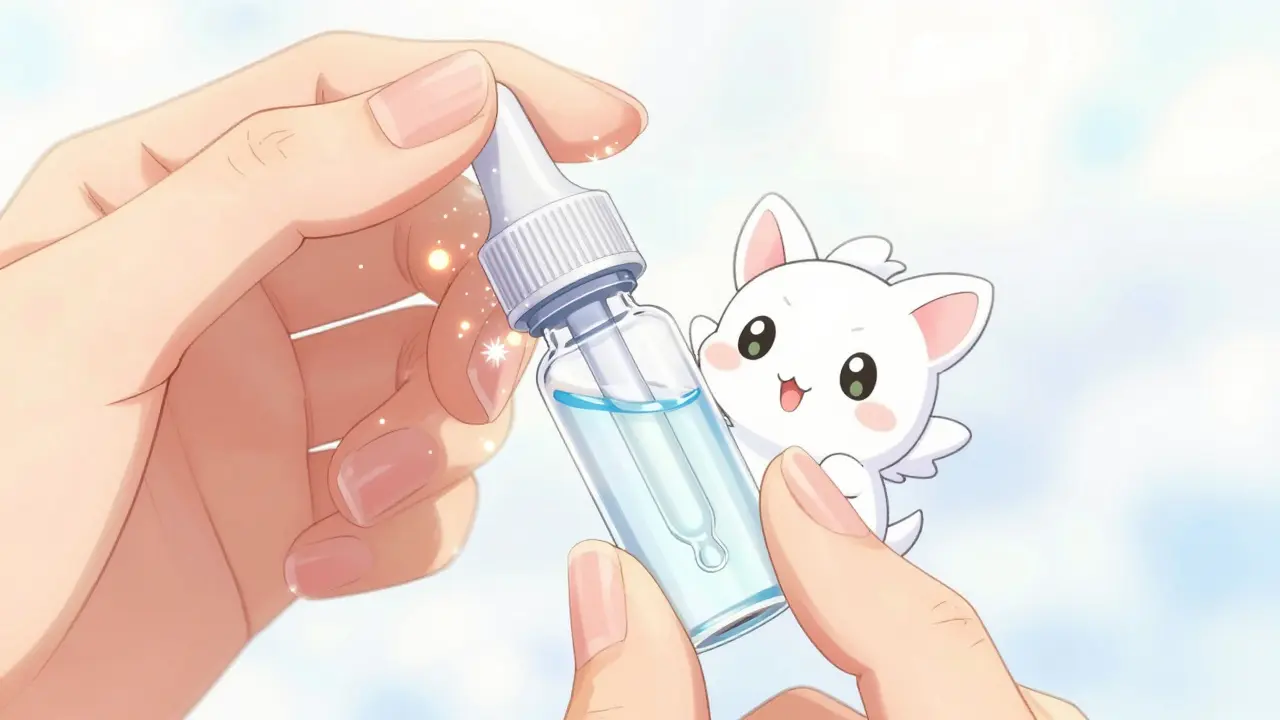
If you’re using drops more than four times a day, standard bottled tears are likely hurting you. The preservatives needed to keep multi-dose bottles sterile can damage the delicate cells on your eye’s surface over time. Switch to preservative-free artificial tears (single-use vials of lubricating eye drops that lack toxic preservatives, ideal for frequent use). They cost a bit more upfront but save your eyes from cumulative toxicity. Apply them 4-6 times daily, or whenever you feel that scratchy feeling starting.
The Glaucoma Drop Hack
If you’re on glaucoma medication, timing is everything. Applying artificial tears immediately after your medicated drop washes it away. Instead, wait at least 15 minutes between doses. Better yet, apply preservative-free tears 15 minutes *before* your glaucoma drop. Clinical studies show this simple sequence improves symptoms by 78%.
Warm Compresses for Oil Glands
If your meds are affecting your meibomian glands (common with Accutane or hormonal therapies), drops alone won’t cut it. You need to unclog the oil ducts. Use a warm compress for 10-15 minutes twice daily, followed by a gentle lid massage. This melts the hardened oils and helps them flow onto your eye surface. Research shows this improves gland function in 65% of cases.
Prescription Options When Drops Fail
If OTC methods aren’t enough, talk to your doctor about anti-inflammatory prescriptions. Cyclosporine ophthalmic emulsion (an FDA-approved immunomodulator that increases tear production by reducing inflammation), like Restasis, can boost tear production by 15-20% after six months of consistent use. Another option, lifitegrast (Xiidra), reduces symptoms by 30% in clinical trials. For severe cases, punctal plugs-tiny inserts that block tear drainage-can increase tear volume by up to 50%.
Lifestyle Tweaks to Reduce Evaporation
Lubrication adds moisture; lifestyle changes keep it there. Since many medications thin your tear film, your goal is to slow down evaporation.
| Action | Impact | Implementation Tip |
|---|---|---|
| Humidifier Use | Reduces tear evaporation by 25% | Keep indoor humidity between 40-60%. Place the humidifier near your desk or bed. |
| The 20-20-20 Rule | Cuts digital eye strain by 35% | Every 20 minutes, look at something 20 feet away for 20 seconds. Blink deliberately. |
| Airflow Management | Lowers evaporation by 30% | Redirect car vents away from your face. Avoid sitting directly under AC drafts. |
| Omega-3 Supplementation | Improves tear stability in 60% of users | Take 1,000-2,000 mg of EPA/DHA daily. Give it 3 months to work. |
| Smoking Cessation | Reduces symptom severity by 45% | Quit smoking. Improvement often starts within 2-4 weeks. |
Dietary Support
Your diet plays a bigger role than you think. Omega-3 fatty acids, specifically EPA and DHA, help improve the quality of the oil layer in your tears. Aim for 1,000-2,000 mg daily. While fish oil is popular, some studies suggest high-quality algae-based supplements may offer better absorption. Consistency is key-you won’t see results overnight. Most patients notice a difference in tear stability after three months.
Environmental Control
Wind and dry air are enemies of the dry-eyed. In winter, heating systems suck moisture out of the air. A hygrometer (a cheap device that measures humidity) can help you monitor your home. Keep it above 40%. Also, be mindful of fans. Direct airflow across your face accelerates tear evaporation significantly. If you drive, adjust your vents so air blows toward your feet or ceiling, not your eyes.

Managing Expectations and Next Steps
Here’s the hard truth: managing medication-induced dry eye is a marathon, not a sprint. Initial relief from lubricants might come in 2-4 weeks, but prescription treatments like cyclosporine take 3-6 months to reach full effect. Don’t give up if you don’t feel better in a week.
Before making any changes to your medication regimen, consult both your prescribing physician and an eye care specialist. Never stop blood pressure or antidepressant meds abruptly. However, ask your doctor if a dosage reduction or switching to an alternative with fewer anticholinergic effects is possible. In 55% of cases, dose adjustments alone alleviate symptoms.
If you’re struggling with costs, remember that generic preservative-free tears are widely available and far cheaper than brand-name options. Insurance coverage for prescription dry eye treatments varies, so check your plan’s formulary. Many clinics now offer diagnostic tests like tear osmolarity measurement to tailor your treatment, ensuring you aren’t wasting money on therapies that don’t fit your specific type of dry eye.
Can I reverse medication-induced dry eye permanently?
In 70-80% of cases where the offending medication can be substituted or discontinued, symptoms reverse completely and prevent further deterioration. If you must stay on the medication, symptoms can be managed effectively but may require ongoing maintenance.
Are preservative-free drops really necessary?
Yes, if you use drops more than four times a day. Preservatives like BAK accumulate on the ocular surface and can cause toxicity, worsening inflammation and dryness. Single-use vials eliminate this risk.
How long does it take for omega-3s to help dry eyes?
Most patients see improvement in tear film stability within 3 months of taking 1,000-2,000 mg of EPA/DHA daily. It is a gradual process as the fatty acids integrate into your meibomian gland secretions.
Should I stop my allergy meds if my eyes get dry?
Do not stop prescribed medication without consulting your doctor. However, you can discuss alternatives. Newer antihistamines or nasal sprays may provide similar relief with fewer ocular side effects. Additionally, using preservative-free tears can mitigate the drying effect.
What is the best way to apply eye drops?
Tilt your head back 45 degrees, pull your lower eyelid down to create a pocket, and place one drop in without touching your eye or lashes. Close your eyes gently for a minute to allow absorption. This technique improves effectiveness by 25% compared to haphazard application.